Ottawa eyes a UK financing model as La Caisse bets $3.2 billion on Sizewell C
Canada's plan to build as many as 10 new nuclear reactors depends on a source of financing that Western nuclear projects have long struggled to lock in: private and pension capital.
The federal government's new Nuclear Energy Strategy sets out to draw in that money, but RBC clean tech lead Vivan Sorab wrote that such capital "has been hard to mobilize for Western nuclear projects."
According to RBC, federal financing terms that would spell out how Ottawa shares project risk are not due until April 2027.
One model Ottawa is watching sits on the Suffolk coast of England.
CBC News reported that when Tim Hodgson, Canada's natural resources minister, announced the expansion, he pointed to the Sizewell C plant as an example.
Private investors are taking a 55 percent stake there by sharing construction costs, and one of them is La Caisse, Quebec's public pension fund, which committed $3.2bn for a 20 percent stake.
Drawing pension money in is not simple, given how much these funds guard against risk.
"If you want to have private sector investors, they need some de-risking," Yrjo Koskinen, professor of sustainable finance at the University of Calgary, told CBC News.
Pension funds in particular need that risk reduced because of their duty to protect members' retirements, Koskinen said, and he added that someone still has to pay for covering it, likely taxpayers or electricity consumers.
Sizewell C addresses that through a regulated asset base model, under which investors such as La Caisse begin collecting returns during construction rather than waiting until the plant sells electricity.
British ratepayers fund those returns through a £1 charge on their monthly bills, so investors earn even if the build runs late.
The model also caps investor exposure to overruns: CBC reported the plant is estimated to cost $78.9bn, and if costs climb to an upper limit of $90.3bn, all investors share the overrun equally, with the government potentially covering anything above that ceiling.
The UK's National Audit Office estimates investors will earn 11 to 13 percent once construction wraps up.
The same report found the cost to consumers will not be outweighed by the benefits until at least 2064.
Those protections reflect the industry's record on budgets.
Hinkley Point C, the UK's newest plant, began construction in 2017 at a budget of $34bn and now carries an estimate above $64bn.
Finland's Olkiluoto 3 took from 2005 to 2022 to finish, and its cost climbed from $5.1bn to $17.8bn, CBC reported.
Adam Scott, executive director of Shift Action, said nuclear has grown at a "really very flat" rate for two decades despite strong government backing.
The stall is "not about governments deciding not to build nuclear," he said.
His group steers financial institutions and pensions toward climate-aligned investing.
The arrangement has drawn local opposition in England.
Alison Downes of Stop Sizewell C, a campaign group opposed to the project, objected that "the investors cannot lose" under the structure.
It loads the risk onto energy bill payers, she told CBC News, the people least able to shape how a project like Sizewell C ends up.
Canada's strategy leans on domestic capacity, targeting two reactors under construction by 2035, five more planned by 2040, a modernized CANDU design by 2030 and a doubling of the nuclear workforce.
Execution turns on rebuilt supply chains, since heavy-water production capacity closed in the 1990s, RBC noted, and provinces, not Ottawa, choose the technology.
Experience is a further constraint.
"It's really hard to build nuclear when you haven't been doing it for a while," Warren Mabee, professor of energy and environmental policy at Queen's University, told CBC News.
Canada built reactors nearly every year from 1970 to the early 1990s, he said, then largely stopped.
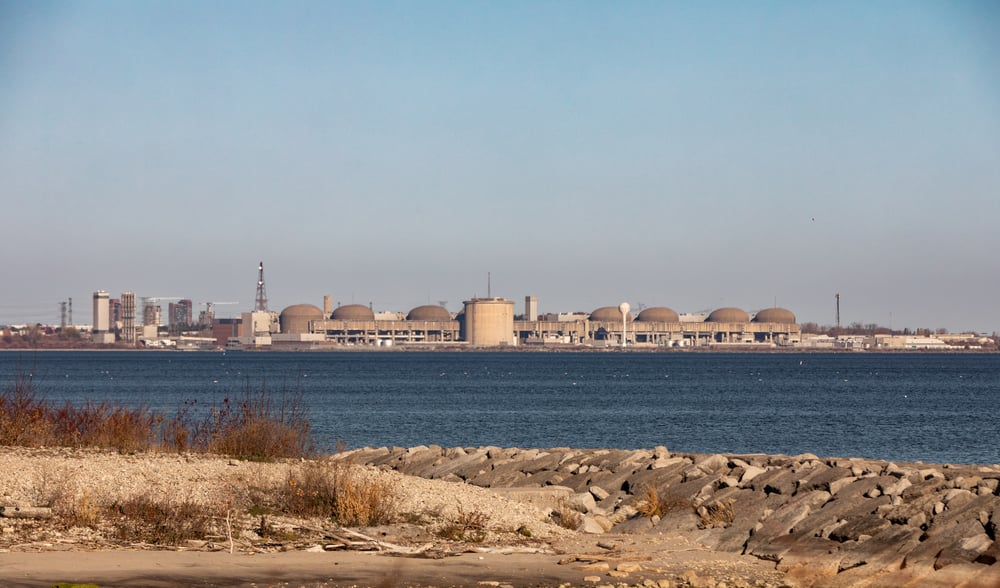
Ontario currently draws almost half its electricity from CANDU plants at Darlington, Pickering and Bruce, CBC reported.
Canada is joining a wider build-out.
If all planned projects proceed, China would lead global capacity at 185,812 MW, ahead of the US at 117,910 MW and France at 75,590 MW, EnergyNow reported, drawing on Global Energy Monitor data.
France already generates about 69 percent of its electricity from nuclear, as per the same source.
For pension investors weighing entry,
Finland offers one precedent.
Olkiluoto 3 came online as Russia invaded Ukraine in 2022, and Finland now has some of Europe's cheapest electricity, CBC News reported.
"So in that sense, thank goodness Finland has this new reactor," Koskinen said. "But of course, when it was commissioned, nobody knew about that."