
Medical director at Phoenix and Raven explains why brand-name Ozempic still leads despite Health Canada approvals
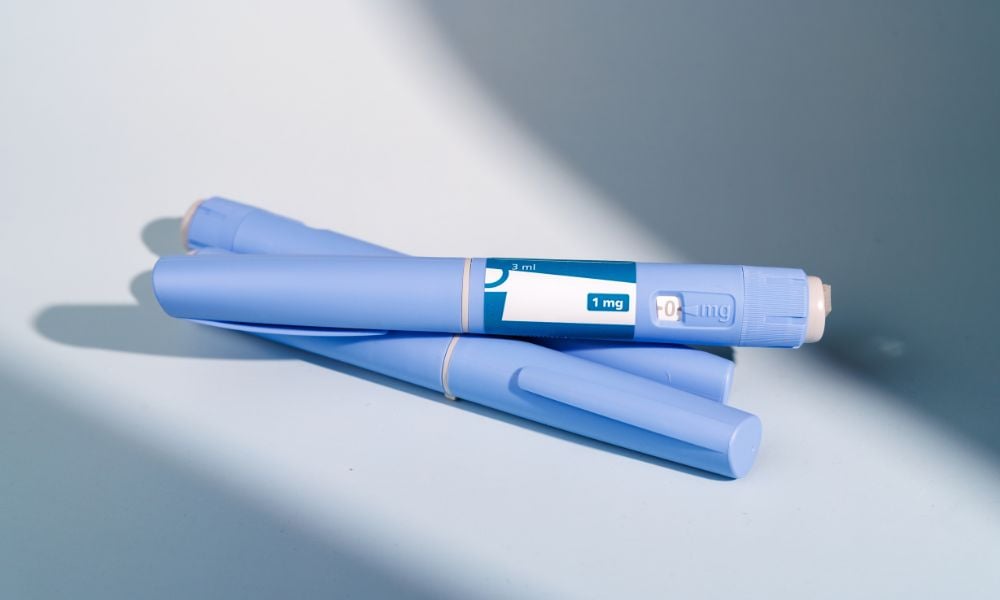
When Health Canada approved generic semaglutide in late April, Phoenix and Raven, two digital telemedicine platforms focused on lifestyle medicine, had inventory in patients' hands within weeks and pricing the generic at $125 per month.
Mark Broussenko, medical director for both platforms, acknowledged the groundwork started long before Health Canada’s approval came through as Novo Nordisk, the original manufacturer, failed to renew a key patent protection back in 2019.
He said the industry had been watching the clock ever since.
"We were expecting approval to happen sometime this year, probably around the summer. And we were actually expecting to receive inventory in the fall," he said. "As it turns out, Dr. Reddy and Apotex, the two approved manufacturers, moved faster than we had anticipated. Prior to this, however, we were soliciting interest from patients and developing logistics and clinical framework to do this so the moment that these were approved, we started allowing people to join a waitlist. Then once Apotex communicated to us that they would be able to ship and fulfill these, we started getting this in front of patients and getting that medication available to them at a much more accessible price point.”
Brand name and generic offered at discount rate
According to Broussenko, Phoenix and Raven sell both generic semaglutide and brand-name Ozempic at the same $124.99 price point. But the price point raises its own questions, particularly around who this serves and who it doesn't as coverage remains fragmented across the Canadian benefits landscape.
"Coverage really depends on the basis of plan," Broussenko said.
Broussenko emphasized how generic drug pricing in Canada is governed by an agreement that indexes the cost as a percentage of the brand-name price, and once generics hit the market, manufacturers typically match through patient support programs to discourage switching.
"Most insurance providers require a prior authorization form to cover these irrespective of a generic or brand," Broussenko said, noting for patients navigating that process, the platform provides dedicated support to help complete prior authorization paperwork, aiming to prevent gaps in treatment.
The pricing structure itself is dictated by federal rules, noted Broussenko, underscoring how generic drug prices in Canada are indexed as a percentage of the brand-name price, creating a price floor that applies across the board.
In semaglutide's case, as Broussenko explained, the generic sits at 35 per cent of what Ozempic costs at full retail. Brand-name manufacturers then tend to match that floor through patient support programs to keep users from switching.
What this means for plan members
That dynamic creates an unusual situation where the brand and the generic cost the same and Broussenko concedes this changes the calculus for patients.
"If the brand name and the generic are at the same equivalent price point, there tends not to be a reason to pick generic," he said. "Once they find out that they can get brand name Ozempic at generic costs, lots of people opt to stick that way."
That access, though, comes with clinical guardrails. Patients complete a detailed health history questionnaire with Phoenix – the male-focused platform and Raven – the female focused one. That gets reviewed by a clinician, who checks BMI thresholds and screens for contraindications including pregnancy, acute pancreatitis, and medullary thyroid cancer. Broussenko stressed how the eligibility criteria aren’t loose.
"If you have an existing endocrinologist and cardiologist or nephrologist, and there's a lot of things going on with your health, telemedicine is probably not the best avenue for you," he said.
Why the brand-name trumps all
To that end, when there aren’t any insurance or financial pressures steering the decision, Phoenix and Raven generally recommend brand-name Ozempic as the first-line option as Broussenko believes it has a long track record, a robust supply chain, and a level of familiarity that removes guesswork for both patients and providers.
"All other things being equal, the default is typically brand," he said.
Broussenko sees two persistent misconceptions among patients when it comes to generic semaglutide. The first is that the generic version is somehow inferior to the brand name. In clinical practice, with rare exceptions, the two are considered interchangeable because both have to pass through individual Health Canada approval before reaching the market, which is why there was a lag between manufacturing authorization and actual availability. He noted the comparison is no different from acetaminophen and Tylenol or ibuprofen and Advil sitting side by side on a pharmacy shelf.
The second misconception, he said, runs in the opposite direction. Once a generic enters the market, the brand name vanishes. Novo Nordisk and other manufacturers maintain extensive patient support programs that match generic pricing, particularly for those paying out of pocket. Patients who were already comfortable on Ozempic can continue accessing it at the same cost.
The goal, Broussenko argues, is to remove price from the clinical conversation entirely so that the choice between brand and generic comes down to what makes sense medically rather than financially.
Are generics still misunderstood?
According to a poll published by Phoenix and Raven last fall, 59 per cent of Canadians were either actively trying to lose weight or planning to, and roughly 40 per cent said they were interested in trying some version of Ozempic. Yet, only about eight per cent had ever used a GLP-1 medication — five per cent currently on one, three per cent having tried one in the past.
For Broussenko, the gap between demand and actual access was enormous but he also sees generic semaglutide as a turning point in a public health crisis that has persisted in Canada for decades. In his view, weight management medicine has never had a drug that combines this level of safety, availability, and clinical effectiveness at scale.
“It’s actually a huge win for Canadians. We're the first developed nation to have access to generic semaglutide and it's incredible that this level of access can be available to almost everybody,” he said.
Affordable semaglutide is a significant step forward
From both an actuarial and public health standpoint, Broussenko sees broader access to affordable semaglutide as a significant step forward. After all, Canada has been dealing with obesity-related conditions - diabetes, osteoarthritis, sleep apnea, cardiovascular disease - at disproportionate rates for a long time, and the primary care system is already under considerable strain. He underscored anything that helps reduce the downstream burden on urgent care and emergency rooms represents a net positive.
“I think it's a very favorable return on investment for the public system as a whole. Just because having people be at a healthier wage is going to mean that they're not going to be presenting some of those more significant consequences of obesity down the road,” said Broussenko. “It's a very, very complicated long-term impact, but I think on the whole it's going to be very, very favorable for Canada.”


