Website: novonordisk.ca
Head office address (Canada): 101-2476 Argentia Road, Mississauga, ON L5N 6M1
Year established: 1984
Ownership structure: Ontario corporation; subsidiary of Novo Nordisk A/S, Denmark
Target market/client profile: patients, healthcare providers, and plan sponsors managing chronic diseases
Number of professional staff: 464 employees across Canada
Canadian office locations: Mississauga
Novo Nordisk Canada Inc. (NNCI) is the Canadian sales and distribution arm of Danish pharmaceutical company Novo Nordisk A/S. Based in Mississauga, the company focuses on treatments for serious chronic diseases, conditions that sit at the centre of many group drug plan conversations. It says it reached over 45 million people living with diabetes and obesity worldwide as of 2024.
Novo Nordisk’s connection to Canada goes back to 1921. That year, University of Toronto researchers identified insulin and changed how the world treated diabetes.
That discovery led Danish Nobel laureate August Krogh to travel to Canada and secure rights to produce the drug in Denmark. Nordisk Insulinlaboratorium and Novo Terapeutisk Laboratorium, two Danish companies, grew from that effort and spent decades competing. The two merged in 1989 to form Novo Nordisk A/S.
The company established a Canadian presence in 1984, five years before that merger was complete. That operation, now called Novo Nordisk Canada Inc., focused on sales and distribution across Canada and Bermuda.
From the start, NNCI worked on getting chronic disease treatments to Canadian patients and healthcare providers. The subsidiary has since grown to 464 employees in roles from field sales and clinical research to medical and regulatory affairs.
Over time, NNCI’s Canadian role grew beyond sales and distribution. The company partnered with the University of Toronto to co-establish the Novo Nordisk Network for Healthy Populations.
The interdisciplinary group focuses on type 2 diabetes prevention and studies factors like urban mobility, virtual care, and wearable technology. That partnership marked one of Novo Nordisk’s more deliberate steps into the Canadian health research space.
In January 2026, the firm partnered with Vancouver-based Aspect Biosystems to develop cell-based diabetes treatments using stem cell technology. Under the deal, Aspect leads development and manufacturing while Novo Nordisk retains options to expand its involvement.
Later that year, NNCI and pharmacy chain Rexall launched Novo Nordisk Care Rx, a home delivery service for Ozempic, Wegovy, and Rybelsus. The service ships medications at in-store prices across all provinces and territories except Quebec.
NNCI markets treatments for several chronic and rare diseases:
Novo Nordisk also supplies the NovoPen insulin delivery device and compatible pen needles. In April 2026, the firm partnered with OpenAI to advance drug development with AI. That collaboration aims to speed up research and identify new drug candidates.
Iain Graham leads Novo Nordisk Canada as its general manager. He has had a pharmaceutical career spanning more than two decades. He joined NNCI in 2006 as a diabetes product manager and has since held several roles within the organization. Before NNCI, Graham was a product manager at Purdue Pharma and studied at the University of Guelph.
The global executive management team at Novo Nordisk A/S, which sets direction for NNCI, includes:
Novo Nordisk A/S uses a two-tier governance structure where the board of directors and executive management operate as fully separate bodies. No member serves on both, and the board appoints all executives, sets their remuneration, and oversees succession planning.
Novo Nordisk Canada distributes chronic and rare disease treatments through healthcare professionals and pharmacy networks. The company employs a field team of sales representatives and clinical trial monitors who connect with physicians, pharmacists, and clinical specialists. That team is the primary channel through which NNCI’s products reach patients and plan members.
Novo Nordisk’s approach is built around healthcare professionals rather than direct-to-patient sales. Sales representatives engage physicians and specialists to support treatment decisions for conditions like diabetes, obesity, and hemophilia. Plan sponsors and drug plan administrators interact with NNCI’s portfolio indirectly, through the medications their benefit plans cover.
Semaglutide-based medicines are among the most discussed drugs in Canadian group benefits today. Novo Nordisk says it holds the only Health Canada-approved medicines containing semaglutide.
The firm has also warned against compounded versions not assessed by Health Canada. In April 2026, Health Canada authorized Canada’s first generic semaglutide, a development that could lower costs for employer-sponsored drug plans.
In the US, Novo Nordisk announced GLP-1 list price cuts of up to 50 percent, including Wegovy and Ozempic, effective January 2027. The cuts target insured patients whose costs are tied directly to list prices.
Novo Nordisk Canada has earned workplace recognition for its employee programs and company culture. The firm has also built ties with Canadian research institutions and community health programs.
Novo Nordisk Canada served as the presenting partner of the 2024–2025 ParticipACTION Community Challenge, a national physical activity initiative. In 2024, the program reached more than 1,200 communities and provided over $750,000 in grants to community organizations.
On the industry side, NNCI holds memberships with:
The firm also co-funded the CCS-Novo Nordisk Cardiometabolic Research Award alongside the Canadian Cardiovascular Society, a $35,000 annual grant for early-career researchers. Those memberships connect NNCI to key stakeholders in Canada’s pharmaceutical and health policy sectors.
Researchers put the added odds at 37 to 68%, though absolute risk stays low

Novo Nordisk alleges their rival's advertising campaigns for its drugs are designed to mislead consumers about their superior efficacy

Supply shortage from India keeps the cheaper diabetes drug off shelves until late October

The device could cost less than injections, but coverage stays unclear in a US$100 billion GLP-1 market

Eligible members can now buy the brand-name semaglutide at a price the company aligns with generics
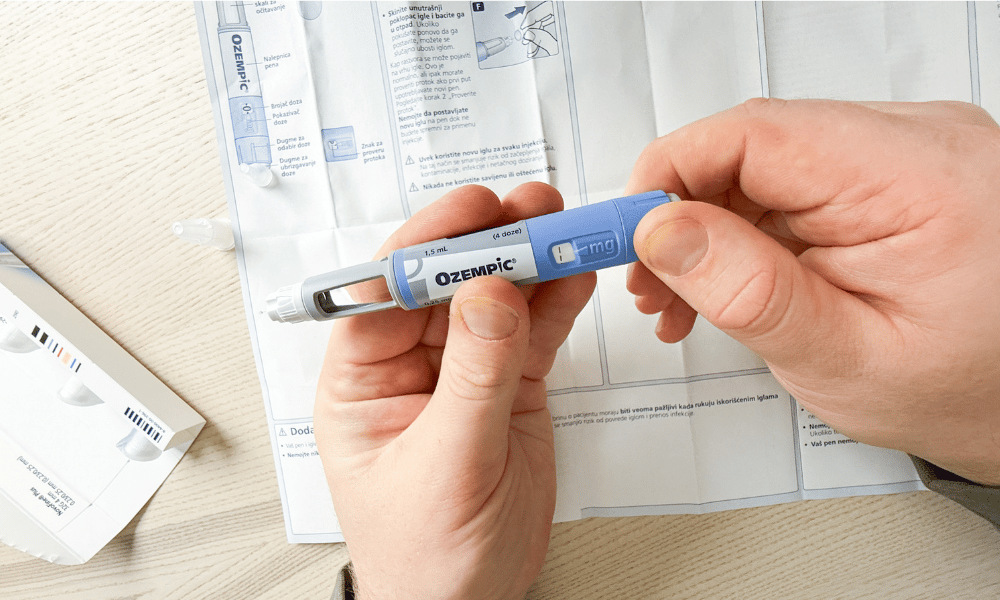
Medical director at Phoenix and Raven explains why brand-name Ozempic still leads despite Health Canada approvals
Generic rollout carries fine print that plan sponsors need to understand, says Canada Life’s Barb Martinez

Guidelines still advise stopping GLP-1 drugs one to two months before pregnancy

US employers retreat from GLP-1 coverage just as a stronger obesity treatment arrives

Apotex turned a $147 million loss into a $374 million profit before filing for a public offering