New survey from Mercer indicates modest pay growth, minimal workforce changes

Most Canadian employers plan to keep salary increases at 2025 levels next year, signalling a cautious approach to compensation even as they brace for economic headwinds.
Organizations are preparing for modest pay growth and only minimal workforce changes tied to artificial intelligence, according to an updated survey from Mercer.
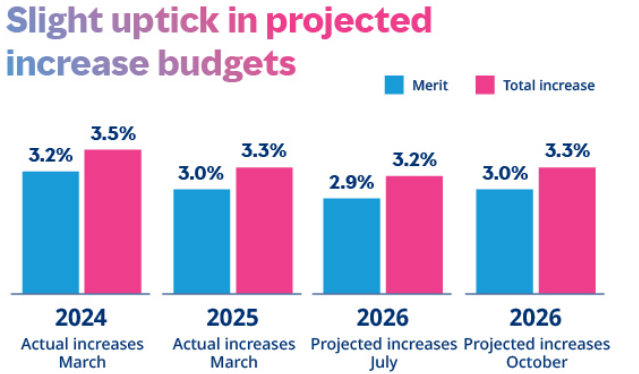
The poll of more than 460 Canadian employers found that companies expect to hold average merit increases at 3.0 per cent and total salary increases at 3.3 per cent for 2026, the same as what they actually delivered in 2025.
Those “total” figures include not only merit but also promotions, cost‑of‑living adjustments and other pay changes, according to the October 2025 QuickPulse CA Compensation Planning Survey.
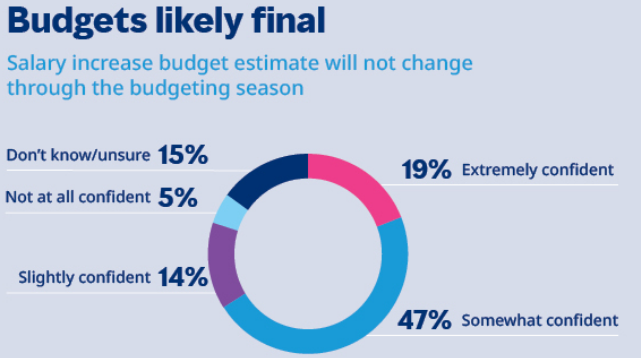
The turbulent economy is causing concern, with 53% of participants stating it will have moderate impact on compensation decisions, and another 13% reporting the impact will be significant.
Pay budgets flat, with sector-by-sector differences
However, pay plans diverge significantly by industry. The research shows that employers in consumer goods, non‑manufacturing and energy are projecting average total increases below the 3.3 per cent national benchmark. By contrast, chemicals and high‑tech organizations are planning notably larger budgets.
Average total increases in chemicals are projected at 4.0 per cent, and high‑tech employers expect to come in around 3.8 per cent, putting both sectors well ahead of the overall market, according to Mercer.
That gap highlights how pockets of stronger demand and skills shortages are still shaping pay decisions in some parts of the economy, even as most employers hold the line.
“If you are going to ‘trim the fat,’ you have to be very careful because you know that this is very temporary and any cuts you have may jeopardize your footing for after it ends,” said one Canadian expert in a previous article.
Equal distribution of salary budgets
The survey also suggests that, in practice, compensation strategy is not always aligned with stated priorities. While respondents say they want to prioritize skill and talent development (31 per cent), market competitiveness (28 per cent) and compensation adjustments (22 per cent), most are not concentrating pay on their most critical roles.
Fully 80 per cent of employers say they plan to distribute salary increase budgets equally across their organizations rather than directing more money to high‑demand areas or roles with acute market gaps, according to Mercer.
Promotion activity is also set to slow. Employers expect to promote about 8.7 per cent of their workforce in 2026, down from 9.8 per cent in 2025, with an average promotional increase of 9 per cent.
“Despite lingering uncertainty in the Canadian economy, companies are still spending money to attract and retain employees,” said Elizabeth English, senior principal in the firm’s Canadian career products business.
“Companies should consider allocating a higher percentage of their compensation budget increases to areas with skills that are in high demand to help address talent needs.”
And, in provinces such as Ontario, they should use part of their budgets to address internal equity issues as new pay transparency rules come into force, she said.
Other salary outlooks have included: