
Institutional investors who move to total portfolio approach can generate over 100 basis points, expert says
The total portfolio approach – also known as TPA - has now become a priority for Canadian institutional investors, as its principles are starting to reshape how defined contribution (DC) plans think about asset allocation, glide paths and the definition of success.
According to Dany Lemay, some studies, like one published from the Thinking Ahead Institute, have previously shown that those who move to a TPA approach generate 100–180 basis points more return than traditional strategic asset allocation (SAA) plans do at similar risk levels.
Lemay, who’s a managing director of investments at WTW, emphasized the outperformance doesn't come from picking better stocks or bonds. It comes from dismantling the rigid bucket-by-bucket structure that has governed institutional portfolios for decades and replacing it with a framework where every asset competes for capital across the entire fund.
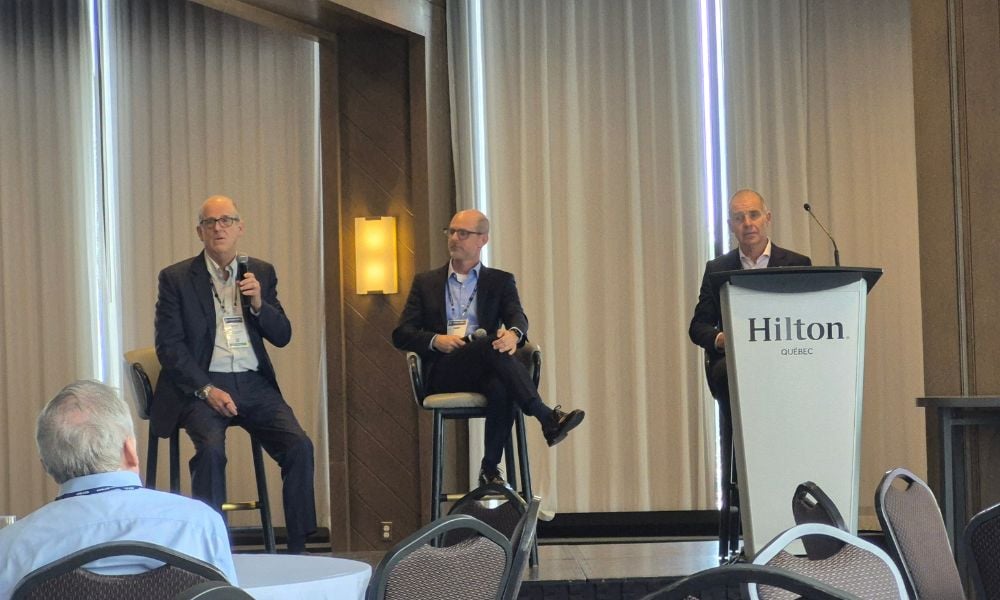
"It's really thinking about the whole portfolio, not just about buckets," said Lemay, during a Canadian Pensions and Benefits Institute (CPBI) Forum session, which took place in Quebec City this week. “As you have more of a TPA mindset, it's about going back to ‘What's my mission? What's ultimately my objectives? What are my key competitive advantages as an investor?’ Start the overall investment process with those in mind. Not only in the way that you set up the strategy, but obviously in the way you're going to monitor the strategy over time.”
Diversification at the total portfolio level
Risk management is another motivator, Lemay suggests, noting that under a traditional SAA, a plan or board might hold fixed percentage target allocations across equities, fixed income, infrastructure and real estate, check the diversification box and leave the portfolio untouched for several years. He cautions that surface-level diversification can be misleading.
"You might believe you're diversified, but you're not necessarily diversified at the total portfolio level because you haven't made that kind of risk management more realistically," he said, adding if underlying managers across all four buckets are chasing the same theme — AI-linked stocks, AI-adjacent bonds, data centre real estate — the fund carries concentrated exposure that a sleeve-by-sleeve review would never flag.
TPA also opens room to act on opportunities that rigid allocations lock out. For example, a plan stuck with a fixed 2.5 per cent emerging markets target, has no ability to tilt toward or away from the asset class for three to five years regardless of what the market is offering. That’s why he believes a TPA framework gives investment teams the latitude to be more dynamic — adjusting currency hedges, interest rate positioning or regional tilts — without veering into reckless tactical bets.
“Having an approach that's a bit more dynamic, but at the same time structured, I think, is where TPA is the best of both worlds, by providing more nimbleness to the implementation, but also a structured approach with clear goals and objectives from the board,” he noted.
Target date glide path meets TPA
For DC plans, James Robertson, Senior Portfolio Manager and Head of Multi-Asset Solutions, Canada, at Manulife Investment Management explained how his team has put the TPA framework to work through a revamped target date glide path. The approach starts participants at age 25 with heavy equity exposure to build balances, begins evolving the portfolio around age 42 at the point where investment returns start to dwarf contributions and lands at 50 per cent equities at retirement.
"Our modeling shows that with 50 per cent equities as well as the other portfolio construction components that we've got, you will actually continue to see balances grow post retirement," he noted.
The asset classes within the glide path aren’t static placeholders as Robertson noted the “glide path within the glide path”, noting Canadian large cap equities enter later because they carry the strongest inflation correlation among developed market equities. Global infrastructure earns its spot through downside capture and income protection, while high-yield bonds and emerging market debt function as equity-return substitutes with lower volatility but get phased out near retirement.
"We want to make sure that they've got sufficient balances and a portfolio construction that will mitigate that longevity risk as well as provide inflation protection. What we're doing on an ongoing basis is asking ourselves are these the right assets to have in this portfolio, what do we hope to accomplish by adding those assets and how do they actually work into the overall investor experience?" Robertson said.
Governance leads to TPA success
However, none of this works without the governance to support it as Lemay underscored adopting TPA is as much an organizational shift as an investment one, noting that it starts with governance. The board or pension committee has to own the decision outright, because a TPA portfolio can look markedly different from what peers are holding — and that divergence will be uncomfortable at times. If the people at the top haven't bought in before the process begins, the discomfort becomes a structural problem.
Delegation is also another critical component, Lemay noted, as a plan can’t run TPA under the old SAA decision-making model, where every manager selection or strategy change requires approval from a committee that only meets once or twice a year. The approach demands that boards set objectives and hand off implementation authority to investment teams with enough latitude to act.
“When you think of the total portfolio approach, it's truly all of the assets in the broader portfolio competing against one another and the overall team all aligned to make it a success,” he said. “It’s not the responsibility of one single team just focused on the tactical allocation. It's everyone's responsibility to achieve the overall objective.”


