
HOOPP’s head of plan services insists to continue fighting for fair pensions, even in retirement
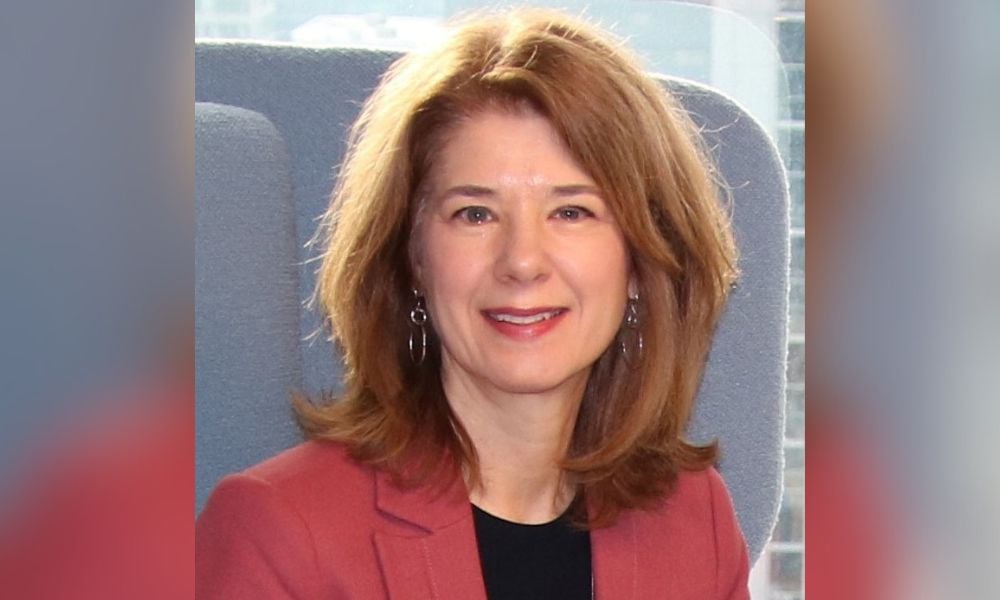
Ivana Zanardo didn't set out to spend her career in pensions. The eldest daughter of immigrant parents, she took a job at a municipality straight out of university because she simply needed work. But it didn't take long for the role - in pension and benefits administration - to grab hold of her.
After all, her parents, she noted, had no pension of their own.
“I quickly got a passion for pensions when you see the impact that it could have on people,” said Zanardo, head of plan services at the Healthcare of Ontario Pension Plan (HOOPP). “When you retire, you can't necessarily spend your money because you need to save if you do need it for health reasons. That was a big influence for me as well.”
Zanardo spent her first few professional years at the city of North York, and when the municipalities amalgamated in 1998, she carried on with the city of Toronto. Then, her scope widened. She gained exposure not only as an administrator for employees under the Ontario Municipal Employees Retirement System (OMERS) plan but also inherited five single-employer plans. That experience gave her a front-row seat to pension governance, funding mechanics, and the politics of pension committees and councillors.
But then Zanardo hit a roadblock.
“I knew that there wasn't anywhere within municipal government that I could progress to. I had gotten to the top of what I could do in the space that I had a passion for in my job," she noted. "So if I wanted to do more in the pension space, I had to leave."
A stint at OMERS followed, and then she landed at the Healthcare of Ontario Pension Plan (HOOPP), where she now serves in her current role. HOOPP's membership - overwhelmingly female, with a third working part-time and its focus on healthcare workers - made the move feel right.
"Just to be able to provide that retirement security to healthcare workers just is just extra special," she said. “I think we've done a lot of really good work to help healthcare workers.”
Zanardo will serve in her current position at least until the end of March when she will then step away and become someone who she herself has advocated for her entire career – a pensioner.
The pension gap, though, remains wide as Zanardo agrees the conversation has shifted over the course of her career. After all, pensions make the news more often now, she said, adding industry leaders continue to offer thought leadership through communication and more Canadians understand their importance. But awareness alone hasn't closed the divide.
"I think there's still lots for us to do," she said. "It's important for organizations to recognize how important it is for them to offer pensions for their employees, that it not only helps their employees with their financial security, with productivity, but it helps the organizations as well."
Zanardo argues that widening pension coverage starts with making sure people understand what a pension is and why it matters. When workers have the option to join a plan, employers need to explain its value in plain terms that feel relevant to their lives.
She also suggests governments have a role to play by being open to policy changes that make it easier and more flexible for employees to join workplace pension plans. Alongside that, she sees continued advocacy as essential.
There’s also the fact that many people are still focused on immediate financial pressures, not retirement decades down the line, Zanardo noted, particularly as rent, bills, and day-to-day costs tend to take priority, especially for younger workers.
She believes that helps explain why some part-time employees only realize much later that they could have joined a pension plan years earlier. And even when information is available, it doesn’t always land.
That’s why she emphasized organizations need trusted internal advocates who can keep reinforcing the message, and why communication about pension value needs to reach workers at every stage of life.
Despite defined benefit pension plans (and the model HOOPP falls under) often being touted as “the gold standard,” Zanardo suggests the decline in DB coverage may have somewhat levelled off. She underscored that the benefit of a DB pension goes well beyond the employee contributions going in because members can recover those contributions relatively early in retirement and then continue receiving stable income for many years after that.
She also suggests even if an organization isn’t moving straight to an ideal plan design, providing some form of retirement benefit is still a meaningful step up from offering nothing at all.
But she sees the bigger issue as one of communication. In her view, plans still need to do a better job of explaining their real value to members, many of whom are experts in their own fields but not in retirement planning.
Looking ahead, Zanardo underscores the biggest hurdle is getting employers to see a pension as an investment in productivity, well-being, and retention rather than just another line item on the budget. She acknowledged how there’s still healthcare organizations across the province that don't include HOOPP in their compensation packages, and she finds that difficult to square with the reality of the labour market. Community care organizations, hospices, and mental health providers that do come to HOOPP often arrive at the same conclusion on their own.
"They'll come to us and they'll say, ‘Well, we have to join HOOPP because it's hard to attract healthcare workers or nurses to our organizations, because they're going to the organizations that have HOOPP [as a pension plan],’" she said.
Some employers also push back on contribution rates, comparing them unfavourably to a group RRSP. Zanardo counters that HOOPP's rates have held steady since 2004 and the plan has delivered benefit improvements over that period. The value to the employee, she argues, is far greater than the sticker price suggests.
"Last year, the average pension that we were paying, it was $30,000 a year. They're modest pensions," she said, noting that most of these healthcare workers earn between $65,000 and $70,000 a year. “We should be providing them with retirement security,” she added.
As she prepares to step away, Zanardo sees two pieces of unfinished business. On the broader advocacy front, she wants to see more Canadians gain access to retirement security. Within HOOPP, her focus remains on service delivery that meets members on their terms. While the plan has invested in digital education tools and online resources, Zanardo underscored that technology should complement personal service, not replace it.
Regardless of who fills her role next, Zanardo emphasized the guiding principle should be keeping the member at the centre of every decision. She acknowledges the strength of HOOPP's investment professionals but also stressed that the organization's purpose ultimately comes back to helping members make informed choices and providing them with security in retirement.
As for her own next chapter, she has no intention of walking away from pensions altogether.
"I would love to stay engaged in the pension space. It's something I've been a part of my entire career," she said, noting she’s currently exploring ways to continue contributing, whether through work with other DB plans in the province or by joining a board.
"This is not the end of my work. It's a change in the road, and maybe a different way for me to contribute," said Zanardo.


