
CEO of HOOPP explains how 'total portfolio approach', infrastructure and organic expansion will ensure healthcare workers' pensions
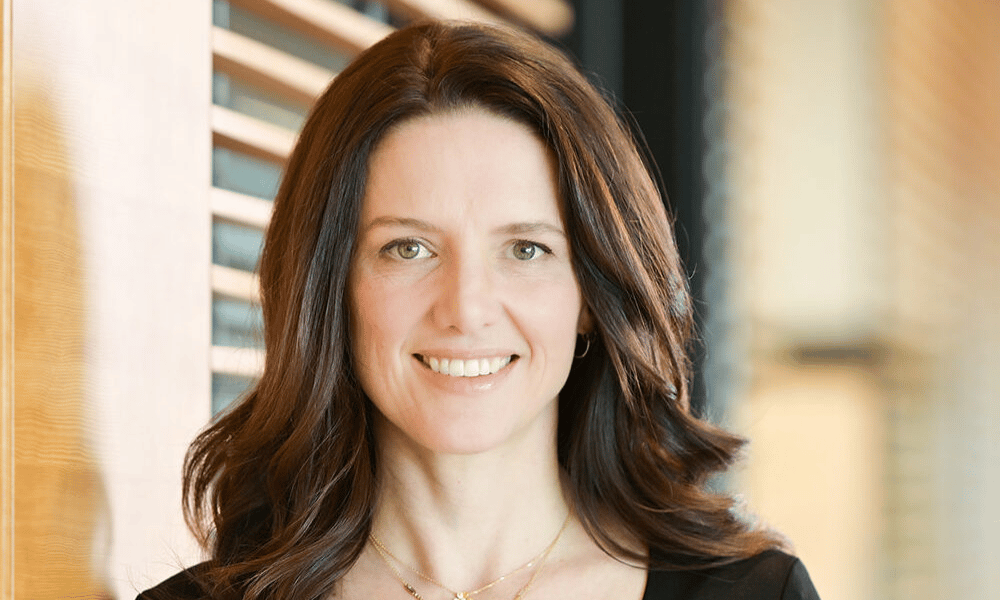
Six months into her role, the CEO of one Canada’s Maple 8 pension plans has had to face several economic and geopolitical challenges head-on.
But Annesley Wallace says she remains focused on her members. She believes their strategic plan is crucial to the fund’s long-term sustainability and most importantly, the financial security of nearly half a million healthcare workers across the province.
“We're facing extraordinary challenges in healthcare driven by demographics and increased longevity. Demand for health care is rising. The number of Ontarians aged 80 and over is expected to double by 2040 to avoid overburdening hospitals and ensure sustainable care delivery,” emphasized Wallace, CEO and president of the Healthcare of Ontario Pension Plan (HOOPP).
“The healthcare system is evolving and will continue to adapt and grow in home community and long-term care and the system will need to shift its focus toward decentralized and patient centered models. In parallel, HOOPP must continue to evolve to remain the pension plan of choice for Ontario's health care workers,” added Wallace, following a speech on Thursday.
To that end, the strategy for HOOPP moving forward hinges on their “total portfolio approach”, grounded in adaptability and integration, which Wallace underscored is designed to ensure the fund can be nimble and resilient across a more complex investment landscape.
This model abandons traditional asset-class silos in favour of a holistic view of the portfolio, enabling the team to respond quickly to market disruptions and geopolitical shocks, while positioning the fund to make the most of new opportunities, notably in infrastructure and sustainability.
Despite having more than half of its portfolio invested in Canada, HOOPP’s infrastructure exposure remains relatively limited. Yet, Wallace sees infrastructure as a strong fit for HOOPP’s long-term pension obligations. With the plan moving from a “liability-driven” to a “liability-aware” investing model, infrastructure has become an attractive hedge against long-dated liabilities, she noted.
In terms of specific sectors, Wallace underscored the decision to invest will be less about the type of infrastructure asset and more about how it's structured. However, HOOPP is open to a range of projects - from utilities to transportation - as long as the underlying business case is sound.
“It really depends more on the overall risk-return profile and the commercial models that underpin the infrastructure projects, more than it does the sector,” she said.
Path to growth is ‘organic’
Wallace believes HOOPP’s path to growth lies in steady, organic expansion. With a current annual membership growth rate of about 4.5 per cent, the pension fund is targeting 600,000 members by 2030, a five-year goal she believes is achievable without a dramatic overhaul.
“A lot of the growth that we have is organic growth,” Wallace told BPM. “We see that 4.5 per cent continuing into the future.”
Rather than relying on large-scale mergers or structural shifts, HOOPP is focusing on increasing participation from existing employers, particularly among part-time workers, and onboarding smaller healthcare providers, which she attributed to as “the fastest growing part of our employer group right now.”
Importantly, Wallace emphasized that as new members join, contributions begin flowing in immediately, allowing the plan to maintain its funding strength and support future benefit improvements. Despite the scale of the 2030 target, Wallace believes the fund is well-positioned to deliver, pointing to its investment capacity and the “fantastic team doing all the heavy lifting.”
According to Wallace, being based almost entirely in Toronto adds to HOOPP’s agility, helping align the organization and adapt quickly to changes. Still, she underscored how the strategy is firmly rooted in the basics of operation a pension plan.
“We need to pay pensions, make stable contributions, pay COLA [cost of living adjustment], and then hopefully be able to provide benefit improvements. We start there and as for the rest, we build around it," she told BPM.
A pension plan under pressure
Wallace also highlighted how the pension plan is zeroing in on both stability and relevance as it adapts to a healthcare sector under pressure. Earlier this year, SickKids became the final hospital in Ontario to join HOOPP, a milestone Wallace described as pivotal in solidifying the plan’s reach across the province’s entire hospital system.
“This means that every hospital across the province of Ontario now offers a HOOPP pension,” she said.
While defined benefit (DB) pensions were once the standard, many employers have moved away from them, opting instead for RRSP matching programs that don’t provide the same income stability in retirement. This has left more than half of working Canadians feeling unprepared to stop working, an issue Wallace said affects not just individuals, but families and communities as well.
“Today’s workforce is increasingly characterized by part-time and contract jobs, career breaks, shared financial responsibilities across diverse family structures and multiple employers over time,” said Wallace.
She views HOOPP as an exception to the trend, underlining that its scale, funded status, and long-term returns have made it one of the country’s most sustainable pension plans, Still, Wallace emphasized that a strong track record isn’t enough in today’s volatile landscape, citing the breakdown of past assumptions about stable markets, low inflation, and global cooperation, particularly that came with the shocks of 9/11, the 2008 financial crisis and the COVID-19 pandemic.
“We have no shortage of investment opportunities in order to make sure that we're deploying capital in the right way to earn the returns that we need for our members,” said Wallace.


