Fear of discrimination drives delayed treatment and mental health risks for Black workers
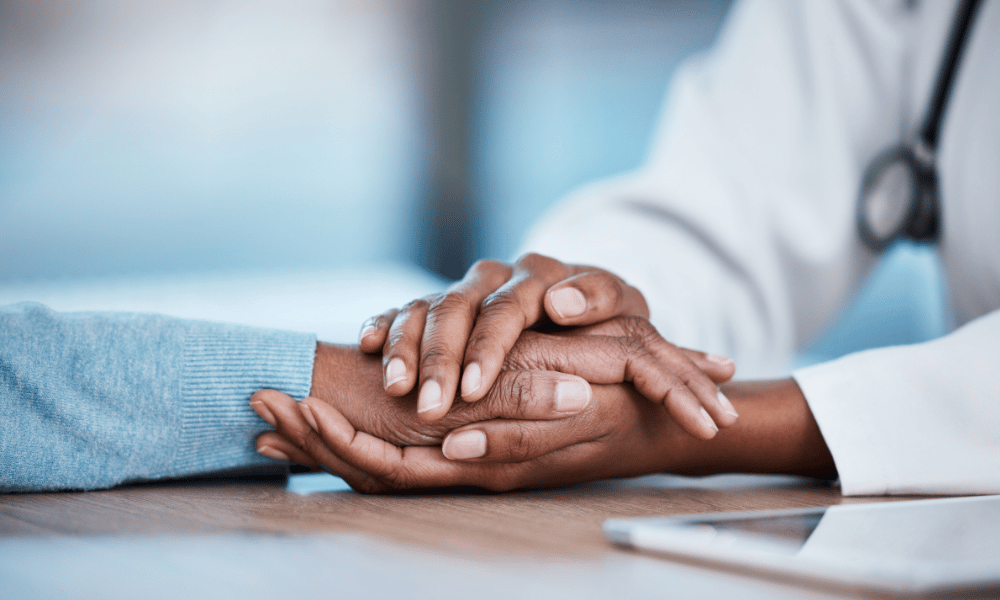
Almost half of Black women, girls and gender-diverse people in Canada have delayed or avoided seeking health care because they fear racial discrimination, which reports on a new national survey of experiences in the health-care system.
Global News reported that the Black Women’s Institute for Health released Voices Unheard: Healthcare Barriers and the Lived Experiences of Black Women in Canada, drawing on a survey of nearly 2,000 Black women, girls and gender-diverse people across the country.
Researchers gathered both numerical data and detailed accounts of how anti-Black racism shapes care.
Executive director and founder Kearie Daniel told Global News that the findings confirm long-standing concerns.
“Anecdotally we knew that Black women were having a differential experience,” she said, adding that “the reality is that in our society, data … numbers are power.”
Global News reported that Daniel sees dismissal as widespread in health care and especially severe for Black women.
“We know women in general feel dismissed,” she said, “but two-thirds of Black women feel dismissed.”
She added that providers often make assumptions about Black women’s pain, including “this idea that you can tolerate more pain.”
The report highlights six “critical areas of healthcare disparities.”
It points to medical conditions that disproportionately affect Black women, girls and gender non‑conforming people; Black maternal health and medical neglect; distinct mental health challenges; exposure to racial violence and abuse and higher PTSD risk; burnout and emotional fatigue in toxic workplaces; and racial discrimination that shapes Black girls’ and youth’s early experiences with racism and identity.
Some of the survey participants described being told they were “drug-seeking” when they reported pain, or being reported to child services because of assumptions about their parenting.
Other respondents recounted miscarrying in hospital waiting rooms and having caesarean sections where doctors forgot to provide freezing for the mother.
Daniel told Global News that “some of the stories are so horrific” that researchers reviewing them were provided with mental health supports.
Mental health emerged as a major pressure point.
The survey found that mental health was the top chronic illness diagnosed among participants, at 15.8 percent.
Statistics Canada puts the share of women nationally who experience suicidal thoughts at four percent, compared with 27.4 percent of Black women in the survey who said they had contemplated self-harm.
One participant, Aaya Musuya, told Global News she “always” feels Black women “start at the back of the line,” saying, “I’ve lived it myself.”
She described significant challenges accessing care at clinics and emergency rooms, including waiting 22 hours to see a doctor during an emergency.
She said she sees “a disconnect in accessing and fully utilizing the services.”
Global News said Musuya arrived in Red Deer from Uganda six years ago and was surprised by how hard it was to navigate the health-care system.
She said navigating health care is “working through a system,” not simply visiting a doctor.
The complexity sometimes stops her from seeking care. When she does see a doctor, she said she arrives overprepared, worried they will not understand her or will “just give me a bunch of drugs to cover up my symptoms.”
Musuya said she felt more at ease with a doctor “who looked like me,” because she believed they would better understand her experience and her symptoms.
She said she is also teaching her two daughters “how to better advocate for their own health,” because, in her words, going to the doctor “never seems easy.”
Daniel rejected the idea that Canada is significantly better than the United States on these issues, saying, “We’ll compare ourselves to the US and say, ‘We’re not as bad as them,’… That’s not true.”
The report makes 70 recommendations for different levels of government, including calls to declare anti-Black racism a public health emergency and to create a national Black health equity strategy.
As Daniel told Global News, “now that we have the data, the next step is action” and “there’s no excuse anymore.” She said that by “fixing the system” for people most impacted by oppression, “we’re fixing the system for everybody.”