
Canada's inflation picks up in September on higher grocery and rent costs

Canada’s annual inflation rate edged higher in September, rising to 2.4 per cent from 1.9 per cent in August, driven by firmer grocery prices and a smaller decline in gasoline costs, according to new data from Statistics Canada.
While still within the Bank of Canada's 1-3 per cent target range, the uptick may pose new challenges for monetary policy as households continue to feel pressure from persistent price growth in essential categories.
Excluding gasoline, which posted a 4.1 per cent year-over-year decline in September compared to -12.7 per cent in August, core inflation climbed 2.6 per cent, up from 2.4 per cent the previous month.
“The smaller year-over-year decline was largely due to a base-year effect,” Statistics Canada noted, as September 2024 saw a sharp month-over-month decline in oil prices that skewed comparisons.
“In September 2025, gasoline prices rose 1.9 per cent on a monthly basis following refinery disruptions and maintenance in the United States and Canada, which put upward pressure on prices,” StatsCan added.
Courtesy of Statstics Canada
Grocery prices accelerate
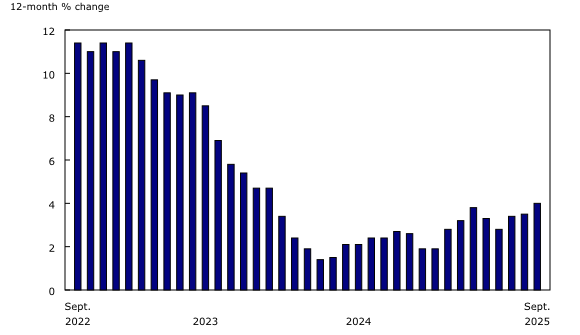
One of the largest contributors to inflation in September was food as grocery prices rose 4.0 per cent annually, up from 3.5 per cent in August. The gains were driven by fresh vegetables, which flipped from a 2.0 per cent decline in August to a 1.9 per cent increase in September, and sugar and confectionery products, which surged 9.2 per cent accelerating from 5.8 per cent.
The trend marks a continuation of grocery price inflation, which has been climbing steadily since hitting a low of 1.4 per cent in April 2024. Items like fresh or frozen beef and coffee were key contributors to this rise, “in part due to lower supply,” the government agency added.
Rent, travel prices also edge higher
Nationally, rent prices jumped 4.8 per cent year over year in September, following a 4.5 per cent gain in August. The increase was especially pronounced in Quebec, where rents soared 9.6 per cent, led by pressures in the Montréal market. British Columbia saw slower rent growth at 1.8 per cent, helping to slightly temper national figures. Prince Edward Island was the only province to post a rent decline, down 2.2 per cent annually.
Meanwhile, travel tour prices, typically down in September, rose 4.6 per cent month over month, contributing to a slower annual decline of -1.3 per cent from -9.3 per cent in August. The rise was attributed to higher costs for destinations in Europe and select US cities, where major events boosted hotel prices.
With price pressures showing signs of stickiness in areas like housing and groceries, policymakers will be watching closely ahead of next week’s Bank of Canada rate decision. While overall inflation remains relatively contained, persistent increases in core categories could complicate efforts to begin cutting interest rates in the near term.


