
Gold has risen about 18% this year amid heightened geopolitical and economic uncertainty
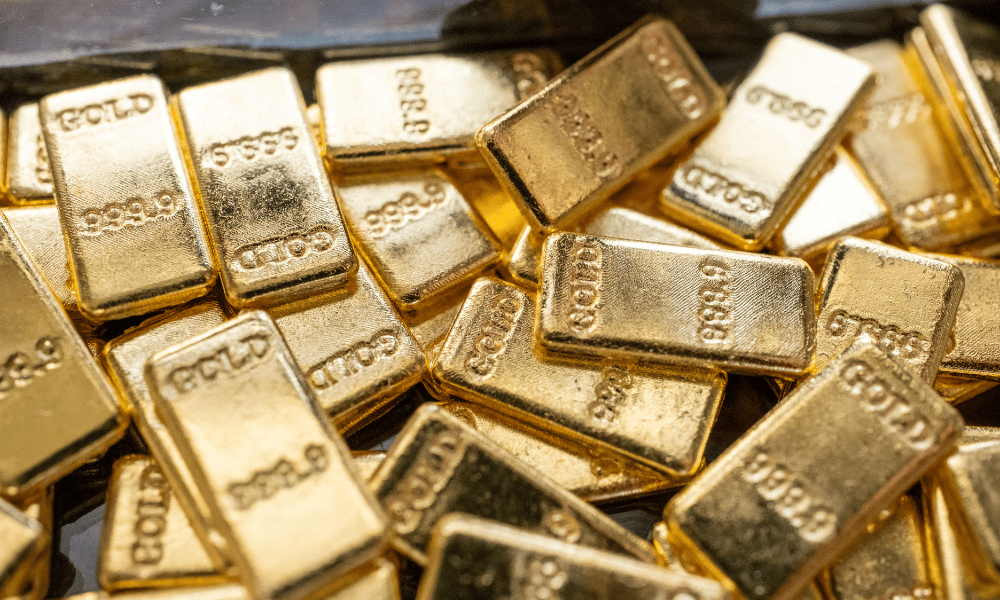
Gold is holding near record levels even after violent swings, as investors crowd into bullion on the back of a widening US–Iran war and shifting expectations for US interest rates.
Reuters said spot gold climbed 0.7 percent to US$5,120.71 per ounce on Wednesday after a drop of more than 4 percent on Tuesday, while US gold futures for April delivery ended 0.2 percent higher at US$5,134.70.
Spot prices then climbed 1 percent to US$5,128.39 by early Friday, with April futures up 1.2 percent at US$5,137.50.
Even so, the metal has lost roughly 3 percent so far this week and looks set to snap a four‑week winning streak as fading rate‑cut prospects and higher energy prices stoked inflation concerns, CNBC said.
Analysts tie that resilience to geopolitics and macro fundamentals.
Peter Grant, vice president and senior metals strategist at Zaner Metals, said “the macro‑fundamental factors remain broadly supportive of gold” and that “as long as the war with Iran is ongoing, that's going to remain supportive as well,” according to Reuters.
He added that “there is risk that volatility continues” but said, “I remain bullish and think we will see new all‑time highs.”
The conflict has escalated rapidly.
The US–Iran war “widened sharply” after a US submarine sank an Iranian warship off Sri Lanka, killing at least 80 people, and NATO air defences destroyed an Iranian ballistic missile fired towards Turkey, Reuters reported.
On the sixth day of the war, Iran launched a series of attacks on Israel, the United Arab Emirates and Qatar, while a US-Israeli military campaign that began on Saturday has struck targets across Iran and triggered Iranian retaliation.
US Defence Secretary Pete Hegseth and Admiral Brad Cooper, who leads US forces in the Middle East, said the United States has enough munitions to continue its bombardment indefinitely.
That backdrop is fuelling safe‑haven demand.
CNBC reports that Kelvin Wong, senior market analyst at OANDA, sees persistent “geopolitical risks” and the risk of “escalation” as key supports for gold.
He cited comments from Iran’s foreign minister that Iranian forces are ready for a US or Israeli ground invasion and said this “is actually supporting gold price.”
Bullion, traditionally viewed as a hedge against uncertainty and inflation, has risen about 18 percent so far this year and has notched successive record highs amid heightened geopolitical and economic uncertainty.
Currency and rate dynamics are adding to volatility.
The dollar pulled back on Wednesday after sharp gains the day before, providing some support to gold by making greenback‑priced bullion less expensive for other currency holders, Reuters reported.
According to Bloomberg, gold fell more than 1 percent earlier in the week as a stronger US dollar and higher US Treasury yields pressured prices.
The outlet said the US‑Israeli war with Iran lifted oil and caused traders to cut back on expectations for US Federal Reserve rate cuts.
On the data side, ADP’s national employment report showed US private payrolls increased more than expected in February, though the prior month’s figures were revised sharply lower, according to Reuters.
Separate US data showed initial jobless claims were unchanged last week while layoffs dropped sharply in February.
Investors now await the US employment report for February, with nonfarm payrolls expected to have increased by 59,000 jobs after a 130,000 gain in January, based on a Reuters survey.
Near term, Wong expects volatility, highlighting key support at the US$5,040 level and resistance at US$5,280; he said prices could rise up to US$5,448 if that resistance breaks.
Other precious metals are moving in tandem.
Spot silver rose 1.3 percent to US$83.07 per ounce on Wednesday after falling more than 8 percent in the previous session, then climbed 2.6 percent to US$84.26 on Friday.
Spot platinum added 2.8 percent to US$2,141.71 and later gained nearly 1.6 percent to US$2,154.60, while palladium rose 1.2 percent to US$1,667.51 and then 2.2 percent to US$1,665.21.
The World Platinum Investment Council said the global platinum market is heading for its fourth consecutive annual deficit in 2026, Reuters reported.


