
Investment values fell 32%. Growth-stage deals dropped 29%
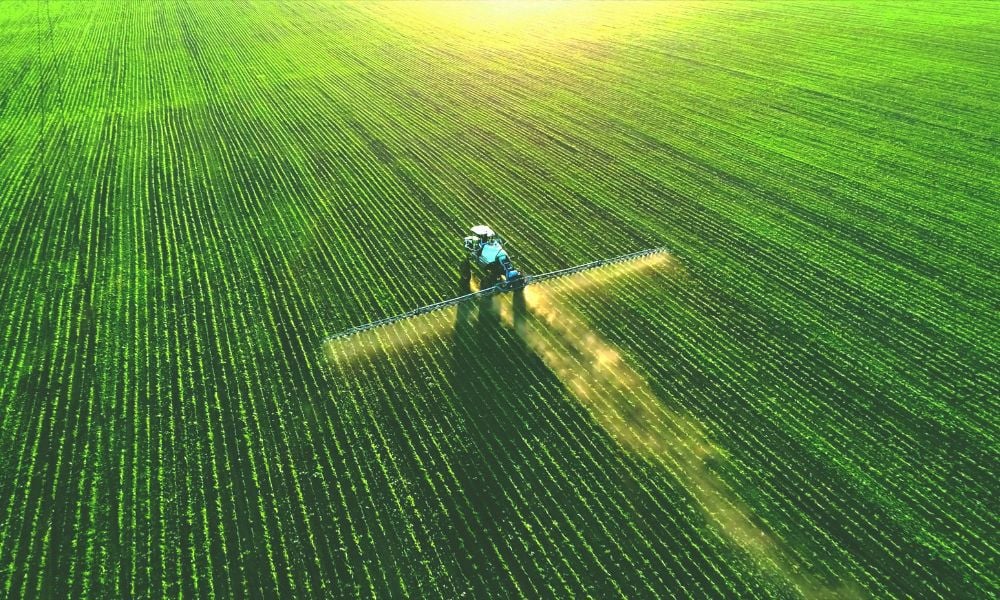
Agricultural innovation in Canada drew an estimated $270M annually in 2021, and a new coalition convened by Farm Credit Canada aims to mobilize up to $7B by 2030 to increase that capital base.
The $7B figure combines a May 2025 commitment by FCC Capital to deploy $2B by 2030 with a new pledge from more than 20 investment organizations prepared to allocate up to $5B over the same period. FCC Capital is on track to deploy $325M in new capital in its fiscal year ending March 31, 2026.
The scale of the pledge stands out against a backdrop of contraction in Canadian agri-food growth capital. According to RBC Thought Leadership’s February 2026 report Seeding Scale, investment in Canadian agri-food companies is lower than a decade ago, with values down 32% and deal count down 29%. Over the past five years, agri-food captured about 4% of total growth capital invested in Canada and accounts for less than 2% of federal government-backed growth, venture and infrastructure funds.
The same report estimates that aligning agri-food growth capital with the sector’s contribution to GDP would require about $13B in additional investment by 2030. It also documents a 450% drop in deal count between early and growth stages over the past three years, illustrating what it describes as a deep gap in follow-on capital.
Public agricultural R&D spending has also declined. Reporting by the Canadian Agri-Food Policy Institute shows public ag R&D fell from roughly $0.86B in 2013 to $0.68B in 2022, placing Canada last among the top seven OECD agricultural producers. Research intensity stands near 2% of agricultural GDP, compared with about 4.5% in much of Europe and high-income Asia.
Tyler McCann of CAPI said, “Increasingly, the evidence says yes,” when asked whether Canadian ag innovation is in crisis. Seeds Canada policy director Lauren Comin said, “Our regulatory system, particularly for seed, is extremely risk-averse,” adding, “In some cases, it discourages innovation outright.”
RBC’s report also notes that Canada-based companies attracted about 3% of global agri-food growth capital between 2023 and 2025, compared with 33% for the U.S. and 8% for India. It highlights structural barriers including fragmented capital pools, limited growth-stage funds above $30M, and institutional investors’ preference for asset-light sectors.
Institutional capital participation remains uneven. The report cites data showing Public Sector Pension Investment Board allocates roughly 77% of its natural resources portfolio to agri-food, yet only 9.3% of that exposure is in Canada, with 43.3% in Oceania, primarily Australia.
Against that context, FCC said coalition capital will target innovative Canadian businesses, construction and project finance opportunities, and early-stage ag-tech companies.
Darren Baccus, executive vice-president, Agri Food, Alliances and FCC Capital, said, “Canada's farmers, producers, and processors are already among the most innovative and entrepreneurial in the world.” He added, “By bringing this coalition together, we're crowding in the capital needed to scale breakthrough solutions and deliver the next generation of innovation directly to Canadian producers. This work strengthens our food security at home while accelerating Canada's rise as an ag and food superpower. FCC remains rigorously focused on supporting Canadian farmers and ensuring our work delivers tangible, measurable impact for them.”
Minister of Agriculture and Agri-Food Heath MacDonald said, “Agriculture is one of the most important and investable sectors of our economy.” He added, “This landmark investment will strengthen Canada's leadership in agriculture and agri-food innovation, while charting a course for long-term growth, competitiveness, and resiliency for generations to come.”
The effectiveness of the $7B target will depend on whether capital reaches the growth stage where Canadian agri-food companies have historically faced the steepest constraints, according to data compiled by RBC Thought Leadership.


