Opening 5% of public assets to pensions could unlock $25–$50 billion in infrastructure cash.
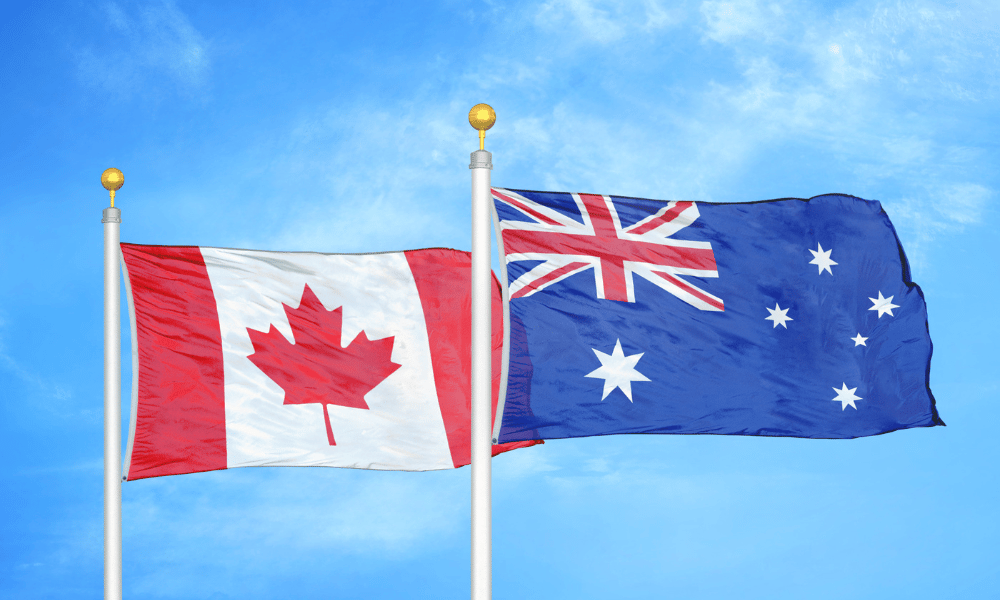
Canada’s pension funds see tens of billions of dollars in potential deals at home – but politics, fragmented ownership and policy risk still block the kind of “asset recycling” that reshaped Australia’s infrastructure market.
According to the Financial Post, Mark Carney’s first budget earmarked $315bn for infrastructure as part of $280bn in capital investments and incentives meant to mobilize more than $1tn from public, private and institutional partners.
For large plans, the most promising channel is asset recycling: governments sell or lease mature, cash‑generating assets such as airports, toll roads and power systems to institutional investors, then reinvest the proceeds in riskier priority projects.
Bank of Nova Scotia economists said opening just 5 percent of Canadian government‑owned infrastructure to private capital could unlock $25bn to $50bn, while a more ambitious program could raise more than $100bn.
They also estimated that about half of Canada’s $470bn in government‑owned infrastructure – roads, rail, bridges, ports, airports, utilities and pipelines – would suit private investors such as pension funds.
Yet Canada has done far less large‑scale privatisation than peers.
As per the Financial Post, Canadian plans hold a smaller share of domestic infrastructure than funds in the UK, Europe, the US and Australia.
When Australian governments launched a A$23bn asset recycling push in the mid‑2010s, Canadian pensions “lined up to buy,” including electricity transmission networks, ports and the WestConnex toll road in Sydney.
The Caisse de dépôt et placement du Québec and the Ontario Municipal Employees Retirement System, with $517bn and $145.2bn in assets at the end of December, both joined Australia’s program, reported the Financial Post.
In 2015, the Caisse joined a consortium that paid $9.9bn for a 99‑year lease on TransGrid, which owns and operates the New South Wales transmission network serving Sydney and Canberra.
By mid‑2018, the Canada Pension Plan Investment Board alone had $11bn invested across Australian infrastructure, real estate, and public equities.
Those ties deepened this month.
According to the Financial Post, all of Canada’s globally focused pension giants – the Maple 8 – signed the Canadian‑Australian Pension Funds Investment Initiative with major Australian superannuation funds while Carney visited Australia.
The pact targets policy barriers and aims to unlock investment in both directions, with a particular focus on infrastructure.
A senior pension official told the Financial Post that Ottawa was “in the loop” as the initiative formed and supports it, in part because of Australia’s record with asset recycling.
At home, the politics remain tougher.
The sale of Ontario’s Highway 407 in 1999 still shapes debate.
The 108‑kilometre toll road remains largely in private hands, with CPPIB now a major shareholder and the Public Sector Pension Investment Board buying a 7.5 percent stake last year.
The original deal is still controversial enough that Ontario introduced legislation in 2024 to ban new toll roads and remove user fees from a provincially owned section of the 407, while Premier Doug Ford has criticized the sale and even mused about buying it back.
Despite that legacy, Jo Taylor, chief executive of the Ontario Teachers’ Pension Plan Board, told the Financial Post that his fund would “prioritize” infrastructure investment in Ontario and sees more opportunities there than at the federal level.
He pointed to nuclear power generation, electricity transmission and mining as live areas for discussion with the province.
Taylor said asset recycling appeals to institutional investors because “the concept of a built project to fund is easier than a to‑be‑built project,” especially in asset classes where they already have experience.
Airports sit at the centre of that conversation.
Carney’s first budget revived a decade‑old idea that Ottawa could sell some of the airports it owns, many operated by non‑profit airport authorities, reported the Financial Post.
Taylor called Toronto Pearson and Vancouver “the two choices really that you could start with,” and noted that while Teachers’ sold its last global airport holding last year, it has decades‑long experience in the sector.
He said many investors have raised airports in talks with the Carney government, suggesting strong domestic and international interest if assets come to market.
Stephen Poloz, former Bank of Canada governor, wrote in the Financial Post that the Canadian‑Australian pension pact may signal more openness to airport deals and other asset recycling to fund priority projects, but said it is governments, not pension funds, that “need to be persuaded.”
Alberta Investment Management Corp. director Jim Keohane added that Canada’s patchwork of federal, provincial and municipal ownership makes it “almost impossible to replicate” Australia’s model, because sale proceeds may not flow back to the jurisdictions that give up control.
For Sebastien Betermier of McGill University’s Desautels Faculty of Management, some form of asset recycling “would flow naturally” from the Carney government’s infrastructure push and the Canadian‑Australian pension pact, as reported by the Financial Post.
He pointed to the Sydney Metro, funded from recycling proceeds, and said Canada has “much to learn” from New South Wales on how to do asset recycling well.