Canadian funds weigh India returns as Carney pursues $2.6 billion uranium deal and trade pact
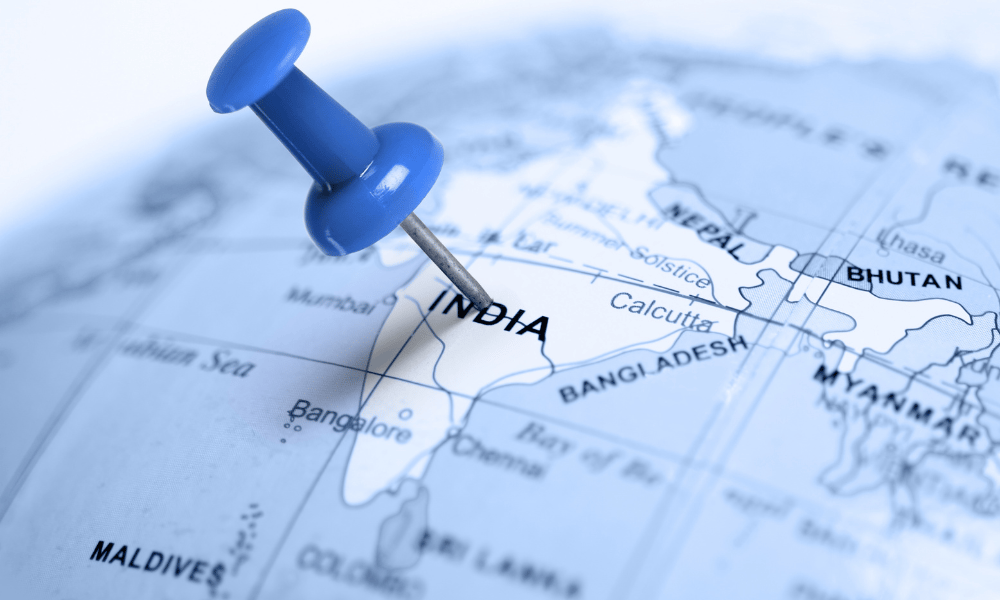
Canada is doubling down on India as a growth market even as it sidesteps an unresolved political killing and sharp diaspora tensions — and Canadian pension funds are now firmly in the middle of that bet.
According to the Prime Minister’s Office, total direct and indirect Canadian investment in India surpassed $110bn in 2024, and Prime Minister Mark Carney used his first bilateral visit to Mumbai and New Delhi to “catalyse new investment in Canada” and expand two-way flows.
He travelled with cabinet members, parliamentarians and senior executives from the nine major Canadian pension funds, meeting business leaders across technology, manufacturing and energy with a combined market capitalisation of about $600bn.
The most tangible outcome for long-term capital is in energy.
As per the Prime Minister’s Office, Canada and India launched a new Strategic Energy Partnership covering LNG, LPG, uranium, solar and hydrogen.
The centrepiece is a “landmark $2.6bn agreement” between the Government of India and Saskatoon-based Cameco to supply nearly 22m pounds of uranium for nuclear power generation from 2027 to 2035.
The New York Times reported that the uranium deal is valued at about $2.5bn over that period.
The Prime Minister’s Office said the leaders welcomed two MOUs to deepen co‑operation on critical minerals and energy and to expand clean energy collaboration in solar, wind, biofuels and hydropower.
They also agreed to “intensify engagement on LPG” to secure Canada’s first long‑term LPG arrangement with India.
On trade, Carney and Indian Prime Minister Narendra Modi confirmed that Canada and India will conclude a Comprehensive Economic Partnership Agreement (CEPA) this year, after a meeting of chief negotiators in New Delhi and the signing of Terms of Reference.
Ottawa said CEPA will support its goal to more than double two-way trade to $70bn by 2030.
The New York Times reported that Carney estimated a broader trade deal would roughly double trade to about $50bn by 2030, compared with about $900bn in annual trade between Canada and the United States.
The Prime Minister’s Office said the visit produced more than 10 commercial agreements worth over $5.5bn, expected to create thousands of careers in Canada, boost bilateral investment and build the foundations for increased exports to India.
It also said Canada’s new government has helped secure $85bn in global investment agreements in the last 10 months.
On the corporate side, HCL Technologies, India’s third-largest IT services firm, will expand its operations in Canada and increase its workforce by 75 percent by 2030, creating thousands of high-paying careers.
Technology and space also feature in the partnership.
The Canadian Space Agency and the Indian Space Research Organisation agreed to co-operate on Earth observation and intend to explore joint initiatives on space exploration and quantum technologies, using space-based technologies to support innovation and disaster resilience.
An MOU under the Australia-Canada-India Technology and Innovation Partnership will formalise “strengthened collaboration on the development and deployment of AI” and industry co-operation.
All this unfolds against a fraught political backdrop.
About two and a half years ago, Justin Trudeau publicly asserted that “agents of the government of India” had gunned down Canadian citizen and Sikh activist leader Hardeep Singh Nijjar in British Columbia in a politically motivated attack.
The New York Times reported that the allegation led both countries to expel diplomats and left relations “largely frozen.”
When Carney met Modi in New Delhi, The New York Times said there was no mention of that charge or the diplomatic rupture, beyond a vague reference to “transnational repression” in a Canadian government statement.
Canadian officials have said over the past three years that there was credible evidence of India’s involvement in targeting Sikhs in Canada, but Canada has not taken formal action against Indian officials.
Three Indian nationals have been charged in connection with Nijjar’s killing, and Canadian government lawyers are seeking in court to withhold some evidence on the basis that its release “would be injurious to international relations and national security,” the paper reported.
The New York Times said there are about two million Indians in Canada and that Canada hosts the largest population of Sikhs outside India.
It reported that the unfreezing of relations has been largely welcomed by many in the Hindu community, while provoking criticism and dismay among many Sikhs and Muslims.
Prabjot Singh of the Sikh Federation argued that officials are “completely sweeping it under the rug in pursuit of trade ties.”
Despite this, the Prime Minister’s Office said Canada and India will increase defence co-operation, including maritime security, and advance bilateral co-operation on security and law enforcement, focusing on the illegal flow of drugs, “particularly fentanyl precursors,” and transnational organised criminal networks.