
Earlier Dumai rulings may steer whether Hudson's Bay staff or creditors benefit from the surplus
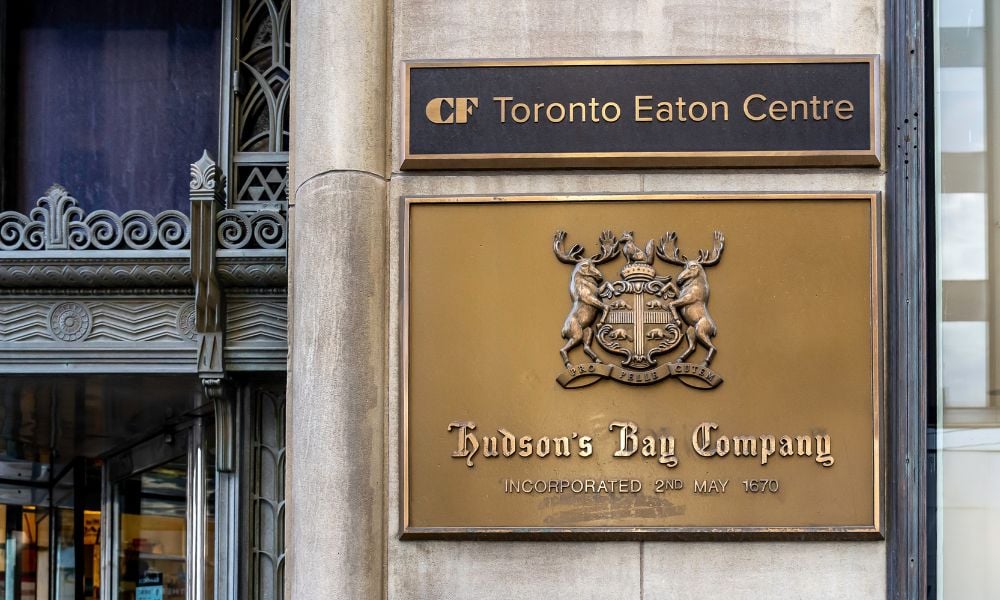
A nearly $180m pension surplus at Hudson’s Bay Co. (HBC) is shaping up as one of the most consequential surplus fights in recent memory for former employees and creditors alike.
According to the Toronto Star, HBC’s wound‑up registered pension plan still holds substantial excess assets after allowing for all expected benefit payments.
The plan, created in 1961, was later merged with three others: the Dumai Plan, an executive plan and a Zellers Inc. pension plan.
The Dumai Plan originally covered former Simpsons employees and later expanded to include certain Zellers and Kmart staff.
As of 31 December 2024, the plan had about 4,000 active and inactive members with defined benefit entitlements and roughly 17,000 active and inactive members with defined contribution entitlements.
A source familiar with the file told the Star they expect eligible pensioners to receive at least some portion of the surplus, calling it a “windfall” beyond full pension benefits and “a nice additional payment” that workers “weren’t necessarily expecting.”
The source framed the issue as “just a question of who is entitled to what percentage.”
At the same time, HBC has stated in court documents that it is “asserting a claim of an interest in the pension surplus for the benefit of its creditors.”
The Star reports that, if available, the surplus will likely help repay senior creditors Restore Capital and Pathlight Capital, as well as landlord Cadillac Fairview, who together are owed a few hundred million dollars.
The Star also notes that the roughly $180m surplus exceeds any proceeds HBC has realized from selling store leases, its royal charter document (which sold for $18m to the Thomson and Weston families), its art collection and its intellectual property, which Canadian Tire bought for $30m.
Global News reports that an Ontario court has extended HBC’s stay from creditors to 30 June, after it was previously set to expire on 31 March.
A stay, Global News notes, is a standard feature of creditor protection that prevents new lawsuits or debt‑recovery actions.
HBC lawyer Ashley Taylor told the court the extended stay will allow the retailer to assist with auctions of its art and artifacts, distribute hardship funds to former staff and prepare for a future hearing on the pension surplus.
The Financial Post reports that Judge Jessica Kimmel approved the stay extension and cited court documents referring to “pension surplus matters as applicable.”
The Post notes that, in February 2026, an Ontario court approved a $250,000 hardship fund for former employees and retirees, drawing on a $9.9m Zellers trust and about $1.6m in Manulife reserves.
The surplus fight builds on long‑running litigation around the Dumai and Simpsons‑related plans.
A lawsuit brought in the 2000s by former Simpsons employees alleged HBC diverted about $111m from the original Simpsons plan to help fund a separate defined contribution plan for Zellers and Kmart staff.
In 2007, a judge ruled HBC could use surplus to meet obligations to that broader DC group while the plan remained active, but also held that former Simpsons employees would be entitled to any remaining surplus if the plan were ever wound up.
In 2011, an Ontario court dismissed a cross‑appeal from HBC and held that the Dumai plan documents created “an irrevocable trust, over all of the assets in the pension trust fund, for the exclusive benefit of the employees,” reported the Post.
Other case law cuts the other way.
According to the Toronto Star, in a 2008 case involving HBC workers transferred to North West Company after a 1987 sale, the Supreme Court of Canada found employees had no rights to surplus because the original plan text expressly limited them to receiving pension benefits.
Pension lawyers Level Chan of Stewart McKelvey and Susan Philpott of Goldblatt Partners LLP told the Toronto Star that entitlement to any surplus hinges on the original plan and trust language and often means digging through decades of documents.
Philpott said it involves “a complicated analysis of the history of the plan,” including who the surplus terms were designed to benefit.
Chan added that retirement payouts and plan design also shape who benefits, with defined contribution members generally excluded from any defined benefit surplus.
Stakeholder pressure is mounting.
“Unifor members and retirees have a clear right to share in the pension surplus, and Unifor will be advocating on their behalf to assert this right as this matter proceeds,” said Unifor national president Lana Payne.
The Star also reports that some Dumai plan retirees launched a class action last June seeking surplus from the wind‑up, arguing prior rulings entitle them to assets now held by plan administrators and trustees.
The application, filed by Koskie Minsky LLP, stated that “HBC is not paying severance pay and other amounts that it owes to the terminated employees and retirees, causing many hardships.”
After HBC filed for creditor protection last March with $950m to nearly 1,900 creditors, Hudson’s Bay began consulting secured lenders and court‑appointed monitor Alvarez & Marsal on a process to address the pension surplus.
The Star and the Financial Post both reported that lawyers for HBC and Alvarez & Marsal did not respond to requests for comment.


