
USMCA uncertainty is now the biggest risk to Canada’s rate outlook, argues Soami Kohly
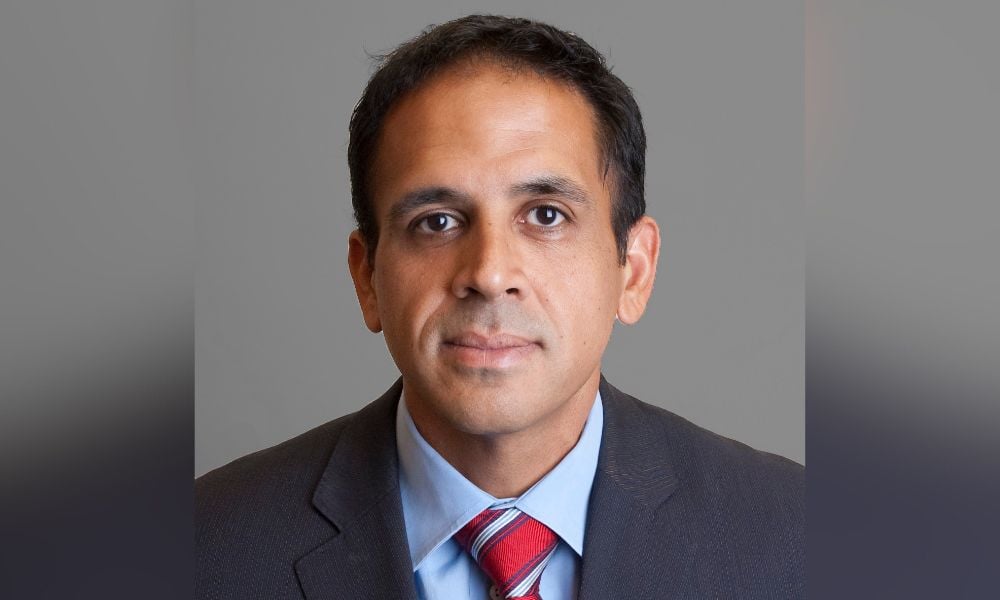
The Bank of Canada’s next move on rates is less about surprises and more about endurance, with policy expected to sit tight unless the economy buckles under a full-blown downturn, according to MFS Investment Management’s Soami Kohly.
For its final meeting of the year, the BoC’s rate is going to stay the course because as policymakers have already signalled, they wouldn’t be cutting any further this year, argues Kohly.
“They essentially told us at the last meeting that they were done. And it would take a pretty big decline in the economy like a recession, that's my interpretation,” said Kohly, fixed income portfolio manager and investment officer at the investment firm. “For them to get back into cutting rates, it's really the fiscals’ responsibility to fix the issues that we have because some of them like the trade issues, can’t be addressed by monetary policy.”
Kohly believes nothing in the recent data justifies a change in course from the Bank of Canada, noting there’s been no renewed, persistent surge in inflation and no collapse in employment; in fact, the labour market has remained relatively strong.
Given that backdrop, he suggests the central bank will stay on hold unless the economy tips into recession. Looking ahead, he thinks the next adjustment in policy is more likely to be a rate hike than a cut, and even that would be a distant prospect, probably not occurring until late 2026 at the earliest.
“It feels weird to say this given all the noise going on, but economic growth should be good for the next 12 to 18 months, based on two macro factors. One, the impact of past cuts from the Bank of Canada continuing to filter into the economy. And two, we now have a Federal Reserve in the US that's easing rates, which also should be supportive for global growth, which Canada should benefit from,” noted Kohly.
According to Kohly, multiple layers of fiscal support are now working in Canada’s favour. Notably, the recent federal budget, more expansionary provincial budgets, and additional stimulus expected from the United States all point toward stronger demand.
He believes when governments step up spending while interest rates are moving lower globally, he sees that as a broadly supportive backdrop for growth. On that basis, he expects Canadian economic activity to hold up well over the next year to year and a half.
If that outlook proves right, he questions why the Bank of Canada would keep its policy rate anchored at the bottom of its neutral range, since a healthier economy should be able to tolerate somewhat higher borrowing costs, potentially prompting a gradual move toward the middle of that neutral band.
The main threat he highlighted to this otherwise constructive scenario is the uncertainty surrounding trade, particularly the ongoing issues around existing agreements and the looming renegotiation of the USMCA, which could disrupt confidence and alter the growth trajectory.
Chief to that, Kohly sees the early signals from Donald Trump on USMCA as standard hard‑line opening tactics rather than a genuine surprise. What matters now, in his view, is not the rhetoric itself but the uncertainty it creates, which he expects to be intense while negotiations unfold.
He thinks that uncertainty will have two major albeit conflicting economic effects. In the near term, it could actually pull activity forward, noting he expects companies, households and cross‑border traders to accelerate orders and shipments to get ahead of any potential new tariffs or trade barriers. That rush to front‑run possible changes could artificially boost growth in the first half of the year, even if underlying demand is not truly strengthening.
For the BoC, that dynamic complicates the job of reading the economy, emphasized Kohly, adding policymakers will need to distinguish between temporary spikes driven by precautionary behaviour and more durable trends in output and demand.
The second effect he acknowledged is more damaging and plays out over a longer horizon. He expects the same uncertainty to make firms more cautious about committing capital to new projects, despite generous tax incentives.
According to Kohly, the federal budget’s 100 per cent expensing provision was designed to encourage investment by letting businesses write off eligible spending immediately, and ongoing projects are still likely to use it. However, he thinks many companies considering expansions or new ventures will delay until they have a clearer view of how trade rules and regulations will look, blunting the policy’s impact.
From his perspective, that hesitation undermines a key pillar of the fiscal strategy, which was meant to take over from monetary easing and push private‑sector investment higher at a time when interest rates are already doing their part. He sees that as a clear negative for the medium and long term rather than a major drag on the 2026 growth numbers specifically.
Today, he sees the GDP correlation as extremely high, but over the long run he thinks it may drift somewhat lower rather than collapse, which would allow for somewhat more policy divergence without breaking the underlying relationship.
Over the nearer term, though, he does not think that decoupling story happens quickly. Into 2026, he still expects the spread between Canadian and US policy rates to shrink, not widen, as both central banks move through their respective cycles.
In his assessment, US rate cuts are a clear positive for domestic conditions south of the border, and what supports the US economy tends to spill over into global activity and, by extension, Canada. Because Canadian growth remains heavily tied to US growth, Canadian markets benefit both from their own expected rate cuts and from the lagged impact of easier policy in the United States, which typically works through over 12 to 24 months and should continue to support conditions into 2026 and potentially early 2027.
Ultimately, Kohly underscored the Bank of Canada would only have a solid case for cutting rates if the economy had clearly fallen into recession. He does not see that as the most likely outcome. Using a simple business-cycle lens, he noted that a 10‑year cycle implies roughly a ten per cent annual chance of recession, but he would put the odds lower, around the mid‑single digits, because he expects growth to remain reasonably firm.
“The USMCA renegotiation is probably the biggest risk that we have. And that's a very binary thing. In some ways, the chance of a recession is really linked to what happens to those negotiations, in my opinion,” said Kohly.


