'The structure of the Fed would still make a hostile takeover difficult', says Mike Dragosits
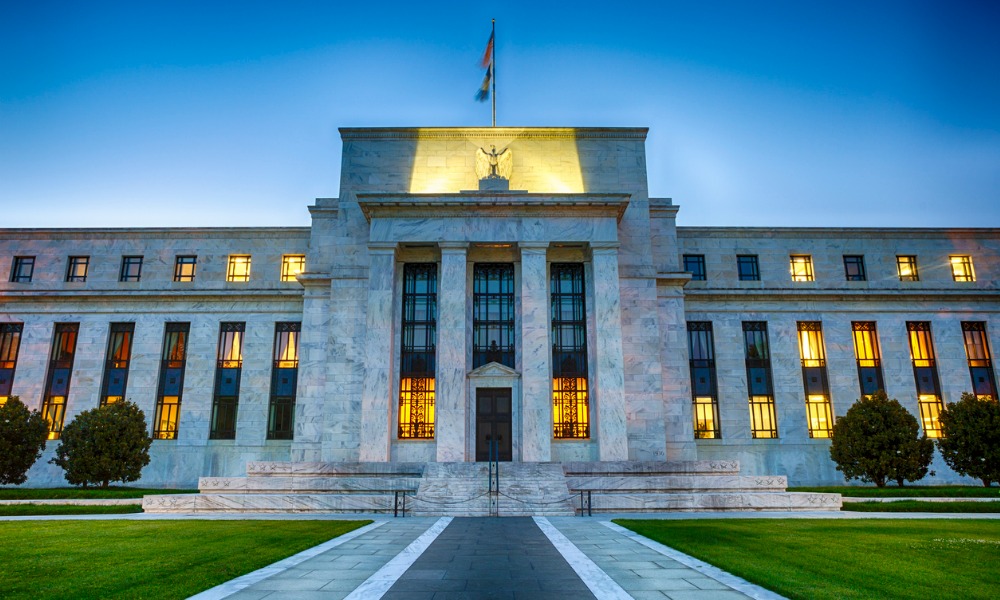
Fixed income and equity markets weathered turbulence on Monday following news that US Federal Reserve chair Jerome Powell received grand jury subpoenas last Friday by the Department of Justice (DoJ).
The subpoenas notably raise the possibility of criminal charges connected to testimony Powell delivered to the Senate Banking Committee last June regarding the renovation of historic Federal Reserve office buildings.
As for investor sentiment, Powell’s criminal investigation has raised concerns about how an independent central bank would operate. Notably, Mike Dragosits’ main concern is that the Fed is supposed to operate as a technocratic body, not a political one, and any shift away from that can unnerve markets.
“The Fed and central bank has really been set up to be an independent entity looking at economic data and follow their mandate of price stability and employment while keeping things on track without outside influence on their decision making,” emphasized Dragosits, portfolio manager at Harvest ETFs.
Once that starts crossing the line, he argues market participants in both equity and fixed income begin to worry.
BNN Bloomberg reported that early Monday trading saw the S&P 500 decline by 0.3 per cent, while the Dow Jones Industrial Average dropped 0.8 per cent and the Nasdaq composite slipped 0.2 per cent. Treasuries also showed slight weakness, with both two-year and 10-year yields rising by a few basis points.
Still, Dragosits underscored the situation around Powell is opaque and evolving, and that lack of clarity is itself a problem. He sees the investigation and related headlines as feeding into broader speculation that the Trump administration wants to reshape the Fed’s board with members who favour lower short-term rates.
Additionally, the separate developments involving Fed governor Lisa Cook and upcoming court proceedings only add to the sense that the institution’s future composition is in flux, he noted.
He links that institutional uncertainty directly to asset allocation. In his view, investors in both fixed income and equities are reassessing risk, but one of the clearest moves is towards precious metals.
Meanwhile, Antulio Bomfim, head of global macro on the global fixed income team at Northern Trust Asset Management underscored how the renewed pressure on the Fed may end up backfiring, leaving the opposite of its intended effect.
“The market response has been subdued, which we think indicates that the market also believes that the administration’s efforts will backfire, or, at a minimum, be ineffective. We continue to expect two rate cuts this year, likely starting in the middle of the year,” he said in a statement.
Dragosits suggests the interference from the DoJ forces investors to question whether new, unstated “mandates are potentially going to be involved in the process,” which raises uncertainty across asset classes. He notes that money was already rotating into gold and that this trend has accelerated as questions about the Fed and inflation have grown.
For him, the core risk right now for investors is in fixed income, particularly the pressure on short-term rates.
“In an environment where the economy is really slowing down and consumers are having a tough time spending, you need to incentivize spending and growth,” noted Dragosits, adding that aggressive easing while “the economy still looks pretty good” risks reigniting inflation, he said.
That’s why he sees the bond market wrestling with a distorted curve.
“By having a mismatch between talk of cutting rates much steeper and much faster, in environment where the economy still looks pretty good, there’s spark for potential inflationary concerns there. That's what the bond market is grappling with the front end of the curve and is pressured lower,” explained Dragosits.
On equities, he thinks stocks have handled the shock better than bonds in the short term, but the backdrop is still unsettled, particularly as rate cuts in a solid growth environment can squeeze corporate margins via higher inflation and force investors to demand higher equity risk premium, he warned.
That leaves a mixed picture where uncertainty rises even as lower short-term rates offer some support. Despite that, he maintains that “we’re still in that secular bull market for equities so I think equities are okay for now,” he said, while stressing that the prospect of further uncertainty is already being priced in.
"Overall, it looks like the market isn't putting too much stock in these developments as equities or fixed income moves have largely reverted. The structure of the Fed would still make a "hostile takeover" difficult," added Dragosits.
An excuse ‘to weaken Fed’s autonomy’
In a statement delivered on Sunday, Powell described the threat of criminal charges as an excuse designed to weaken the Fed's autonomy in determining interest rates, which is its primary instrument for controlling inflation.
"This new threat is not about my testimony last June or about the renovation of the Federal Reserve buildings. It is not about Congress's oversight role; the Fed through testimony and other public disclosures made every effort to keep Congress informed about the renovation project. Those are pretexts. The threat of criminal charges is a consequence of the Federal Reserve setting interest rates based on our best assessment of what will serve the public, rather than following the preferences of the President," he said.
While the threat of a criminal indictment over Powell’s testimony about the Fed’s building renovations is the latest escalation in US President Donald Trump’s feud with the Fed, Powell affirmed in his statement that he carried out his duties “without political fear or favor, focused solely on our mandate of price stability and maximum employment.”
“Public service sometimes requires standing firm in the face of threats. I will continue to do the job the Senate confirmed me to do, with integrity and a commitment to serving the American people," said Powell.