
Pension funds want more toll roads, but Canada has almost none, notes KPMG’s Andras Vlaszak
Each month at BPM, we offer a slate of articles and content pieces that go deep on a particular topic. This month, we're exploring alternatives as an asset class, with a focus on infrastructure in institutional portfolios.
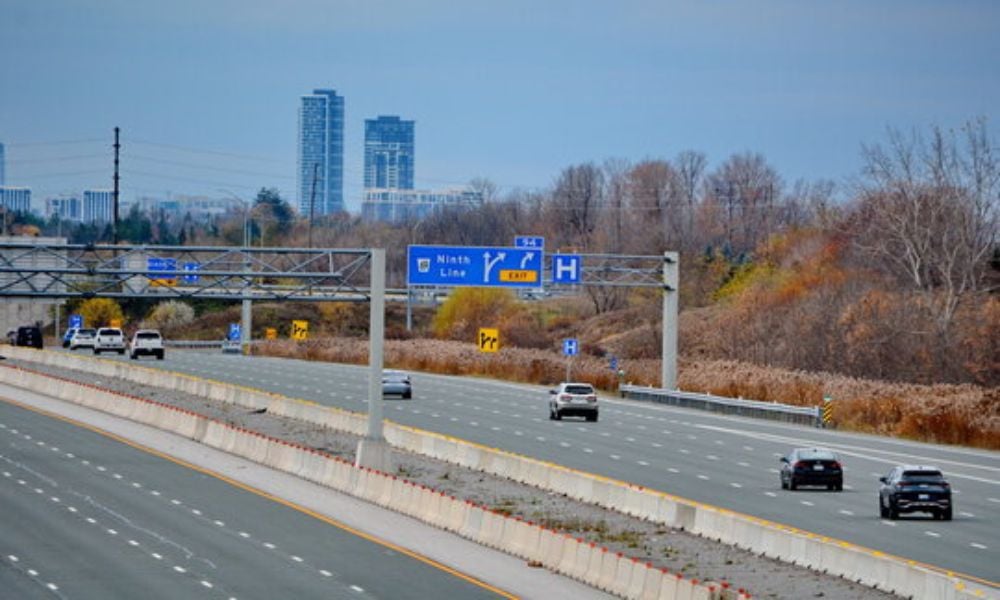
Canadian pension funds keep pouring money into toll roads, whether domestically or internationally and the 407 Express Toll Route in Ontario remains one of the most coveted assets in the country.
Multiple funds hold stakes in the highway, and for Andras Vlaszak, senior director, infrastructure, capital projects, and sustainability services lead at KPMG Canada, the reasons are due to its size along with pensions’ long-term liabilities.
"It has multiple pension funds as investors because of its sheer size," he said. “What it also tells you is that multiple pension funds believe that they are long-term assets that have a very long-term viability. For example, the 407 connects major metropolitan areas and is providing a mode of transport that is not currently assumed to be subject to technological change. So what that gives is an existing asset that has high longevity, barriers to entry for competition, and toll revenues are typically inflation indexed. The fact that the road is needed to drive on is basically a certainty,”
According to Vlaszak, toll road performance hinges on traffic volume, and the strongest assets are those connecting major metropolitan areas. Notably, the sheer concentration of population in those centres makes sustained demand close to a given as people are unlikely to leave, and that guarantees a steady base of users.
The revenue model also reinforces this advantage through inflation-linked toll increases, something few other asset classes can offer. Competing modes of transport, whether aviation or high-speed rail, do not threaten the cost competitiveness of driving.
"It's a very efficient way of traveling, and that keeps the customers, ensures customer capture or traffic capture by this asset," Vlaszak said, while acknowledging the obvious risk is a pandemic-scale disruption that causes traffic to fall sharply. Still, the historical pattern offers reassurance as he notes conservative underwriting at the point of investment is what makes the difference across cycles, he added.
From a pension investor’s perspective, the core appeal of private infrastructure is long-dated, predictable cash flows combined with inflation protection. Assets like toll roads can reprice revenues over time and sit in strong competitive positions, which helps them deliver steady performance through the cycle.
Compared with public equities and conventional bonds, these assets are usually treated more like fixed income. Public stocks are expected to return more over the long run, but with sharp swings from year to year. Infrastructure, by contrast, tends to hold its value and avoids those extremes.
What matters for pension funds is how returns compound over decades. In public markets, that compounding rides on big ups and downs. In private infrastructure and fixed income, the return profile is smoother and more recurring. Even if the expected annual return is lower, the stability of those cash flows allows funds to build competitive long-term compound returns while better matching their liabilities.
But Ryan Gubic argues that private infrastructure demands a higher bar for trust and governance because it operates with lighter reporting requirements than public markets, emphasizing investors need to work with advisors and firms they have confidence in, and focus on strategies backed by credible management teams and robust oversight.
He also highlights liquidity as a critical, often overlooked issue. In private infrastructure, like toll roads, there's no instant exit.
“What can happen in infrastructure private investments is gating where if there's too much money trying to leave at once, quite often, the strategy or the fund will gate, meaning that no one else gets money out,” explained Gubic, portfolio manager and founder of MRG Wealth. “They protect the existing investors until things stabilize and there's cash flow available to liquidate back to the investors. So those are big considerations.”
On the return side, he sees both capital growth and ongoing yield as key parts of the value proposition. Investors care about how much an asset can appreciate and how reliably it can generate cash distributions.
“If you have a market correction, do people stop driving tomorrow? No, you still carry on, you're using the toll road, and that's still generating revenue. So, there are some really strong private alternative investments out there that have some resiliency to market downturns,” he said.
One way pension funds can manage political and regulatory risk is by investing in their own backyard, noted Vlaszak. An Ontario-based fund buying Ontario assets creates a natural hedge, because governments are unlikely to undermine revenue on projects owned by the pension plans of local workers.
Beyond geography, disciplined underwriting matters just as much. Funds stress-test their assumptions before bidding, running multiple scenarios around rate increases and ensuring the purchase price accounts for each one.
Vlaszak draws a clear line between different types of toll road markets. For assets that link major metropolitan areas, their performance is anchored in ongoing trade between cities and in stable or growing local populations, which support both cargo movements and personal travel.
Contrastingly, some toll roads and bridges are built primarily to serve industrial sites or agricultural regions, such as routes in South America that move farm output or specific commodities to ports. Those assets are much more exposed to sector cycles and commodity price swings, because their traffic depends on how those industries are performing. He contrasts that with Highway 407, which is tied to the daily needs of large urban populations rather than a single industry.
“That's a very low risk part of the supply chain so that provides for the resiliency of certain toll roads like 407, compared to more industrially focused toll transportation assets,” noted Vlaszak.
Yet, Canada's toll road landscape is thin, according to Vlaszak, highlighting that British Columbia, where Vlaszak is based, there are none at all - the government recovers infrastructure costs through taxation rather than user fees, which effectively locks out private capital whereas the 407 exists because it was delivered under a different model, one where the project generates its own revenues and can be privatized.
That distinction is what separates investable infrastructure from everything else.
"The criticism of the Canadian pension funds about the lack of opportunities to invest domestically are stemming from this," Vlaszak said, noting there are few revenue-generating projects that governments could sell to private investors.
If policymakers wanted pension funds to deploy more capital locally, and if governments were looking to recycle assets to address fiscal deficits, introducing tolling on existing infrastructure could open that door, he said.


