War‑fuelled inflation and rate fears shake gold just as long‑term portfolios lean on it
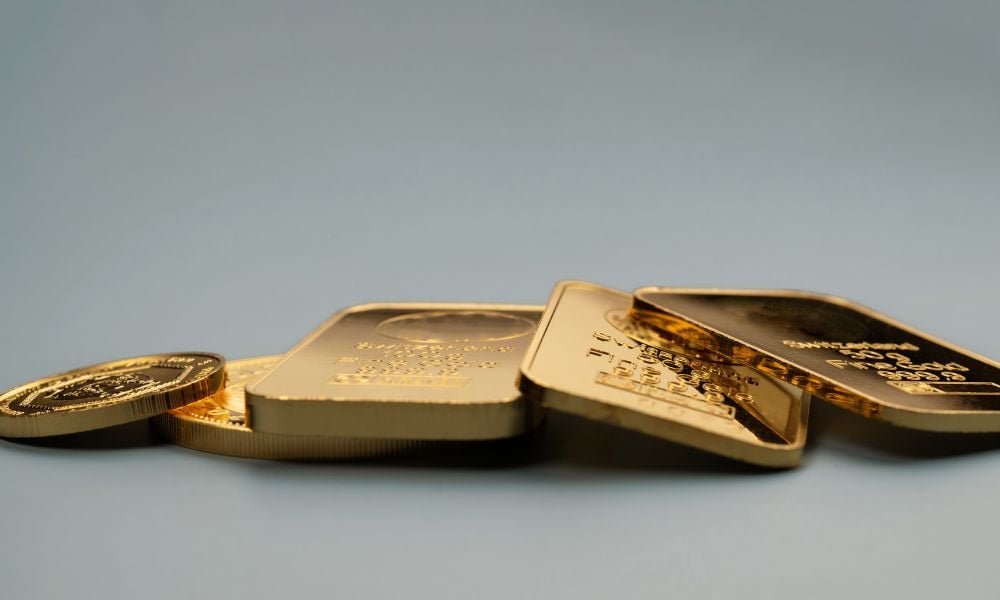
Gold just posted its worst month in more than a decade even as prices bounced on Tuesday, underscoring how the Iran war, inflation fears and higher‑for‑longer rates are hitting one of the most widely used hedging assets.
Reuters said that the spot gold rose 3.2 percent to $4,652.31 per ounce by 1:31 pm EDT, the highest level since March 20, while US gold futures settled 2.7 percent higher at $4,678.60.
CNBC reported that gold futures still fell more than 10 percent in March, marking their biggest monthly decline since June 2013 and snapping an eight‑month positive streak.
Reuters said spot gold was on track for its steepest monthly drop since October 2008 as “persistent inflation worries and expectations of higher interest rates due to the impact of the Iran war weighed on the non‑yielding metal.”
Higher oil prices triggered by the war in the Middle East have “intensified inflation concerns and prompted markets to reassess interest rate expectations.”
Despite gold’s role as a hedge against uncertainty and inflation, Reuters noted that high interest rates raise “the opportunity cost of holding the metal.”
The US dollar slipped on Tuesday but remained on course for a monthly gain, making “greenback‑priced bullion more expensive for holders of other currencies.”
The geopolitical backdrop remains tense.
The Wall Street Journal reported that US President Donald Trump “was willing to end the military campaign against Iran even if the Strait of Hormuz remains largely closed.”
CNBC reported that Trump told aides he was ready to end military hostilities against Iran even if the strait remained mostly closed.
He also wrote on Truth Social that Washington was “in serious discussions” with Iranian officials and warned that, without a deal soon, US forces would target electricity plants, oil wells and Kharg Island.
According to Reuters, US Defense Secretary Pete Hegseth said the next few days in the war against Iran would be decisive and warned Tehran that the conflict would intensify if it did not make a deal.
CNBC reported that US Secretary of State Marco Rubio told Al Jazeera in an interview that Washington’s objectives in Iran would take “weeks, not months” to achieve.
CNBC, citing Reuters, also said that 2,500 US Marines from the 82nd Airborne Division had arrived in the Middle East over the weekend.
Strategists highlighted shifting drivers for gold returns.
Reuters reported that Peter Grant, vice president and senior metals strategist at Zaner Metals, linked the “current rally in gold” to “increased optimism about de‑escalation in the Middle East,” but said he needs “more upside performance” to view it as a continuation pattern.
He said longer‑term support for gold comes from “de‑dollarization and central bank buying.
Wayne Nutland, investment manager at Shackleton Advisers, told CNBC that “the past four years have changed the way gold is traded.”
He said gold was inversely linked to real bond yields and the US dollar before the Ukraine war, but that those relationships broke down afterward, particularly in 2025 and early 2026 when gold “rose very strongly” relative to what history would suggest.
Nutland said that after the Iran war, gold has “reverted to its more traditional relationships,” with rising bond yields and a stronger US dollar pushing prices lower.
He said the decline has “perhaps also been exacerbated” by how high gold was at the start of 2026 and by investors looking “to liquidate profitable positions.”
CNBC reported that Iain Barnes, chief investment officer at Netwealth, said gold has been roughly twice as volatile as usual in recent months because more financial investors are trading it.
He said central banks that tried to diversify away from the US dollar “may have started gold’s bull market,” but that the rally faded as the market “ran out of new financial buyers,” uncertainty increased and the dollar strengthened, prompting widespread profit‑taking.
On the outlook, Reuters said BMI kept its 2026 gold forecast at an annual average of $4,600.
Goldman Sachs continues to forecast gold at $5,400 per ounce by the end of 2026.
According to CNBC, Goldman Sachs said it remains positive on gold despite the “Iran sell‑off,” citing central bank diversification, low speculative positioning and expectations for 50 basis points of US Federal Reserve cuts.
It warned that ongoing disruption in the Strait of Hormuz could keep the metal exposed to further liquidation.