
Investors brace for wider WCS discount as US-backed Venezuelan heavy crude targets gulf coast refineries
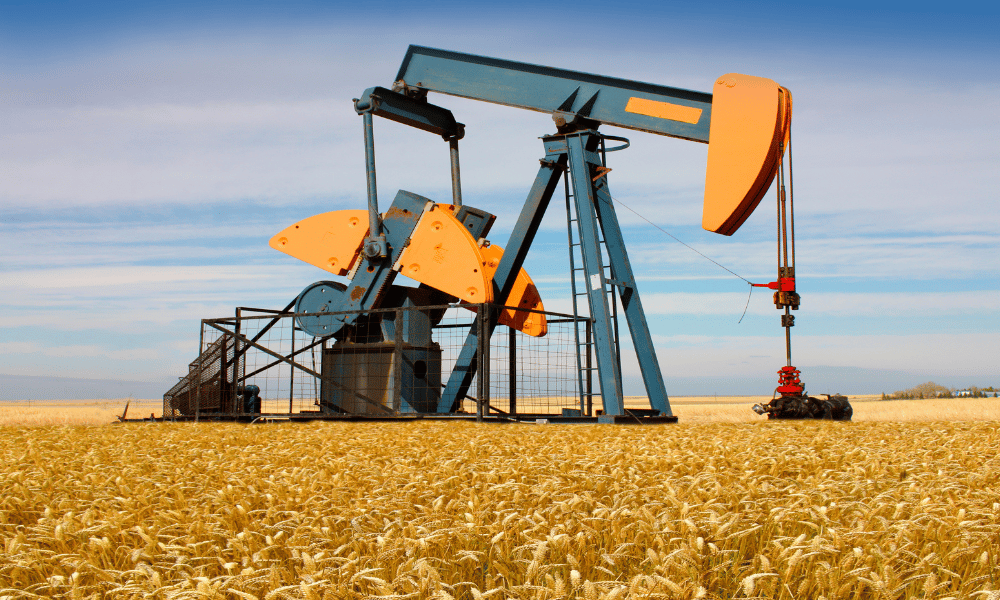
Canadian heavy oil producers could see a wider price discount just as new Asian outlets open up, as Washington courts “big oil” to revive Venezuela’s extra‑heavy crude industry and reshape flows into the US Gulf Coast.
In an exclusive by Reuters, Strathcona Resources executive chair Adam Waterous wants Canada to offer its heavy‑oil expertise to the United States as it looks to rebuild Venezuela’s oil sector.
He argues that Canada’s decades of oil sands experience give Ottawa “something to offer” ahead of this year’s review of the Canada–United States–Mexico Agreement, which shields much of Canada’s exports from US tariffs.
Waterous told Reuters that Canada, the world’s top producer of heavy crude similar to Venezuelan grades, is “better positioned than any country in the world, by far, to help rebuild” Venezuela’s damaged industry.
He said Strathcona is not looking to invest capital in Venezuela but would “quickly assemble a technical team” to go if asked, and added he is “sure there’s not a heavy oil company in Canada that would say no.”
A spokesperson for Canada’s natural resources ministry told Reuters it has not offered US President Donald Trump help with Venezuela’s oil sector.
The pricing stakes are clear.
Analysts at CIBC expect the discount for Western Canada Select (WCS) versus West Texas Intermediate (WTI) to widen as US plans to rebuild Venezuela’s ailing industry gather attention, reported CBC News.
The bank forecasts the WCS–WTI differential will average US$14.25 a barrel in 2026, up from an average of US$11.30 a barrel in 2025, when Canadian producers benefited from the first full year of the Trans Mountain expansion and increased exports to Asia.
CBC News noted that both Venezuelan and Alberta oilsands crudes are thick and tarry and require specialised equipment to refine into gasoline and diesel.
US Gulf Coast refineries are set up to run this type of heavy oil, so any meaningful increase in Venezuelan supplies would compete directly with imports from Alberta and could weigh on WCS prices.
The market has already shown some of that anxiety.
Reuters reported that the discount on heavy Canadian crude to US oil widened by 14 percent last week, while shares of Strathcona and other Canadian heavy oil producers fell on investor worries about a revival of Venezuela’s sector.
The scale of the Venezuelan resource underscores why Washington is pushing.
As per CTV News, the US Energy Information Administration estimates that Venezuela holds 303bn barrels of proven crude reserves, or 17 percent of the world’s total, the largest of any country.
Canada ranks fourth with 163bn barrels of proven reserves, most in Alberta’s oilsands.
Output, however, tells a different story.
Venezuela produced 1.14m barrels a day as of November 2025, while the Canada Energy Regulator reported that Canada reached 5.13m barrels a day in the first half of 2025.
CTV News reported that Venezuela’s extra‑heavy crude needs more work to move and refine and that production has been constrained by budget pressures, decaying infrastructure and a shortage of qualified workers.
Despite those constraints, the US is trying to pull major players back in.
Trump planned to meet 17 oil executives from firms including Chevron, ExxonMobil, ConocoPhillips, Halliburton, Valero, Marathon, Shell, Trafigura, Eni and Repsol to discuss Venezuela.
In a pre‑dawn social media post, Trump claimed “at least US$100bn will be invested by BIG OIL.”
Large US companies remain cautious.
CTV News pointed out that ExxonMobil and ConocoPhillips were among the firms whose assets were nationalised under former president Hugo Chávez in 2007, and that international arbitration panels ordered Venezuela to pay them billions of dollars that remain outstanding.
Rystad Energy estimates Venezuela needs US$54bn in oil and gas investment over the next 15 years just to keep production flat, and that pushing output beyond 1.4m barrels a day would require an additional US$8bn to US$9bn a year.
Policy is shifting alongside the rhetoric.
CTV News reported that the US Department of Energy is “selectively rolling back sanctions” to allow Venezuelan crude back into global markets, authorising oilfield equipment, parts and services to enter the country, and sending light US oil as diluent so Venezuela can blend and transport its heavy crude.
The US also aims to sell between 30m and 50m barrels of sanctioned Venezuelan oil into global markets “for the benefit of the United States, Venezuela and our allies.”
For Canadian producers, that combination of a potentially wider WCS discount, growing access to Asia through Trans Mountain, and a possible resurgence of Venezuelan heavy barrels into the Gulf Coast points to a more volatile price environment.
According to Reuters, Waterous argues that the long‑term risk of the US buying more Venezuelan crude increases the need for Canada to diversify markets and build another pipeline to the Pacific.
CBC News reported that WTI recently traded up almost 3 percent to around US$61 a barrel, while CTV News noted that North American benchmark oil has generally hovered below US$60 a barrel, pressuring margins.
In that setting, more heavy supply might not be welcome for producers, but Canada’s technical edge in handling heavy oil could still carry strategic value in any US‑led reshaping of Venezuela’s energy sector.


