
'Fiat currencies are going to be under attack; pension funds need to really think about what exposure they have,' says expert at CPBI event
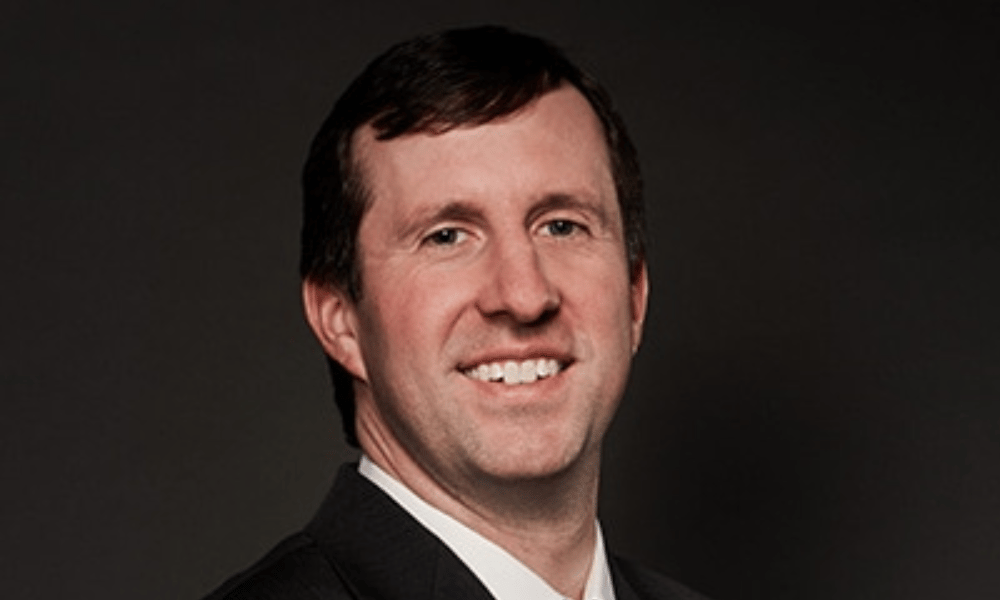
One industry expert believes sweeping macro trends are rapidly reshaping the global order, generating significant uncertainty and making it increasingly difficult for institutional investors to chart a clear course.
At the Canadian Pension and Benefits Institute (CPBI)’s annual Atlantic conference on Thursday, Grant Johnsey highlighted two major forces shaping the future of institutional investing, the first being “a shift to multipolarity.”
“Within that bucket means less globalization, more onshoring and the US perhaps retrenching more to what it historically has done on the foreign policy side, which is more isolationist or more focused on the Americas - called the Monroe Doctrine of 1823 - is I think where the US may be headed, which is going to be more multipolarity and that has a number of ramifications,” explained Johnsey, head of market solutions, banking & markets for Americas at Northern Trust.
One such ramification Johnsey pointed to was that the post–World War II geopolitical order is rapidly unraveling. To explain, he traced this shift to the historical roots of US foreign policy, which was largely isolationist until World War II. The war marked a turning point, establishing a grand strategy based on four pillars: securing the homeland, controlling key oceans, maintaining trade routes, and suppressing rival superpowers.
Today, that framework is being dismantled as the US is returning to regionalism, reviving the Monroe Doctrine and focusing more on the Americas. This pivot is driven not just by politics but by structural pressures, ballooning deficits, shrinking appetite for foreign aid, and evolving military threats. Russia is no longer seen as a serious global threat, and China lacks the geographic and naval capacity to project global power. Meanwhile, AI and drone warfare are reshaping defense strategies.
Chief to that, globalization is in retreat. With energy independence from the shale revolution, the US is now “weaponizing energy” as a geopolitical tool.
He also highlights de-dollarization - the global shift away from US Treasuries and toward gold.
“If you’re a Blue Jays fan, I’ll liken it to that we’re probably in the fourth inning of this gold rally,” he said, pointing to China’s quiet exit from Western finance after the West froze $300 billion in Russian assets.
Johnsey also flagged silver as a strategic metal, crucial in renewables and defense. He warned that foreign demand for US bonds is weakening, currency volatility will rise, and the dollar’s dominance will likely erode.
Johnsey also underscored the rise of populism as a powerful and global political trend, emphasizing its growing impact on markets and institutions. He explained that populism emerges in times of institutional or democratic failure, when citizens feel left behind by bureaucracy, rapid technological change, or policies that no longer serve their needs.
At its core, populism is defined by three key elements: a leader who claims to represent “the people,” a clear opposition to “the elites,” and a focus on restoring the so-called will of the people.
“Populism cannot exist in a pluralistic political system,” Johnsey noted, because it thrives on division and delegitimizing the opposing side, making cooperation nearly impossible.
Drawing on contrasting views from authors Ray Dalio and George Friedman, Johnsey explained that while Dalio sees the US in structural decline, Friedman argues the country is undergoing a historical reinvention, what he calls “an 80-year institutional cycle.”
Both, however, agree that such moments give rise to populist movements.
Populist leaders, whether left- or right-wing, typically favor domestic production, rapid short-term growth, and expanded executive powers. They often attack central banks, mainstream media, and independent institutions. On the left, populism centers on social class, while on the right, it emphasizes identity.
Economically, populism supports energy subsidies, industrial policy, and companies producing affordable goods for average citizens. This too, has implications for investors as Johnsey stressed that in such environments, diversification into commodities and gold becomes more effective than traditional hedging strategies.
When asked about the geopolitical trends he expects to unfold in Canada, he pointed to energy, infrastructure, and pension fund strategy.
“Canadian pension funds have been one of the largest sellers of Canadian dollars in buying US dollars, largely because Canada’s domestic investment market is relatively small. What I expect to see, and I think Carney's going to focus in on this, is building more investable assets in Canada for pension funds to invest in,” noted Johnsey, especially through infrastructure privatization or public-private partnerships.
“You can’t artificially inflate the size of the equity market, but you can create more investable infrastructure,” he added.
Johnsey also emphasized the untapped potential of Canada’s hydrocarbon reserves, pointing out that Canada has more oil and gas reserves than Saudi Arabia. While he acknowledged the political and environmental sensitivities, he believes there will be increasing pressure to develop this sector - particularly through pipelines in British Columbia and expanding LNG export facilities on the west coast.
Beyond hydrocarbons, rare earths were also flagged as a critical opportunity. Although Canada has large deposits, the processing is complex and environmentally messy, something China has traditionally handled. He expects renewed Canadian interest in developing domestic rare earth processing capacity.
Johnsey warned that US geopolitical attention will increasingly shift toward the Americas, including the Arctic, where he believes Canada has underinvested. If Canadian pension leaders are forward-looking, he believes they’ll focus on mineral resources, access to both oceans, and the Arctic, as well as privatizing infrastructure like airports.
Ultimately Johnsey believes all this fragmentation, along with rising populism, ballooning, aging populations, deficits, and the unraveling of global trade structures, spells trouble for his second factor shaping institutional strategy: fiat currencies, particularly for pension funds exposed to long-duration bonds.
“Fiat currencies are going to be under attack, so pension funds need to really think about what exposure that they have specifically to currencies,” he said, noting that Northern Trust strongly advocates for currency hedging to protect against overexposure to any single fiat currency.
He also cautioned that it’s not just the US dollar at risk of weakening because other major currencies could also face debasement, particularly as nations engage in trade wars.
“The key to winning a trade war is to have a cheaper currency, which means you're okay printing more money, and you're okay with having your currency weaken on the global stage because it helps your export market. The big takeaway here is fiat currencies and how they may manifest, both on the long end of the bond side as well as currency volatility,” said Johnsey.


