Top Benefits, Pensions, and Institutional Investment Professionals 40 and Under in Canada | Rising Stars
Jump to winners | Jump to methodology
Diamonds in the rough
Meet BPM’s Rising Stars 2026, whose specialized expertise is making an impact across the industry
BPM Rising Stars 2026: Canada’s top benefits, pensions, and institutional investment talent under 40
Diamonds form under pressure, and this year, so did Canada’s brightest young talent in benefits, pensions, and institutional investment. Employers across the industry report they cannot find the people they need: only 5 percent say they have enough skilled staff and headcount to execute their priority projects, even as 58 percent plan to hire more before the year is out, according to Robert Half Canada’s July 2026 survey.
Amid that shortage, this year’s Benefits and Pensions Monitor’s Rising Stars 2026 – the top benefits, pensions, and institutional investment professionals 40 and under in Canada – didn’t wait for the gap to close. They stepped up and shone through.
-
One winner took over a municipal pension fund’s portfolio and pushed its performance into the top quartile against comparable funds, adding tens of millions of dollars in value along the way.
-
Another led the rollout of defined benefit coverage to roughly 1,500 workers who had never had access to a plan like it before.
-
A third helped launch an entirely new institutional bond strategy from scratch, while elsewhere in the cohort, a pension actuary was quietly governing the finances behind 10 separate pension and benefit boards at once.
These are not stories of people waiting their turn. They are proof that pressure, in the right hands, produces exactly what the industry says it struggles to find. That breadth of expertise is exactly what the industry now expects.
“A rising star today is someone who combines deep technical competence with the ability to operate in a world of accelerating complexity,” says Dawn Jia, president and CEO of UBC Investment Management in Vancouver, British Columbia.
The 22 professionals honoured were chosen from nominations submitted by companies across the country starting in May 2026, judged against a 40-and-under age cutoff and a demonstrated commitment to the industry. They are not necessarily the youngest people in the room; they are the ones who came to this industry with hard-won expertise built elsewhere, whether in institutional portfolio management, pension governance, or benefits consulting, and paired it with the two traits winners rated as most important above all others: hard work and emotional intelligence. In an industry short on specialized talent, that combination is what stood out.
Canadian benefits, pensions, and institutional investment employers are hiring, but they are not hiring for tenure. Fifty-eight percent of Canadian employers plan to increase permanent hiring in the second half of 2026, and 53 percent say specialized skills, not seniority, are what they value most when bringing someone on, according to Robert Half Canada’s July 2026 survey.
Technical expertise, industry-specific knowledge, and leadership ability now rank as the three hardest qualities to find in a candidate, a gap that is reshaping who gets recognized as a rising talent in benefits and pensions.
Chris Gory, employee benefits advisor at Orchard Benefits in Toronto and a 31-year veteran of the insurance and benefits industry who runs the Slack channels for the Canadian Group Insurance Brokers (CGIB) and the Benefits Alliance, says today’s standout professionals share the singular trait of focus.
“If they’re really going to be a rising star, they’re going to get involved in the community,” he says. “They’re going to focus on one segment and get involved, not just learn from people but also give back.”
Gory points to advisors who build their entire book around a single niche – tech companies, law firms, accounting practices – as the ones who win instant credibility with clients. “You get instant credibility,” he says. “It becomes so easy to open doors in that sense.”
That focus on specialization echoes what BPM has previously reported on Canadian employers struggling to hire, as skill gaps widen across the industry more broadly.
The clearest story in this two-year comparison isn’t about who’s fastest; it’s about who’s most seasoned. The share of Rising Stars winners with 16 or more years in the industry jumped from 10 percent of the 2025 cohort, first introduced through BPM’s inaugural call for Rising Stars nominations, to 18 percent in 2026, an 80 percent relative increase, while winners with just 1–5 years of experience shrank from 20 percent to 9 percent.
The 2026 Rising Star looks less like a fast-tracked 20-something and more like someone who has built real depth, often somewhere else, before landing at the firm that nominated them.
That shift lines up almost perfectly with the ratings data. “A long career at the same employer” fell from 4.33 to 2.91 in importance, a 1.42-point drop and by far the sharpest swing of any trait measured, while hard work and EQ stayed at or near a perfect 5.00 in both years. Loyalty to one employer is being displaced as a marker of a rising star; hard work and emotional intelligence are what’s actually driving recognition.
UBC Investment Management president and CEO Jia sees that rating as more than a soft preference. “EQ is not a soft skill; it is a discipline, and it develops through deliberate practice and honest feedback,” she says.
This isn’t happening in a vacuum. That same Robert Half research points to a deeper shortage behind the headline hiring numbers, with only 5 percent of leaders reporting the necessary headcount and skill sets to accomplish priority projects this year. As that gap widens, employers are leaning harder on outside expertise rather than internal tenure to fill it.
Put plainly, the data suggests BPM’s Rising Stars are increasingly people who pivoted into the industry with hard-won experience elsewhere, exactly the kind of specialized, adaptable talent employers say they’re struggling to find and are now actively recruiting for.
Rising Star: Kate Finkler-Kemeny
Vice President, Portfolio Management, BGO, British Columbia
Kate Finkler-Kemeny found her way into institutional real estate through an unconventional route. A bachelor of applied science in geological engineering and a master of urban planning with a real estate focus put her closer to fieldwork and city building than to a finance classroom, and that technical foundation still shapes how she works today as vice president, portfolio management, at BGO in British Columbia.
Before joining BGO, Finkler-Kemeny built her early career at private real estate investment and development firms in Toronto, working with managers who recognized her strengths and gave her opportunities to try new things before she felt ready.
That early trust accelerated her growth and helped her identify the parts of the profession she enjoys most, and over time she became increasingly intentional about building a career in the institutional investor landscape.
That transition was not instant. In her early meetings, Finkler-Kemeny remembers sitting through conversations where colleagues seemed to speak a different language – acronyms, fund mechanics, and concepts in economics and institutional real estate that she was only beginning to grasp.
“I had a strong analytical background, but I started to realize that understanding an investment from a portfolio management perspective was very different from understanding just the little pieces in isolation,” she says. Her engineering instinct pushed her to ask basic questions, write down anything she did not understand, and trace numbers back to their source rather than simply accepting them, a habit she still keeps today.
That same instinct now drives how she rebuilds the systems around her. Investor and portfolio reporting once lived across dozens of scattered spreadsheets, meaning reports were pulled together largely by hand, work that ate into the time she would rather spend interpreting the numbers than cutting and pasting them.
Finkler-Kemeny has been leading a shift toward standardized, systematic data, migrating reporting to Power BI and refining the underlying Excel models so the team can spend less time assembling information and more time analyzing it.
She has brought that same willingness to work outside her comfort zone to her role as the Western Canadian point of contact for the fund’s investor base and presenting to Quebec investors in French. It is not her first language, and she is candid that nerves are part of the process.
“There’s always a moment before I start where I’m very almost hyper-aware of how much I’m operating outside my comfort zone,” she says. “I’m usually shaking.” What she has found, after over a dozen French presentations, is that clients respond to the effort itself.


Simon Holmes, chief investment officer in Canada at BGO, credits Finkler-Kemeny with a rare combination of rigour and initiative. “She consistently produces valuable, additive work without being asked, anticipating what the team needs and delivering it before the ask is made,” he says.
Finkler-Kemeny wants to keep building at the intersection of portfolio strategy, investor relationships, and capital raising, translating complex analysis into narratives that resonate with clients. Her engineering-shaped curiosity, driven by a need to close knowledge gaps, has become the trait she now leans on most.
How does curiosity shape success in institutional portfolio management?
Q: Curiosity keeps coming up as your defining trait. Was there a question you asked early on that ended up changing how you saw the job or one a colleague later told you was the right one to ask?
A: I can’t think of one defining moment, because it’s been so consistent. Honestly, I thought managers would tell me to kick rocks after so many “why” questions, but so far, no one has. Early in my career, I might have worried a question was too basic, but over time I learned that questions like “Why do we do it this way?”, “Can you explain to me why this metric is relevant?” or “Why did you make this assumption?” can be surprisingly useful because you get to the root of something. Why are we reporting it? Where did it come from? Does an investor need to understand it in this way? Are we doing something this way because it’s the best approach, or just because it’s the way we’ve always done it?
Those kinds of questions have helped me identify processes, improve reporting, and rethink how we communicate. They’ve also changed how I think about portfolio management.
I used to think being good at the job meant knowing the answer and giving a good answer. Now I think it means knowing what to ask, where to poke holes, and that’s even more important than having a good answer.
Q: When you took on all that extra responsibility after your colleague left, what had to give? How did you figure out what could wait?
A: That period taught me quickly that taking on more responsibility doesn’t just mean a longer list of things to do. When my colleague left, there were immediate needs that required continuity, particularly for our investors, and that was the most important thing: making sure we maintained the high level of service and the legacy we’ve always strived to deliver.
Portfolio decisions and reporting deadlines were the non-negotiables. I had to become more deliberate about distinguishing between what was genuinely important and what was just urgent, because there’s a difference.
Some things had to wait, some meetings had to be shorter, and the nice-to-have projects, the value-add work for a rainy day, moved down the list. I became more comfortable asking whether a deliverable needed to be done by a certain date, whether it could be moved, or whether it could just be met candidly rather than going above and beyond. I’d say I learned to delegate more, though we operated so lean at the time there wasn’t really anyone to delegate to, aside from my co-pilot and teammate out east, our associate portfolio manager.
Earlier in my career, my instinct was to take ownership by doing everything myself. This experience showed me that leadership is also about creating clarity when you’re overwhelmed, raising your hand, and trusting a colleague to share the load when it’s appropriate.
It was an uncomfortable and demanding period – I won’t sugarcoat that – but it accelerated my development more than anything else in my career. Prioritization became less about how to do everything and more about figuring out what mattered most.
Rising Star: Jon Knowles
Institutional Portfolio Manager, Fidelity Investments, Ontario
Jon Knowles has quietly wrestled with imposter syndrome, and he has come to see that as part of the job rather than something to outgrow.
“Three years ago, when I stepped into my current role, there was a sense of imposter syndrome,” he says. “Three years in, that can still be a mental hurdle to overcome and perhaps one that will never fully go away, but if the ambition is to help others, then you need to spend less time focusing on yourself anyway.”
That instinct to focus his energy outward rather than inward has only deepened since becoming a new father, an experience that has him thinking often about what kind of world he wants to help build.
Reflecting on the podcasts and nonfiction he gravitated toward during the pandemic, Knowles noticed a pattern among the leaders he considered genuinely successful and content.
“They appear to have always positioned themselves in this outward fashion, doing for others without any expectation or belief that they need to receive,” he says. Knowles is candid that the alternative, a transactional approach to a career, is a short-term view. “You can miss the forest for the trees when you are focused on extracting something from each interaction,” he adds.
Knowles’ work on Canadian target date strategies has coincided with a period of substantial growth at Fidelity, which now manages more than $32 billion in Canadian target date assets. Since he joined the ClearPath franchise as an investment analyst, assets have grown by $24.9 billion, a 351 percent cumulative increase.

He has helped guide plan sponsors through glidepath design, risk management, and decision-making anchored in member outcomes. His tenure has been marked by volatility and a heightened focus on retirement readiness, with colleagues crediting his work with deepening client confidence and retention.
That outward focus extends well beyond the scope of his work. For eight years, Knowles has spearheaded Fidelity Canada’s team in the Princess Margaret Cancer Foundation’s Ride to Conquer Cancer, a two-day, 220-kilometre ride that has raised more than $430,000 for cancer research.
One rider has stayed with him in particular, a former colleague who joined the ride in 2023 while in the midst of a serious cancer battle of their own. “He had every reason to be sad, upset, and angry, whatever negative emotion you want to say, but he was just having a great time learning other people’s stories, laughing, and chit-chatting,” Knowles says. “There was a lot of wisdom in the way that he was acting. I’ll always think fondly about him and his energy during the ride.”
That same instinct to show up for people, informally mentor less experienced colleagues, and step forward on cross-functional projects defines how he operates day to day.
What does open-mindedness look like in Canadian target-date fund management?
Q: Looking back at moving from advisor sales into portfolio management, what’s something you had to unlearn or let go of the status quo on to make that shift work?
A: As I entered the investment management world, I thought I had to do things differently. From the outside, it seemed like a very different world to be operating in. But having been in the role for a while now, I actually think it’s not dissimilar at all.
We have different rules and different tools available to us, but at the core, we have the exact same objective. We’re all fundamentally striving to be the best partners and provide exceptional service to our clients.
They’re the reason we’re able to do what we get to do. So, in the early days, I was thinking I might need to reframe things or do them differently, but I ultimately came to a place where these worlds are a lot more similar, and the early experiences I had are very relatable and translatable into what I’m doing today.
Because I had a slightly different career trajectory than some of my peers who came straight into the investment world, I have different cumulative experience to share, and I’ve seen things done differently across different teams and departments in the industry. I think that’s ultimately why you get hired into a role: your cumulative experience and character, and being able to approach things a little differently while keeping that same objective in mind can bring strong diversification to the team.
Q: Open-mindedness comes up as your biggest driver of growth. Can you think of a time you tried something new on the ClearPath side that felt uncomfortable at first, and how did that turn out?
A: When I came into this role three years ago, ClearPath was already a strong, successful, stable franchise, so I couldn’t say things were broken and we needed to change everything. We needed modest, incremental changes rather than wholesale ones. Our business partners and customers don’t want wholesale changes on a frequent basis; they want methodical, prudent evolution.
So we started trying a bit of trial and error with our messaging and presentations, bringing in new content, dropping old content, and really trying to listen to what our customers cared about rather than what we thought they cared about.
It was clear pretty early on that this was working. The first handful of meetings under the new approach went very well. Then we got ahead of ourselves. We thought, “This is working; let’s just jump to the end state,” and we skipped a number of the gradual steps. That was possibly the worst presentation I’ve ever given. It didn’t resonate; it didn’t make sense. We learned very quickly and reversed course.
That’s what open-mindedness really means to me. You have to be willing to take these small, incremental chances in the context of the environment you operate in, but you also have to recognize when the pendulum has swung too far and recalibrate.
The franchise had been around for two decades, but I tried to come in with a fresh perspective. There are reasons why things are done the way they are, and that’s understandable, but sometimes it’s just because it’s been done that way for a while and hasn’t been challenged. Challenging it can yield great results.
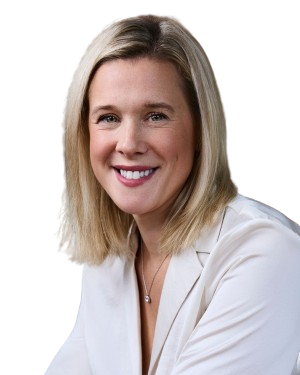
Rising Star: Heather Macartney
Senior Benefits Consultant, Belmont Health & Wealth (The JDB Group)
Heather Macartney has spent the past year rebuilding how trustees and stakeholders interact with some of the most complex benefit structures in the industry. As senior benefits consultant at Belmont Health & Wealth, she led the adoption of a governance board portal with union clients choosing to transition to the model, replacing a fragmented system built on email exchanges with one that gives trustees safe, organized, direct access to their own information.
The need became clear early in her role, when she found herself fielding a steady stream of ad hoc trustee questions that a shared portal could answer instead. Privacy and security were also key drivers. Trustees serve various terms and regularly cycle on and off boards; Macartney recognized the importance of ensuring sensitive member and financial information remained within a secure, centralized system rather than residing in the personal email accounts of individual trustees.
“Being able to control that access was extremely important,” she says. “That was a really big win for Belmont and for the trustees.”
The initiative sits squarely in Macartney’s specialty, supporting complex, multi-employer union benefit plans that require coordination across boards of trustees, union representatives, and participating employers.
She interprets plan texts and collective bargaining agreements, resolves eligibility and coverage issues that can span multiple employers or periods of employment, and analyzes claims utilization and plan performance to help trustees make sustainable, well-informed decisions.
Macartney has also played a key role in modernizing outdated contracts across the business, work she traces back to the same instinct that shaped the portal project. “Early on at Belmont, the only way I could understand what was really happening was to peel back all the layers,” she says. “Why is this happening? What needs to happen next? I’ve carried that approach into everything I do. I want to understand the full picture, but just as importantly, my job is to make it clear and easy to understand for someone who isn’t immersed in this world.”
Ron Cluett, chief operating officer at Belmont Health & Wealth, points to that same reliability as her defining trait. “Heather is an exceptional employee benefits consultant who consistently delivers outstanding service to both clients and colleagues,” he says. “She has a remarkable ability to educate clients on complex benefits solutions in a clear and approachable manner, helping organizations make confident decisions.”
Macartney’s path into this work was not a plan so much as an opening she said yes to. Fresh out of university and working a recruitment job she did not love, she knew people in the insurance industry who seemed to be having a far better time of it.
When a position opened at Great West Life, a company then actively recruiting and training young salespeople straight out of school, she applied. “I went out to Winnipeg for a month and sat in a classroom and learned renewal methodology, sales techniques, and how to manage a block of business. I found all of my training in this industry came from the industry.”
Nobody in her university business classes had ever mentioned insurance as a career path, she says, but she found the benefits side of the business genuinely interesting, and she kept at it until she found her niche.
Outside her day-to-day role, Macartney has spent eight years on the board of the Saint John Family Resource Centre, an organization supporting young children aged zero to five and families, serving most recently as chair before her term concluded in June 2026. She has also earned her Certified Employee Benefit Specialist (CEBS) designation, along with an Advanced Trust Management A credential through the International Foundation of Employee Benefits.
Macartney strives to bring greater clarity, consistency, and long-term financial stability to multi-employer and union-sponsored plans, structures she sees as highly nuanced. She is also committed to mentoring and supporting the next generation of professionals in the industry.
What do multi-employer benefit plans demand from today’s leaders?
Q: You’ve been on the Saint John Family Resource Centre board for eight years now and chair more recently. Has anything from that experience shaped how you lead at work?
A: Yes, both my position at the Family Resource Centre and my career have shaped how I lead, and it’s gone both ways. My term as chair concluded in June 2026, but my eight years with the organization have given me a great perspective on leadership and governance.
One thing we struggled with at the Family Resource Centre was succession planning, making sure that as new volunteers come onto the board, there’s a proper handoff of information so they understand where we’re at, why we’re there, and the conversations that came before them. That’s something I see very clearly in my work with trust and union plans as well. Good governance isn’t just about making decisions; it’s about making sure the people coming in after you have the information and context they need to make good decisions.
I’ve learned a lot from working in the trust and union space that I brought to my role at the Resource Centre, particularly around governance, continuity, and working with different perspectives around a table. At the same time, my experience with the Resource Centre has made me a better leader at work.
The Family Resource Centre is an amazing organization that supports young children and families in our community, particularly families with children from birth to five. I really enjoyed being part of the organization and working with the board, staff, and volunteers. It taught me a lot about leadership but also about the importance of community and giving people the tools and support they need to succeed.
Q: Is there something about multi-employer and union plans that you find yourself explaining again and again, something you wish more people in the industry just understood?
A: Honestly, I feel like a lot of people just don’t understand this business. It’s almost a conversation stopper when I tell people I work with multi-employer unions as an administrator and consultant; they don’t know what that means.
It’s hard to get people to understand that in this space, you’re not working with a traditional benefits plan; you’re working with many different voices around a table, balancing the rules of the plan, the opinions of the trustees, and a lot of different things at once.
One thing I do wish everyone knew is how impressed I am with the trustees who sit around that table, making sure every decision made is in the best interest of the member. That’s really different from a corporate plan, where a leader determines what’s best for the company.
The next 12–24 months will test the same specialized expertise this year’s Rising Stars have already built.
On the benefits side, Canadian employers are facing an average medical trend rate of 8.3 percent in 2026, up from 7.4 percent in 2025, according to Aon’s Global Medical Trend Rates Report 2026.
“As employer-sponsored medical plans continue to represent a significant portion of overall rewards investment, the need for effective cost management has never been greater,” says Kathryn Davis, global benefits vice president at Aon.
Part of Canada’s increase traces back to U.S. trade policy. Isabel Boyer, vice president at Aon, says 2025 U.S. tariffs on pharmaceutical imports are driving up procurement costs and heightening the risk of drug shortages.
That pressure will keep demanding attention from consultants and plan administrators who understand cost containment and plan design.
On the institutional investment side, Canadian investors are leaning into two factors above all others heading into 2026: technological change and private markets, at 83 percent and 81 percent, respectively, according to Ontario Teachers’ Pension Plan’s Global Investor Sentiment 2026 survey, a shift that builds on BPM’s earlier coverage of Ottawa urging pension funds to prioritize domestic investments.
That volatility is already reshaping what’s expected of early-career professionals. President and CEO of UBC Investment Management Dawn Jia says, “They are navigating a more volatile investment environment than most of their managers trained in, which demands resilience and adaptability.”
Canadian investors are also increasingly looking closer to home, with interest in domestic investment opportunities jumping 24 points year over year, one of the sharpest shifts recorded anywhere in the survey.
That comes as a federal initiative announced in Canada’s 2025 budget through the Business Development Bank of Canada pushes pension funds to weigh larger allocations to Canadian assets, a dynamic Canadian pension plan administrators will be actively assessing through 2026.
Winners who have already proven they can govern multiple pension boards at once, launch new institutional strategies, or manage claims pressure for large plan sponsors are well positioned for what comes next.
The specialized, cross-functional expertise that sets this year’s cohort apart is precisely what the benefits, pensions, and institutional investment space will need more of as costs shift and portfolios evolve.
How is specialized experience defining today’s rising stars in Canada?
Few people have watched Canada’s benefits and insurance industry evolve as closely as Gory at Orchard Benefits in Toronto. BPM spoke with him about what separates a rising star in 2026, the pressures facing professionals pivoting into the industry mid-career, and what he believes the industry still needs to build to support the next generation.
Q: How would you define a rising star in the Canadian benefits and pension space in 2026, and how has that definition evolved from previous years?
A: I think the big thing for a rising star this year is just to be really immersed in the industry. When you get your life insurance license, it allows you to sell individual life insurance, individual disability, employee benefits, and investments.
I think the qualification for someone to be a rising star is that they’ve clearly defined what part of the industry they want to work in. They don’t want to be getting involved with a little bit of life, a little bit of disability.
There are a couple of employee benefits associations. One is called the Canadian Group Insurance Brokers (CGIB), and the other one is the Benefits Alliance. I actually run the Slack channels for both of the associations. I see some new people who are joining, and what I like about some of them is, yes, they’re asking questions to learn, but they’re also giving feedback and coming up with creative ways to do things.
There’s a rising star, an advisor in Alberta, who came up with a wonderful idea to do a promotion on LinkedIn on her birthday to give away free coffees, with a QR code. She’s also been on a panel talking about how she got into the industry and her experiences.
As for how it’s changed, I think our industry as a whole has become more commoditized, like auto and commercial insurance. So the pressure for rising stars now is that they’re trying to learn, they’re trying to give back, but they’re also facing more pressure to grow and maintain their business.
I was speaking to someone yesterday who’s been at this for two years, and she has 25–35 groups. She’s finding the pressure to come up with new ways to market to people her age, so she’s now doing marketing on Instagram and TikTok as opposed to LinkedIn.
Q: What pressures are early-career professionals facing beyond finding creative ways to reach their target audience?
A: It’s funny, no one thinks about going into insurance; it’s something we all fall into. The people I’m thinking of are all pivoting into insurance, and they have additional pressures because maybe they’re 30 or 35 getting into it, not 21 or 22.
When you’re 30 or 35, you have a family, and you have young kids. So the pressures are that they’re trying to learn something new while juggling a very busy personal life, and they’re trying to get immersed. There was an employee benefits event in Toronto, and one advisor flew in from Western Canada just for one day, just to attend that event.
The other advisor who did the coffee promotion flew in to be part of a panel discussion in Calgary and left her husband and kids at home for a couple of days to do it. They’re facing a lot of pressure because they’re trying to launch their second or third career and juggle their personal life and learning.
And the benefits space is different, because unlike property and casualty, where you have to be aligned with an insurance brokerage that has at least three markets, in benefits you can be an 80-year-old person operating with two clients from your house.
There’s a lot of competition because people can operate independently, and we’re not seeing the consolidation we did a few years ago. So they’re really under pressure to learn and to stand out.
Q: Is it fair to say the runway for these professionals is shorter compared to peers in other fields?
A: That’s a great way of putting it. They need to learn; they have that short runway, but they also have to figure out where to learn. Years ago, you used to have Great-West Life doing training programs for their captive advisors. It’s a challenge for them; it’s a difficult industry to really establish yourself in.
The advisor I mentioned has 25–35 groups, and she’s been on her own for two years. It’s a difficult challenge to build up a block of business.
Q: What can the industry do to better support early-career professionals?
A: Training programs. There are some associations I mentioned: Canadian Group Insurance Brokers and the Benefits Alliance, a membership for people who are new to the industry; something with the Canadian Pension & Benefits Institute or some sort of training program, which doesn’t exist; a mentorship program; and a peer-sharing program.
Some of the people who are new to the industry have set up a peer network where they’re keeping each other accountable, but I think there needs to be more of that where they’re sharing. It’d be great if you had three people under 40 together with one or two mentors who can come in and advise them. There needs to be more mentorship going on, and it needs to be structured.
Q: What advice would you give younger professionals who want to develop relationship skills and emotional intelligence alongside their technical expertise?
A: Number one, identify the one area you want to work in, whether it be benefits or pensions. A lot of people are believers in finding a niche, a certain industry to really focus on. You’ll take all clients, but you’re going to focus your marketing on one niche, get involved with that industry, go to their events, meet the people.
I’m on my own, I’ve got 125 clients, and 111 or so out of 125 are tech companies. Snapchat’s a client of mine, along with some other major brands. I just focus on tech companies. Maybe someone new to benefits had a mother who was a lawyer or a father who owned an accounting firm, and they know that industry well. They could focus on that one industry, go to their events, meet the people, and really find out what the pain points are for them.
I’m a big advocate for finding your niche and then immersing yourself in it, going out to these events, even just registering as an attendee, and meeting the decision-makers. I’ve been doing that with tech for 22 years.
Q: What’s your advice for professionals looking to move into more leadership or strategic roles?
A: Go for it, just do it. Don’t be afraid to make the plunge. I’m thinking of an advisor who was with another firm, spent a couple of years building the block, realized she wasn’t going to move up any further, and went out on her own to launch her own firm.
It’s been a big struggle building out the infrastructure and the marketing, but she’s done a phenomenal job attending conferences, partnering with people, and speaking. So try to move up if you can, but if you can’t, and you see the door is closed in front of you, don’t be afraid to make that plunge and take your knowledge and go out on your own.
Q: What advice would you give someone thinking about starting their own firm?
A: Build the infrastructure. Come up with your brand. Brand is the most important thing of all, something that’s easy and catchy, and then your infrastructure, your CRM, how you’re going to be doing your email marketing, and your social media marketing. Building out that backbone has been the most challenging thing for a lot of the people I’ve spoken to.
Now, with platforms like Claude Code, you can do pretty much anything you want. Build out the backend – that’s the most important thing: brand and structure. I’m thinking about an advisor out west in BC. She knows her product, but her biggest challenge has been building out her CRM and the connections to it, building out that sales pipeline, because you’ve got to have that strong CRM to keep track of all your prospects. If you don’t have that, you’re not going to advance your business like you want to.
Q: As an industry veteran, how do you feel about the talent coming into the industry?
A: Talent-wise, yeah, I feel good about it. There are some very knowledgeable people, and we can share and learn from each other. That advisor out west who did the coffee promotion – I’m actually doing that for my own birthday now. I’m going to post it on LinkedIn so people can go get a coffee on my birthday, and I’m paying the tab.
I gave her all the credit. I said I’m taking this idea from you. We can all share ideas, we can all get better as a result, and the industry wins, and the clients win.
What separates a rising star in pension governance today?
Jia brings a governance-focused lens to what separates a rising star in 2026. BPM asked her about the shifting expectations placed on early-career professionals, where the industry still falls short in giving younger talent a platform, and what it actually takes to build the trust and emotional intelligence senior roles demand.
Q: How would you define a Rising Star in the benefits and pensions space in 2026, and how has that definition shifted from previous years?
A: What has also shifted is the expectation around purpose. The best young professionals I see are not just technically strong; they genuinely care about the end beneficiary. In the pension space, that means understanding that the decisions we make today affect the retirement security of real people decades from now. That long-horizon orientation, combined with intellectual curiosity and humility, is what I would call a Rising Star in 2026.
Q: What new pressures or expectations are being placed on early-career professionals right now?
A: The bar has risen considerably. Early-career professionals are now expected to have a working fluency in areas that used to be the domain of senior specialists – responsible investing, climate risk, data literacy, and governance.
Q: Do you think under-40 professionals are given enough platform and opportunity to succeed in this industry? Are there any policies or programs you think would help them succeed professionally?
A: Honestly, our industry has room to do better here. The pensions and benefits space tends to be relationship-driven and credential-heavy, which can slow the path for talented younger professionals who haven’t yet had time to build those networks or accumulate designations.
What I have found effective is creating deliberate exposure, bringing younger team members into board presentations, committee discussions, and external manager meetings early, even in a supporting role. Observation accelerates development in ways that structured training cannot. I would also advocate for mentorship that is genuinely two-way. Senior leaders have as much to learn from younger colleagues on technology, data, and emerging risk frameworks as vice versa. Formalizing that exchange would benefit both sides.
Industry associations could also do more to create visible platforms for under-40 voices, not just awards, but substantive speaking opportunities and working groups where their contributions shape real outcomes.
Q: What advice would you give young benefits and pensions professionals looking to fast-track into strategic or leadership-facing roles?
A: Three things stand out to me.
First, develop a point of view. Leaders are expected to have informed opinions, not just analysis. Practise forming and defending a position, even when you are early in your career and feel it is not your place to do so.
Second, invest in understanding the governance layer of this industry – how boards think, what keeps trustees up at night, and how decisions actually get made. Technical excellence alone will not get you into strategic roles; you need to understand the human and institutional dynamics around the table.
Third, be genuinely curious about things outside your immediate remit. The best investment professionals I know read widely – history, psychology, and political economy – because markets and pension systems are ultimately shaped by human behaviour, not just financial models.
Q: Given how much weight the industry places on EQ, trust, and relationship skills, how do younger professionals develop that alongside technical expertise?
A: I would encourage young professionals to actively seek out situations that are uncomfortable – presenting to a skeptical audience, delivering difficult news, navigating a disagreement with a senior colleague. Those experiences build the relational muscle far faster than any training program.
Trust is built through consistency over time, doing what you say you will do, being transparent when things go wrong, and putting the interests of the fund and its beneficiaries above your own. Younger professionals sometimes underestimate how closely senior leaders and board members are watching for exactly those qualities, even in small moments.
What defines the top benefits, pensions, and institutional investment professionals under 40 in Canada this year is not speed, but depth. Across the cohort, specialized expertise built outside a single career path, in institutional portfolio management, pension governance, benefits consulting, and beyond, mattered more than years spent at one employer.
Curiosity showed up again and again, in a willingness to ask basic questions, to present in an unfamiliar language, and to unpeel complex plan structures layer by layer. Hard work and emotional intelligence were rated as the two most important traits for advancement, a finding borne out in how these winners actually operate, taking on more responsibility during periods of transition, mentoring colleagues, and building the kind of trust that turns technical skill into influence.
In an industry short on specialized talent, that combination, hard-won expertise paired with genuine curiosity and emotional intelligence, is what separated this year’s winners from the rest of the field. As Jia puts it, “The long game is worth playing.”
Top Benefits, Pensions, and Institutional Investment Professionals
40 and Under in Canada | Rising Stars



- Amanda Alexander
Manager, Pension Administration
Provident10 - Amy Hamilton
Associate Director, Pensions
Eckler - Diana Daly
Senior Manager, Benefits Program Service Delivery
IGM Financial - Filip Curovic
Principal
Doane Grant Thornton LLP - Hanna Karman
Executive Board Advisor
Plannera Pensions and Benefits - Jenifer Elmy
Counsel
Prescient Compensation Law - Jennifer De Moura
Benefits Consultant
Gallagher - Jessica Kim
Pensions and Benefits Associate
Lawson Lundell LLP - Joe Stagliano
Portfolio Manager
City of Edmonton - John Glynn
President
Ascent Insurance Services - Jordan Ross
Head of Fund Management
ACM Advisors - Karl Gagné
Head of Institutional Business Development, Eastern Canada
Jarislowsky Fraser - Kyle McFadyen
Senior Employee Benefits Consultant
HUB International - Larissa Bayet
Product Specialist
Saskatchewan Blue Cross - Lexi Wang
Pension and Benefits Specialist
Simon Fraser University - Miranda McLean
Senior Pension Solutions Specialist
CAAT Pension Plan - Sam Beales
President and Founder
Benefluent Advisory - Samantha Brands
Senior Account Executive
Canada Life - Zachary Barsky
Director of Institutional Solutions
RPIA Capital Management
Insights

FAQs
What is BPM’s Rising Stars award?
BPM’s Rising Stars is an annual recognition program from Benefits and Pensions Monitor that identifies the top benefits, pensions, and institutional investment professionals aged 40 and under in Canada. Winners are nominated by their employers or colleagues and judged on performance, leadership, and demonstrated commitment to the industry over the preceding 12 months.
Why is specialized experience becoming more valuable than employer tenure in this industry?
Nearly six in 10 Canadian employers plan to increase permanent hiring in the second half of 2026, and 53 percent say specialized skills, not seniority, are what they value most when hiring, according to Robert Half Canada’s July 2026 survey. That shift shows up directly in BPM’s own winner data, where the importance of “a long career at the same employer” fell from 4.33 to 2.91 between the 2025 and 2026 Rising Stars cohorts – the sharpest swing of any trait measured.
What traits do employers say matter most for career advancement in benefits and pensions?
According to BPM’s 2026 Rising Stars survey data, hard work and emotional intelligence rated highest among the traits considered important for rapid career advancement, both scoring at or near a perfect 5 out of 5. Legal knowledge, a relevant degree, and specific management training rated meaningfully lower, suggesting employers value interpersonal skills and work ethic over formal credentials alone.
What’s driving the rise in Canadian benefits costs in 2026?
Canadian employers are facing an average medical trend rate of 8.3 percent in 2026, up from 7.4 percent in 2025, according to Aon’s Global Medical Trend Rates Report 2026. Part of that increase is linked to 2025 U.S. tariffs on pharmaceutical imports, which Aon says are adding friction and cost pressure to the integrated North American drug supply chain.
What investment trends are shaping the institutional investment industry going into 2026?
Canadian investors identify technological change and the private markets environment as the two most favourable factors for 2026, at 83 percent and 81 percent, respectively, according to Ontario Teachers’ Pension Plan’s Global Investor Sentiment 2026 survey. Interest in domestic investment opportunities also jumped 24 points year over year among Canadian investors, one of the sharpest shifts recorded in the survey, coinciding with a federal initiative through the Business Development Bank of Canada aimed at encouraging pension funds to increase allocations to Canadian assets.
Methodology
To uncover the most promising young professionals in the Canadian benefits, pensions, and institutional investments industry, Benefits and Pensions Monitor undertook a rigorous marketing and survey process, leveraging its connections to thousands of readers across the country. Starting in May, companies were given the opportunity to nominate professionals for consideration based on their performance and achievements over the past 12 months.
To be eligible, nominees had to be age 40 or younger (as of September 30, 2026) and working in a role that relates to, interacts with, or impacts the industry. When reviewing the nominations, BPM concentrated on those who have committed to a career in the industry and clearly hold a passion for benefits, pensions, and institutional investments.
After reviewing all the nominations, the BPM team whittled down the list to 22 deserving winners for the second annual Rising Stars.