One of the first sessions at the CPBI Forum highlights a caregiver’s journey and where employers stand to benefit in supporting the sandwich generation
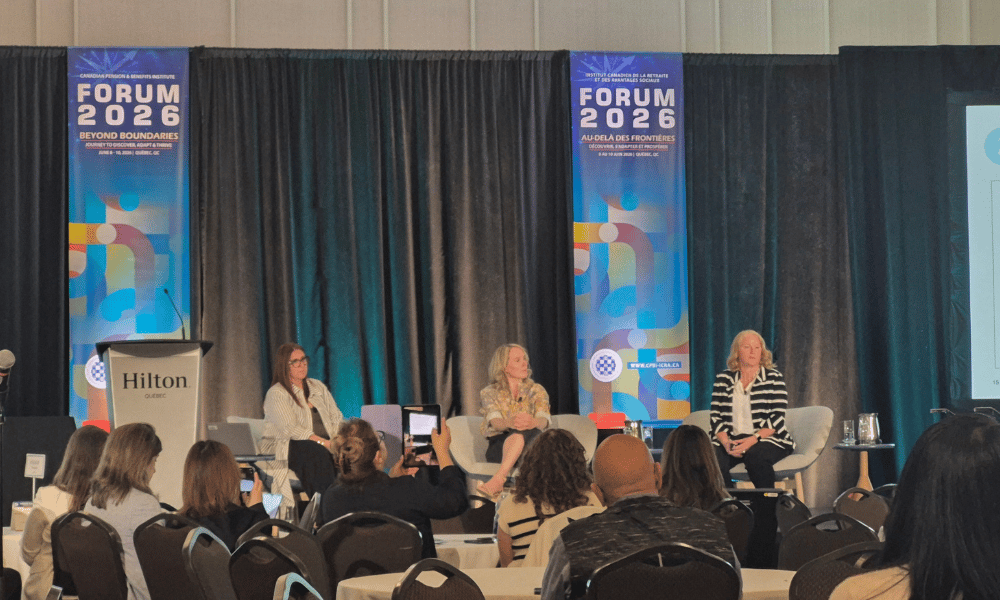
What if caregiving was proactively considered in workplace planning like other life stages are? What if supporting caregivers in the workforce was as common as supporting new parents now?
These were some of the questions posed at one the opening sessions at the Canadian Pension and Benefits Institute (CPBI) annual Forum on Monday, as speakers highlighted data from the World Economic Forum citing in a post-COVID world, employers who offer thoughtful caregiving policies will attract the best talent.
For example, Cynthia Iorio, founder of Monarque Solutions, didn't see caregiving coming. She had grown up in the 1980s with ambitious parents and a clear picture of what her life would look like — degrees, a career trajectory through media, tech, and aerospace, and by 34, a role she was proud of. None of that included becoming someone's full-time support system. But when her mother's cancer returned and spread, the daughter in her stepped forward before the caregiver label ever registered.
"That's often how caregivers are born. They're born out of a sense of obligation, a sense of love," she said. “And that's what I did. In the first few months of life, my mother didn't act sick. And so I was able to kind of walk alongside her on her health journey and not really interfere with my identity. I was, at that time, a daughter who was just helping her mom. My career didn't really suffer.”
But the hospitalization changed everything, she noted, as she found herself managing medical conversations, family dynamics, and a full workload at the same time, with no framework for how to hold it all together. When her mother came home, the demands got worse — not better. She became the chauffeur, the nurse, the coordinator, and she was close to breaking down.
What kept her career intact was her boss, who sat her down and walked her through the leave provisions available in Quebec and the federal caregiver benefit. "Having his backing and his support meant that I had the permission to go through this really challenging time, a time that I didn't anticipate was going to land on my lap until many, many, many years in the future," she said.
Years later, she went through it again when her father was diagnosed with a terminal illness.
“By the grace of the employer that I worked for the first time and the second time. We both had caregiver preparations programs that helped me get through this extremely fulfilling experience,” she said. “It's important for me to highlight that it's time for employers, it's time for companies and it's time for the workforce to come to this conversation. This is no longer just a personal issue. It is a professional one. It is one that belongs in the workplace… Different workplaces are going to have different needs. And the most important thing is to understand how caregiving impacts the people in your workplace.”
Christa Haanstra, national lead for the Working Caregiver Initiative for the Canadian Centre for Caregiving Excellence emphasized this point, highlighting additional data that found over six million Canadians balance work and caregiving. Among those aged 35 to 54, two-thirds work full time, and 36 percent report distress. The CCCE's recent Caregiver Canada report found that working caregivers were the only group whose outcomes worsened.
Moreover, 35 per cent of today's Canadian workforce is providing unpaid care to a family member as most of them never use the word "caregiver" to describe what they're doing, all while their employers have no idea. That disconnect is costing companies billions and pushing high performers out the door, and often for good.
"Whether you're paying attention to this or not, your workplace is paying the price," said Haanstra.
The collective productivity loss from caregiving runs to $1.3 billion annually or the equivalent of 500,000 workers dropping out. Women bear a disproportionate share of the fallout, leaving jobs, accepting lower-paying positions, or retiring early at far higher rates than men, even though the total number of male and female caregivers is roughly equal.
Haanstra argues that many organizations are already paying for caregiver distress — they're just categorizing it wrong. While flexibility ranks as the top ask from caregivers, Haanstra underscored what that actually means. It's not just remote work or hybrid schedules. Rather, it's personal days that don't require an explanation, formal policies that back up informal goodwill, and recognition that return-to-office mandates are pushing caregivers — women in particular — out of the workforce entirely.
She also challenges the idea that caregiving is a drag on professional capacity. Research published in the Harvard Business Review found that caregivers develop skills that are hard to replicate — empathy, collaboration, the ability to influence without formal authority.
"It's not the ones that are going to fall apart after they hit the first barrier. It is the highly capable, the ones who can figure out any problem, find out any solution, manage a very high workload," she said.
While she acknowledged a simple review of existing benefits can help identify ones that are helpful for working caregivers – from EFAPs, mental health support, leave savings accounts and top up of government-administered benefit programs, at the heart of her recommendations, is that organizations don't need to reinvent their benefits programs overnight. They just need to start with what they already have, repackage it, and make it visible.
"Just get started and start talking to the people in your organization who either need the support or have needed the support," she said. “Build a caregiver supportive culture. This means talking about caregiving in the workplace and saying, ‘I'm a working caregiver too.’ There's a much bigger impact when leaders do this and talk about it at that senior level. When you open the door to that conversation and people see you modeling that behaviour, they're more likely to do it as well.”
“We do believe that if there's proactive workforce planning, you're going to have less unexpected leaves and less absenteeism and presenteeism because you're giving people opportunities to be proactive and getting the supports that they need,” she added.