Blue light blocking devices now lead wellness tools, used by 35% of adults across global markets
Most adults under 35 in four major markets now treat wellness technology as a normal part of daily life, not an experiment on the margins.
That's according to the BON CHARGE Global Wellness Tech Trend Report 2026 that links modern routines—artificial light exposure, screen‑heavy days and disrupted sleep, recovery and energy—to rising use of tools such as red light therapy, blue light blocking devices, infrared saunas and PEMF (Pulsed Electromagnetic Field therapy).
Across the four markets, adults under 35 drive the rapid rise in wellness technology use.
In every country, this group leads engagement with red light therapy and blue light blocking devices.
The UAE stands out because people in their late thirties and forties also show strong use.
Men lead usage across multiple categories, especially in Australia and the United States.
In red light therapy, 36 percent of Australian men report use compared with 30 percent of women, and 37 percent of American men report use compared with 27 percent of women.
The UK is the exception, where 27 percent of women and 24 percent of men report red light therapy use.
Blue light blocking devices are the most used wellness technology across the combined markets, with 35 percent of respondents reporting use, compared with 34 percent for red light therapy.
By country, blue light blocking device usage reaches 57 percent in the UAE, 35 percent in the US, 33 percent in Australia and 26 percent in the UK.
Respondents give clear reasons.
The main driver is “a desire to try and prevent discomfort from looking at screens” (36 percent).
Thirty percent say they use blue light blocking products to improve sleep, and 29 percent report engagement and use of blue light blocking glasses.
Roughly 20 percent of users say they have used these devices consistently for more than two years.
Across the four markets, 28 percent say blue light blocking products improved and supported their sleep, and engagement peaks at 60 percent among 25–34‑year‑olds.
The report describes wellness technologies as a recent addition to routines.
Around 86 percent of global red light technology users and 82 percent of blue light blocking users say they started within the last two years.
For red light therapy, usage by market stands at 61 percent in the UAE, 33 percent in Australia, 32 percent in the US and 25 percent in the UK.
Between 84 percent and 87 percent of users in each country say they adopted red light therapy in that two‑year window.
Infrared saunas and PEMF show similar acceleration.
For infrared saunas, 18 percent of users first tried the technology in the last three months, 23 percent in the last six months and 26 percent in the last year.
For PEMF products, 14 percent first used them in the last three months, 21 percent in the last six months and 29 percent in the last year.
In red light therapy, skin‑related aims dominate.
Respondents most often use it “to improve the appearance of dull, tired looking skin” (27 percent) or “to relax muscles and joints” (26 percent).
Another 25 percent say they want “younger-looking skin,” while 25 percent use it as “a general beauty tool to improve skin appearance” and 25 percent use it “to help tackle skin concerns.”
They also cite broader wellbeing aims: 21 percent use red light therapy to improve stress resilience and 21 percent to improve sleep.
Seventeen percent say they use it “to support fuller, healthier-looking hair” and 16 percent for post‑activity recovery.
Reported outcomes match those goals.
Respondents most often say red light therapy “improved skin appearance” (36 percent), “helped achieve younger-looking skin” (28 percent), “relaxed muscles and joints” (27 percent), “improved sleep” (26 percent) and “improved stress resilience” (25 percent).
Smaller shares report support for “fuller, healthier-looking hair” (19 percent), post‑activity recovery (17 percent) and reduced gum irritation (15 percent).
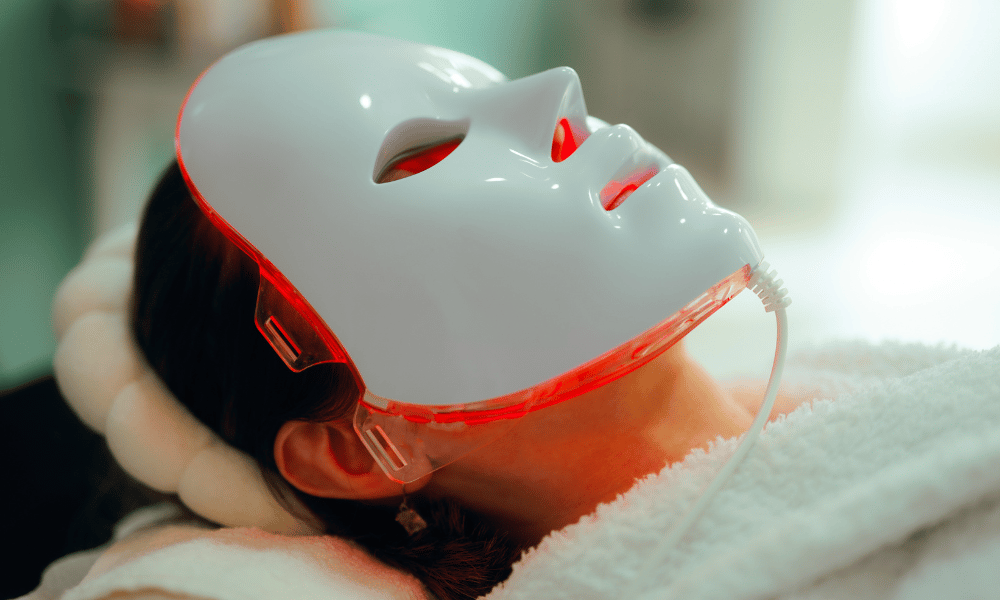
The red light face mask is the most popular device type, overtaking products designed for general wellbeing and recovery.
Among specific devices, LED face masks rank first at 45 percent, followed by recovery and post‑workout devices at 23 percent, and red light panels or therapy devices at 20 percent.
Across all surveyed markets, more than half of adults say they do not trust skincare or beauty products without scientific backing.
The share who “don’t trust skincare or beauty products without scientific backing” sits at 60 percent in the UAE, 56 percent in Australia, 54 percent in the UK and 49 percent in the US.
As one Scientific Advisor for BON CHARGE, Seb Lomas, puts it, “Evidence-led means making decisions based on what is most likely to be true, not what is most exciting to hear.”