'The issues are not necessarily the same, but the impact of stressors is certainly there,' says Dr. Samuel Mikail
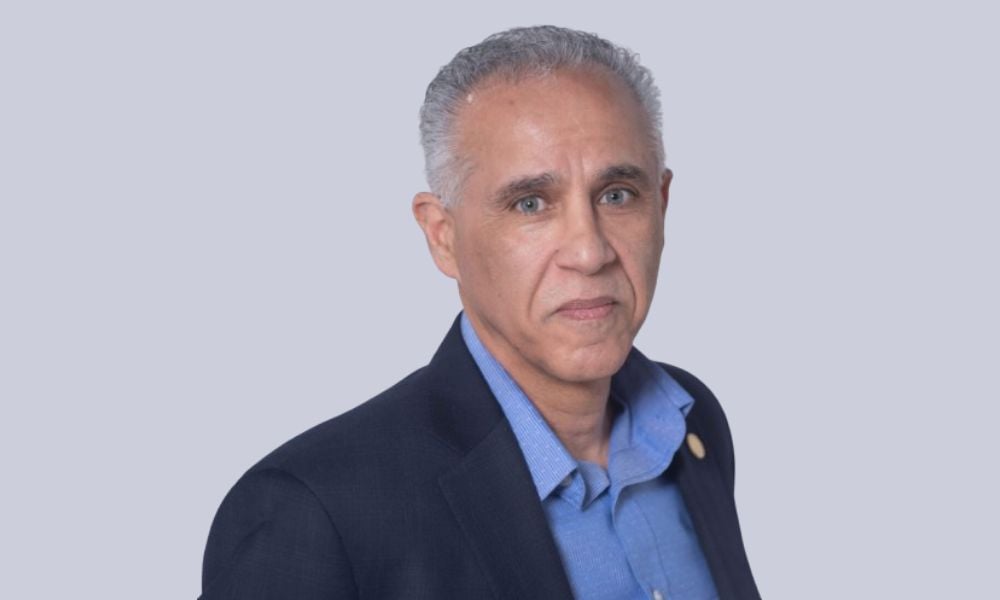
Each month at BPM, we offer a slate of articles and content pieces that go deep on a particular topic. This December, we’re exploring employee and plan members' well-being - and its link to mental health.
Employers are now confronting a far more complex set of mental health and well-being needs than ever before as workers at different life stages face very different pressures - many of which have been ignored until recently, according to Dr. Samuel Mikail. Notably, for the first time in history, employers and colleagues alike are working alongside several generations.
“We need to have an open conversation about what our workplace culture is and how supportive or perhaps unsupportive it is of mental well-being. That's a good place to start because you need to know what the problem is before you start throwing solutions at it,” underscored Mikail, a psychologist registered with the College of Psychologists of Ontario.
Mikail believes the rise in mental health concerns is no longer a marginal trend but a defining feature of today’s workforce. Drawing on Statistics Canada data, he highlighted how concerns have climbed in recent years, with pressure on those just entering the workforce and those at the tail end of their careers. The pressures each group faces differ, yet the psychological impact is material in both cases.
For example, younger workers, ages 18 to 26, are contending with uncertainty, volatile career paths, and social stressors. Meanwhile, individuals 55 and older often face issues related to career transition, caregiving, or health changes.
“The issues are not necessarily the same, but the impact of stressors is certainly there,” noted Mikail, adding that part of the apparent rise also reflects a shift in cultural attitudes. Stigma has not disappeared, but the barriers it creates have eased enough for more open dialogue. As he puts it, employees are now “more willing to identify struggles and to seek out supports where possible.”
Yet, one of the most overlooked issues has been the impact of perimenopause and menopause on women over 45, despite growing attention in the last few years. These hormonal changes can seriously affect attendance and performance because symptoms like sleep disruption, extreme temperature swings, concentration problems and irritability directly undermine productivity and teamwork.
Contrastingly, Mikail describes younger workers as wrestling with identity, independence and financial constraint all at once. Early in their careers, many are trying to form a stable sense of self and autonomy while still living at home or relying on parents because they cannot yet afford to move out.
For young professionals, especially in white‑collar roles, they often feel intense pressure to prove their value, build a credible professional identity and move up quickly, noted Mikail. They often push hard to achieve and accelerate their career trajectory, which can erode any real boundary between personal and work life. Consequently, many are also looking for a long‑term partner, and when professional demands spill over into evenings and weekends, it becomes harder to build and maintain relationships, with clear consequences for overall well‑being.
Similarly, for Millennials, Mikail highlights a new set of pressures, particularly around family formation. Many people in this stage are raising children or attempting to start a family, and he notes that fertility struggles are becoming more common. Those experiences carry their own emotional strain and can significantly increase anxiety and depression, sitting on top of job pressures that are already substantial by mid‑career.
While benefits design is another frontline where multi‑generational needs either get addressed or quietly sidelined, Mikail acknowledged the progress that has come both from raising maximums and from widening the list of covered professionals, moving from psychologists alone to include social workers, psychotherapists, clinical counsellors, nurse practitioners and occupational therapists.
“It's at a level that is more reasonable in terms of people actually being able to get the kind of support that they need,” said Mikail. “Improving accessibility has made access to services, I think, much better than it once was but it's still not where it needs to be. Certainly, the challenges for small and medium-sized businesses are still fairly significant because they can't always afford to increase their benefit.”
Yet, the benefits design flaw still blocks many employees from getting meaningful care, said Mikail, arguing that “mental health needs to be put separate outside of those as a standalone” rather than buried inside a shared paramedical maximum with massage and physiotherapy.
According to Mikail, employers should align coverage with evidence, which shows a first episode of depression or persistent anxiety disorder typically requires “somewhere between 16 and 20 sessions of individual therapy,” and warns that partial treatment “can actually result in a more chronic problem” in the same way that stopping a course of antibiotics early can entrench illness.
That framing turns benefit design into a clinical question rather than a marketing one, said Mikail, because offering six or eight sessions of coverage while encouraging employees to “get help” risks aggravating their condition instead of resolving it.
Alongside coverage, navigation and education matter just as much for a workforce spanning four or five generations. He draws a firm line around EAP, underscoring its design is “short-term, typically just a few sessions, problem-solving,” and not built “to address a chronic issue or severe symptoms.”
One potential solution for Mikail are mental health navigation programs where a coach uses psychometric tools to assess severity and then directs employees “in the right sort of arena” and towards the type of professional and treatment they actually need.
Mikhail also highlights the influence of senior leadership, pointing to Sun Life’s former Canadian president, Jacques Goulet, who actively convened C-suite leaders to examine their own organizational approaches, partnering with institutions such as CAMH to anchor those discussions. Initiatives like these demonstrate what is possible when executives prioritize the issue, said Mikail.
Mikail also sees targeted mental health education as essential. Over roughly the past five years, he argues that mental health training for managers and middle managers has become especially important. He believes training helps leaders understand the specific pressures tied to each life stage and equips them to recognize when behavior may signal distress rather than simple performance problems.
Mikail ultimately urges employers to “step back and assess what is it that we do to support the well-being of our employees. Because that's obviously your most critical resource,” he said, adding that poor culture directly to costs.
If people are unwell but still showing up, “the way that they interact with your clients or your consumers definitely won't benefit your business,” added Mikail.