
Global trade fights squeeze drug access and budgets, adding pressure to already long wait times
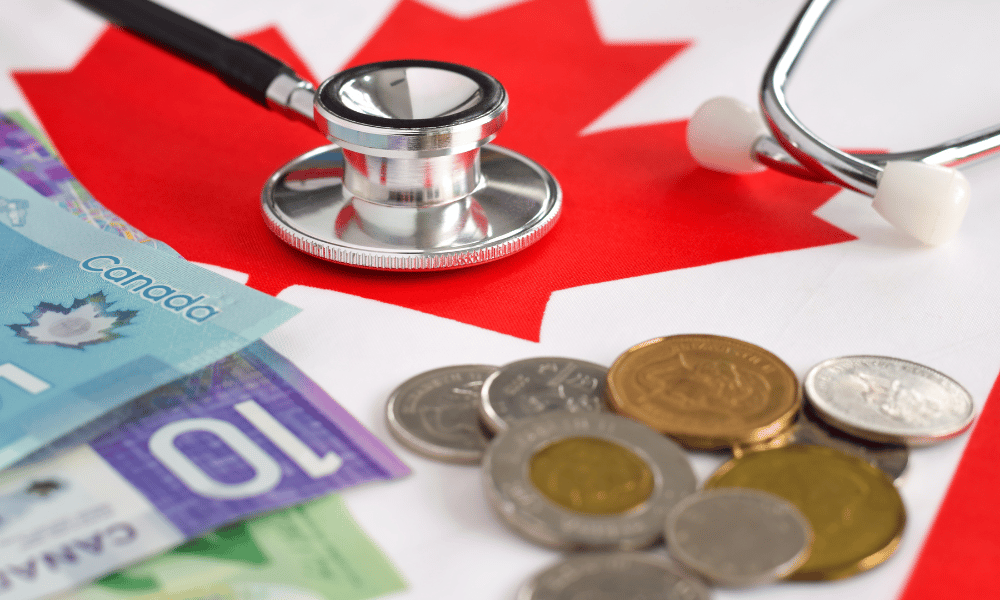
Tariffs that push up the price of drugs, devices and food could quietly drive health costs higher for governments, employers and households already straining under Canada’s expensive and slow-moving health-care system.
BNN Bloomberg reports that a new analysis in The British Medical Journal (BMJ) links trade policy to public health by way of medicine access, food prices, job security and the financial stability of health systems.
Researchers Courtney McNamara of Newcastle University and Benjamin Hawkins of the University of Cambridge argue that tariffs and trade rules shape “the price and availability of food” and “the cost of medicines,” as well as “how secure people feel in their jobs,” even though debates typically centre on inflation and markets.
According to BNN Bloomberg, one of the most immediate risks involves pharmaceuticals and medical supplies, where trade rules and tariff threats can disrupt pricing and global supply chains.
Justin Bates, CEO of the Ontario Pharmacists Association, said in a video interview with CTV News that “pharmaceuticals are not immune to those tariffs and economic pressures,” noting that Canada imports most of its drugs and relies on cross-border supply chains for equipment and devices.
He warned that tariffs on inputs such as steel and aluminum could cascade into higher prices and potential shortages for medical devices, including those used to manage chronic conditions such as diabetes, with “a cascade impact across the system.”
BNN Bloomberg also reports that brand-name drugs and medicines from smaller US manufacturers may face particular price pressure, with costs spilling over into countries closely integrated with the US market.
Paul Sarnese, former president of the International Association for Healthcare Security and Safety, told CTV News that “pharmaceutical prices are going to increase and ultimately that’s going to get passed to the insurance providers and then ultimately to the patients.”
He added that higher costs could prompt some patients to delay procedures or medications until their conditions worsen and require more expensive care.
At the same time, the Fraser Institute says overall health spending has already outpaced household finances.
In its latest commentary, the think-tank estimates that a typical Canadian family of four paid just over $19,000—about 24 percent of its total tax bill—for universal health care last year, almost double the 1997 level after adjusting for inflation.
It notes that between 1997 and 2025, health-care costs for the average family grew 1.6 times faster than housing, 2.2 times faster than food and 1.6 times faster than average income, even as wait times surged.
According to the Fraser Institute, the median wait from general practitioner referral to specialist treatment climbed from 11.9 weeks in 1997 to 28.6 weeks, leaving Canadians waiting “almost two-and-a-half times longer” while paying much more through their taxes.
Against that backdrop, new trade frictions risk adding another layer of cost and volatility.
BNN Bloomberg reports that the BMJ analysis warns tariffs can fuel inflation and economic instability, squeezing the public revenues that fund health and social programs.
The study also highlights employment as a key mechanism, arguing that “when people feel their job is under threat, (their) health suffers.”
In Canada, Steven Staples, national director of policy and advocacy with the Canadian Health Coalition, told CTV News that trade-related layoffs can erode employer-based drug coverage and increase pressure on public drug plans and household budgets.
He also cautioned that federal public-sector job cuts could weaken oversight roles that “make sure that our drugs are safe, that our food is safe, that health care is being provided for in the provinces.”
The Fraser Institute, for its part, argues that Canada runs one of the developed world’s most expensive health systems while ranking among the least accessible for physicians, diagnostic technologies and hospital beds.
It contrasts Canada’s model with countries such as Germany, Switzerland, the Netherlands and Australia, where it says private for-profit hospitals account for between 39 percent and 64 percent of all hospitals and treat patients funded by both public and private insurance.
According to the commentary, patients in those countries “are not restricted to a government monopoly like in Canada, but are free to seek care from both private and public providers and free to choose to pay privately if they wish.”
The wait-time comparisons cited by the Fraser Institute underline the gap.
In 2023, it reports that 65.2 percent of Canadians waited more than one month for a specialist appointment, versus 51.9 percent in Australia, 44.2 percent in Germany, 35.7 percent in the Netherlands and 36.3 percent in Switzerland.
For non-emergency surgery, 58.3 percent of Canadians waited more than two months, compared with 33.1 percent in Australia, 21.1 percent in Switzerland, 20.4 percent in Germany and 20.3 percent in the Netherlands.
The commentary concludes that the private sector “helps provide a superior universal health-care experience” in those jurisdictions and points to developments such as Alberta’s plan to allow physicians to work in both public and private sectors as tentative moves in that direction.
Meanwhile, BNN Bloomberg reports that tariffs also affect what Canadians eat and how much they pay at the grocery store.
The study notes that higher import duties on fresh produce and tariffs on metals used in food packaging can drive up the cost of items such as canned beans and soup.
McNamara told CTV News that when prices rise on these goods, “families who are less able to absorb price shocks end up eating sometimes less healthy food,” with “domino impacts on people’s nutritional quality and intake.”
The researchers say lower-income households are particularly exposed because they devote a larger share of income to food and are more likely to switch to cheaper, ultra-processed products when prices climb.
According to BNN Bloomberg, the BMJ authors and Canadian advocates argue that health considerations should move up the trade agenda.
McNamara said policymakers “shouldn’t just be thinking in terms of macroeconomic figures and stock markets and economic growth, but how these things are impacting people’s daily lives,” and called for health professionals to be included in trade policy-making.
Staples urged Ottawa to pay “much more attention to health care … because of the essential role that it provides for Canadians,” including by planning for greater “medical self-sufficiency” in areas such as medications and vaccines.


