Canadian experts guide menopausal patients through shifting hormone and weight-loss options
Menopause hormone therapy is back in the spotlight after US regulators removed some of the strongest risk warnings from product labels, even as Canadian specialists continue to stress careful patient selection and alternatives.
The US Food and Drug Administration has approved labelling changes for six menopause hormone therapies, dropping references to cardiovascular disease, breast cancer and probable dementia, according to Reuters.
The agency began removing its strict “black box” warnings in November, and 29 drug companies have now submitted proposed labelling revisions.
The first six products include estrogen-only and progestogen-only therapies such as Prometrium, Divigel, Cenestin and Enjuvia, along with the combination therapy Bijuva and the topical vaginal estrogen product Estring.
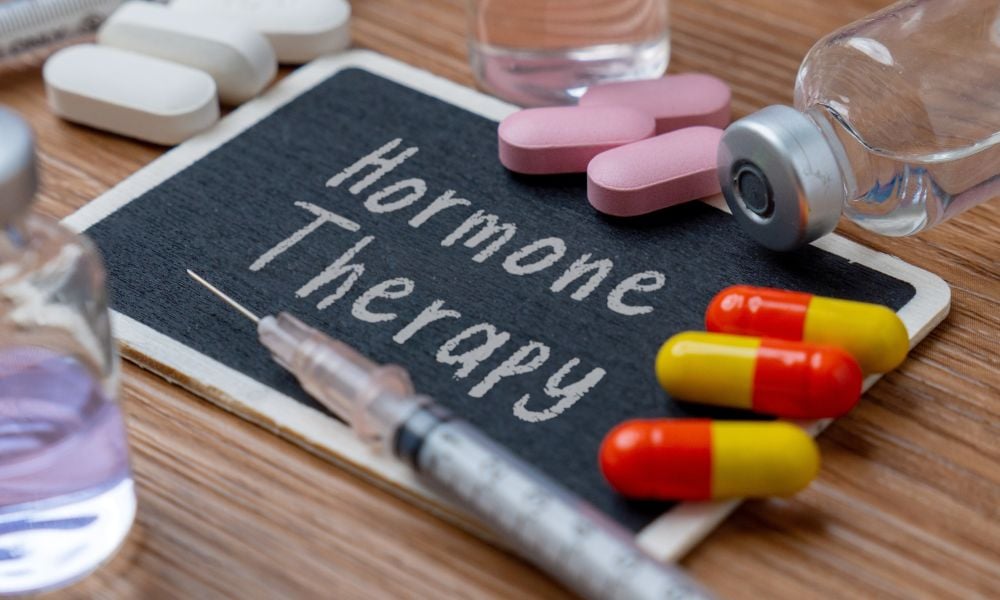
Hormone replacement therapy (HRT) replenishes declining hormones, primarily estrogen, to relieve symptoms such as hot flashes and vaginal dryness, Reuters noted.
HRT was widely prescribed for decades, including to help protect women from chronic diseases like heart disease, before use fell sharply after a 2002 Women’s Health Initiative study linked it to higher risks of breast and ovarian cancer, strokes and other serious conditions.
Reuters said that of about 41m US women aged 45 to 64 in 2020, only about 2m received a hormone‑therapy prescription.
Clinicians in Canada still see a central role for hormone therapy, but only for clearly defined candidates.
CBC News reports that hormone therapy delivered through a pill, patch or gel is the “gold standard” for people in menopause with night sweats and hot flashes, said Kelsey Mills, an obstetrician and gynecologist in Victoria, BC.
The same treatment can also help with insomnia, joint pain, vaginal dryness, vulvar irritation and pain during penetrative sex.
Mills told CBC News that hormone therapy is safe and effective for many patients but not appropriate for everyone.
Anyone with uncontrolled blood pressure, heart disease or liver cirrhosis should consider other options, she said.
Breast cancer survivors are also unlikely to qualify, as some studies have found a correlation between hormone therapy and increased breast cancer risk.
Ideal candidates are under 60, or within 10 years of menopause, whose symptoms significantly affect day-to-day life.
In Canada, women reach menopause at an average age of 51 – defined as one year without a period – with a typical range from 45 to 55.
CBC News also reported that hormone therapy can be a first-line treatment in perimenopause, especially for hot flashes, when estrogen and progesterone levels begin to fluctuate and symptoms such as mood swings, changes in libido, weight gain and night sweats often emerge between ages 40 and 50.
“It’s about treating symptoms, not balancing hormones, because hormones are all over the place in perimenopause,” said Alison Shea, an associate professor of obstetrics and gynecology at McMaster University and a board member of the Canadian Menopause Society.
For those who cannot or do not want to use hormones, non-hormonal drugs are gaining ground.
Neurokinin receptor antagonists can interfere with the brain’s attempts to rapidly raise body temperature, reducing hot flashes and night sweats in a similar way to estrogen, said Michelle Jacobson, co-founder of Coven Women’s Health and chief of obstetrics and gynecology at the William Osler Health Network.
“They work at the same centre in the brain where hot flashes originate,” Jacobson told CBC News.
A 2024 study found that fezolinetant, a neurokinin receptor antagonist approved by Health Canada for menopause symptoms, had a similar effect as 27 hormone therapy regimens in reducing vasomotor symptoms such as hot flashes and night sweats.
In rare cases, it can affect liver function, so people with cirrhosis or other liver conditions may not be candidates, CBC News said.
Lifestyle measures remain an important backdrop to medical treatment.
The hormone changes of menopause can affect bone density, muscle mass, heart health and weight, Jacobson told CBC News.
Mills recommended at least 30 minutes of strength training three times a week plus 150 minutes of moderate to vigorous exercise, in line with International Menopause Society guidelines.
Jacobson said there is little evidence that exercise alone improves hot flashes, but weight loss can help for women who are overweight, and menopause is associated with worse cholesterol and triglycerides, poorer insulin resistance and weight gain.
“So exercise and weight loss can be helpful for improving your overall cardiac health and outcome,” she said. A healthier diet that cuts down on ultra-processed foods and increases calcium intake can help manage bone density loss, Shea added.
CBC News also noted emerging interest in combining hormone therapy with GLP-1 weight-loss drugs such as Mounjaro and Zepbound.
New studies show this combination increased weight loss among participants.
One 2026 observational study of 120 post-menopausal women in The Lancet found those taking hormone therapy alongside the GLP-1 drug tirzepatide were associated with “greater weight loss and improved cardiometabolic outcomes” than those not using hormone therapy.
Shea told CBC News that larger studies are still needed and warned that GLP-1 drugs have been associated with reduced muscle mass, which can already decline more quickly during menopause.