
Health Canada warnings and clinician concerns over fake products, side effects. and over‑reliance put semaglutide under closer scrutiny for benefit plans
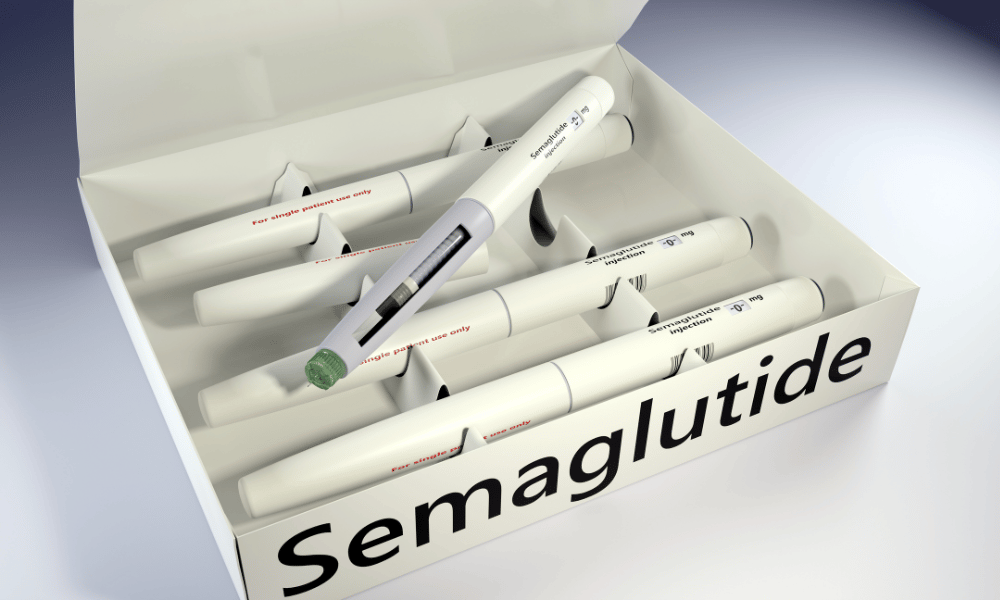
Semaglutide can now cost as little as 35 percent of what Canadians currently pay for brand-name Ozempic — but experts are warning that cheaper access alone will not solve the country’s obesity crisis.
Health Canada approved two generic versions of the drug within three days last week: one by Dr Reddy’s Laboratories of India, and a second by Toronto-based Apotex.
Canada became the first G7 country to authorise generic semaglutide.
Apotex vice-president of global communications Catherine Thomas told CBC News the product should be available “in the coming weeks,” with the company working with insurers to ensure coverage.
Under the pan-Canadian Pharmaceutical Alliance’s pricing structure, two generics on the market drops the cost of both to 50 percent of the brand-name price, and three or more pushes that down to roughly 35 percent.
For people without drug coverage, that shift is significant.
Brand-name Ozempic can run $300 to $400 per month, and Wegovy’s list price sits at roughly $5,066 per patient per year.
Ian Patton, director of advocacy and public engagement for Obesity Canada, called the approvals "exciting." Patton, who has lived with obesity most of his life, told CTV News that effective, evidence-based treatment options have long been scarce.
The clinical case for semaglutide has grown considerably.
According to CBC News, recent research points to benefits on inflammation, arthritis, and the risk of major cardiac events, stroke, and early death — a breadth of evidence that Hertzel Gerstein, director of the Population Health Research Institute at McMaster University, called “remarkable.”
Kaberi Dasgupta, a professor of medicine at McGill University, told CTV News she has seen patients’ blood pressure improve, lab results normalise, and medication loads shrink.
“Some of them feel so much better, and say ‘I am going to move more, and I am going to run this marathon,’” she said.
But both physicians urge restraint.
Gerstein told CBC News the drugs are “powerful” and carry real risks if misused. He stressed anyone considering them should first consult a health-care professional.
Dasgupta echoed that concern at a systems level: “The negative side is that it might become a bit too easy to not try to make our environments healthier.”
She cautioned that widening access could shift focus away from the sedentary lifestyles and food environments that drive obesity in the first place.
She asked CTV News whether society would end up with “30 to 50 percent or more of the population taking a medication” — and warned that work on unhealthy environments must continue regardless.
Demand has also attracted counterfeit products.
This too: Health Canada issued a public advisory in January warning that fake or unauthorised GLP-1 alternatives carry risks ranging from infections to contamination with solvents, heavy metals, and microbials — and that some vendors misuse Health Canada logos to mislead consumers.
The regulator recommended Canadians confirm any product carries Health Canada authorisation before use and consult a health-care professional on what to take.


