
HR leaders ramp up AI spend as only 9% report strong in-house expertise
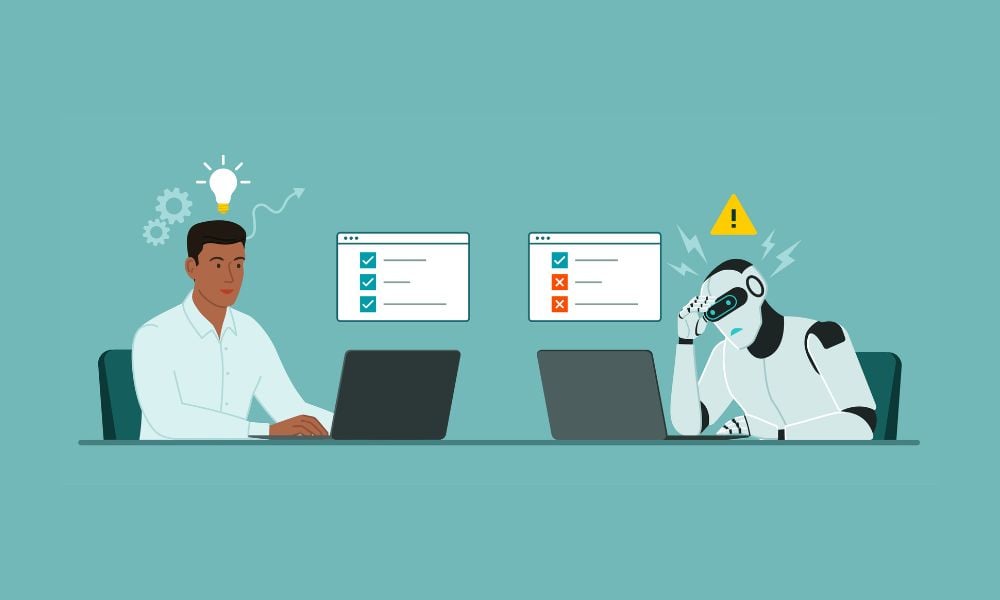
AI is tightening the squeeze on entry-level hiring even as employers struggle to forecast skills and retirement trends in an AI-driven workplace.
Avature’s AI Impact Report 2026, based on a global survey of more than 180 HR, talent acquisition and talent technology professionals, shows most respondents work in large organizations with over 30,000 employees, with primary responsibilities in HR technology and systems or talent acquisition and recruitment.
The report examines the current state of AI in HR, future workforce trends and actions talent leaders are taking.
Most organizations plan to spend more on AI.
Over the next 12 months, 88 percent expect to increase AI investment, with 54 percent saying they will “increase significantly,” 34 percent planning to “increase a little” and 12 percent expecting spending to remain about the same.
Yet most employers still sit in early stages of adoption.
When asked how far along they are in using AI, 7 percent say they are not using it in a meaningful way and 51 percent report they are still in the early exploration stage.
Another 23 percent say they are driving efficiency with AI, 11 percent are integrating it into core processes, 5 percent report using it for strategic advantage and 3 percent describe AI as central to their competitive strategy.
Respondents identify three top HR challenges: 48 percent cite skills shortages in critical roles, 31 percent name implementing AI and new technology and 28 percent highlight legacy software limitations.
Only 9 percent say they have strong AI capability across key functions.
A further 7 percent report very limited or no internal AI talent, 14 percent say they do not know, 36 percent see pockets of AI capability that are not widespread and 34 percent say they are actively building AI capabilities through hiring and upskilling.
Confidence in predicting future skills remains low.
When asked if they feel confident their organization can predict the skills it will need in the next 12 months, 11 percent say they are very confident, 23 percent somewhat confident, 56 percent not very confident, 10 percent not at all confident and 7 percent not sure.
Dimitri Boylan, founder and CEO of Avature, says, “It’s really difficult at this very, very early stage to imagine the workforce of 2028… It’s going to require a skillset that’s not really defined yet. This is the execution gap HR must close.”
The report highlights an “Entry-Level Squeeze.” Among respondents concerned about AI’s influence on early-career positions, 76 percent believe it will significantly reduce entry-level hiring.
When asked about the hidden cost of hiring fewer entry-level employees, 30 percent point to a reduced future leadership pipeline, 15 percent to loss of institutional knowledge transfer and 11 percent to increased cost from over-reliance on experienced hires.
The report suggests that many organizations are redesigning early-career roles by shifting routine tasks to AI and using entry-level positions for supervising AI outputs, quality control and broader exposure to decision-making inputs.
Views on jobs and exits show no simple consensus.
When asked whether AI will create more jobs than it destroys in their company in the next 12 months, 16 percent expect an increase in total jobs, 19 percent expect a decrease, 35 percent expect no noticeable impact, 9 percent say it is too early to say and 21 percent do not know.
On retirement trends, 38 percent expect AI may extend workforce participation, 34 percent expect earlier retirement for some roles or segments, 8 percent foresee no major change and 20 percent do not know.
If AI reduces employment opportunities at scale, respondents favour measures that share work and support transitions.
In that scenario, 52 percent support implementing a four-day work week to redistribute work, 43 percent support public funding for large-scale reskilling and education programs and 40 percent support enforcing stronger regulations on AI deployment in the workplace.
Trust in AI remains limited, especially in people decisions.
Only 2 percent say they completely trust generative AI to make decisions about people, 8 percent trust it moderately, 40 percent slightly, 26 percent not at all and 24 percent do not know.
For agentic AI handling key talent moments, 4 percent completely trust it, 39 percent moderately, 42 percent slightly, 10 percent not at all and 4 percent do not know.
Respondents are more comfortable when AI handles narrow, rules-based tasks.
Assuming the right guardrails are in place, 70 percent would trust AI to answer candidate FAQs, 64 percent to match candidates to roles and vice versa, 63 percent to help employees resolve simple requests, 62 percent to automate interview scheduling, 61 percent to conduct keyword-based resumé screening and 59 percent to source passive candidates.
Only 34 percent would trust AI to generate candidate disposition communications, 9 percent to conduct first-round interviews with decision-making power and 8 percent to make hiring decisions for high-volume roles without human oversight.
Four per cent say they do not trust AI to operate autonomously in any listed area.
The report also shows how AI is changing roles and job descriptions.
Over the past 12 months, 12 percent of respondents report a significant increase in AI-related skills or responsibilities across the organization, 45 percent see a moderate increase in specific functions or roles, 29 percent see no noticeable change, 1 percent report a decrease and 13 percent are not sure.
Looking ahead to the next 12 months, 25 percent expect a significant increase across the organization, 58 percent a moderate increase in specific functions or roles, 10 percent no noticeable change, 7 percent a decrease and 1 percent are not sure.
Jennifer Shappley, global talent and HR leader, says, “I think a lot of the roles that we do right now are going to change. In the short term, that might feel like they’re going away. In the long term, they’re just going to be different.”
Finally, the report notes that respondents see AI delivering most value today through increasing operational efficiency or productivity (67 percent), enhancing customer or employee experience (40 percent) and improving decision-making through better data insights (36 percent).
Only 27 percent say AI currently drives innovation or enables new products or services, 5 percent say it drives revenue growth and 7 percent link it to creating entirely new business models.
Looking two to five years ahead, 70 percent still expect efficiency gains, 45 percent expect stronger customer or employee experience, 52 percent expect better data-driven decisions, 38 percent expect AI to drive innovation, 24 percent expect revenue growth and 15 percent expect AI to help create entirely new business models.


