
'The industry needs to be more adept and adaptable than it has been in the past' urges Connex Health president
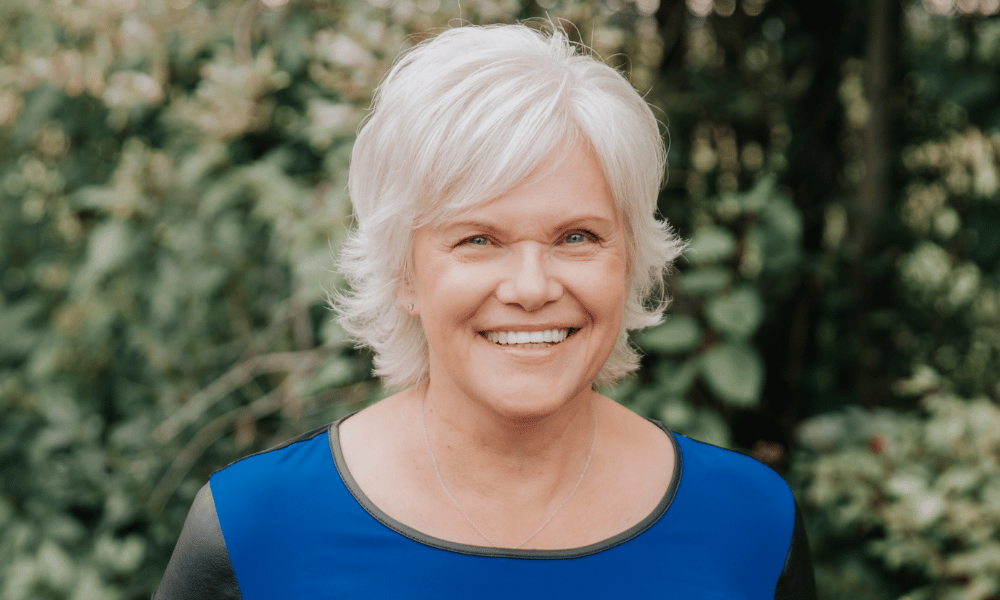
Denise Balch is no stranger to the benefits landscape. From her start at a defunct insurer on Bay Street to her current role as president of Connex Health, she has certainly seen the industry's largest shifts.
But she argues it hasn’t shifted fast enough.
According to Balch, adaptability is one of the industry’s greatest shortcomings. And while COVID-19 briefly forced a digital awakening, she’s skeptical about whether that momentum has held.
“If we look at a higher level, the industry is resistant to change. We know that the industry can change because they did it during COVID but it seems to have largely settled back to a resistance to all but the most minor changes, even if there are opportunities for change that would benefit most stakeholders, and I think that that’s challenging. With the speed of new technology solutions and more AI applications available, to insurers, advisors and consultants, the industry needs to be more adept and adaptable than it has been in the past. Those who adapt will be the ones who will not only survive, but thrive,” says Balch.
She traces that resistance to change back to structural shifts that began two decades ago. Following deregulation and consolidation, fewer insurers now control large segments of the market as most are publicly traded and focused on shareholder returns, which she believes drives a strong aversion to investment in innovation and embracing risk.
“There is a reluctance to do anything that’s going to rock the boat except at the most basic levels,” she adds.
Balch, who now spends much of her time providing guidance to those organizations on the fringe of the benefits industry or working on industry initiatives she believes in, is perhaps best known for organizing webinars and seminars on the benefits’ landscape latest trends. She notes that building engagement through her events and webinars has become increasingly competitive, with success dependent on content that informs and motivates attendance, not easy in a post COVID environment.
“It’s a constant challenge to make sure that we're not only bringing topics to advisors, insurers and other stakeholders that is of importance but is also of interest,” admits Balch.
Balch believes one of the most overlooked issues in the group benefits space is the underfunding of the public healthcare system, particularly physicians and hospitals, and the lack of industry conversations around its implications to the private sector and group benefit plans. Drawing from her experience as chair of the Temiskaming Hospital in New Liskeard, Ontario, she warns that with funding shortfalls to public healthcare systems, particularly in Ontario, the quality of care is in critical condition.
“The sector is significantly underfunded to the point where it's almost in crisis mode. If we don't address those public sector funding issues, then there are going to be repercussions in the employee benefit space,” notes Balch, also highlighting the growing use of publicly funded private clinics and reviews of funding models as signs of a system under pressure.
When asked where she sees the landscape going in the next decade, Balch believes the industry is at a turning point, particularly in how technology and automation can reshape longstanding processes and delivery efficiencies. She’s adamant that AI and digital platforms will become fully integrated into the system, often without users even realizing it.
One area she expects to undergo a major shift is the prior authorization process for specialty drugs, which she describes as outdated and inefficient, adding that in the future technology, including AI will play a key role in prior authorization adjudication. She’s also hoping for broader reforms in drug pooling, particularly for smaller groups, ideally moving toward a simplified national model to replace complex, inadequate solutions that exist today.
According to Balch, plan sponsors are falling behind when it comes to understanding and advocating for improvements in employee benefits. She asserts that lack of engagement is starting to show, particularly in understanding the challenges of prior authorization and pooling. She also points to recent findings from the recent 2025 Vision Care Survey for the Canadian Association of Optometrists, noting that comprehensive exam coverage and maximums are often not sufficient to identify eye diseases early, particularly as optometric technology evolves.
While insurers recognize there’s room for improvement in vision care, Balch says it’s advisors who are most aware of the need for change, while plan sponsors remain uncertain. She believes part of the problem lies in a lack of plan sponsor education.
“We need to better educate our plan sponsors, or they need to better educate themselves, on what the current issues are in employee benefits and advocate for more options” she says, adding that advisors have an opportunity and an obligation to inform plan sponsors of current issues, but that plan sponsors should also be more assertive.
“They shouldn’t passively be just taking what they get. They are paying for these plans, and should be much more active in how funding is managed,” she added, underscoring past efforts, like the regional healthcare partnerships of the 1990s in Toronto and Hamilton, which demonstrated that employers could collectively advocate for real change in the industry.
Today, she sees little of that initiative.
Beyond vision care, she points to growing delays in adding new specialty drugs to formularies as a critical concern. If private plans continue to lengthen the time to formulary list, moving close to the timelines of public systems, she warns, it raises serious questions about the value of employer-sponsored coverage.
Reflecting on her long career, Balch finds it difficult to single out one defining achievement, but for her, building and sustaining her business on her own terms is certainly a highlight.
“People who aren’t entrepreneurs don’t really realize what it takes to be in your own business, particularly as a small business,” she said, adding that over 25 years, “with no capital infusion ever, it’s been all on me.”
While the entrepreneurial success is personal, she hopes her work has left a broader impact on the industry. Her long-standing advocacy of common sense approaches to benefits and employee health, including prior authorization processes, have been brought together through a new accreditation initiative launched under her nonprofit, is an initiative she takes pride in. She hopes these efforts – and others - have contributed to industry progress since she entered the business in the early 1980s.
“To try and influence change to make the industry better is very important to me,” says Balch.


