
Most employers aren't adequately informed or equipped to deal with employees facing critical illness, warns Desjardins
When two out of five people will face a cancer diagnosis in their lifetime, it’s not just a personal health issue. It’s a workplace crisis.
And with 40 per cent of cancer cases occurring during working years, HR professionals are being forced to confront an urgent question: are benefits doing enough?
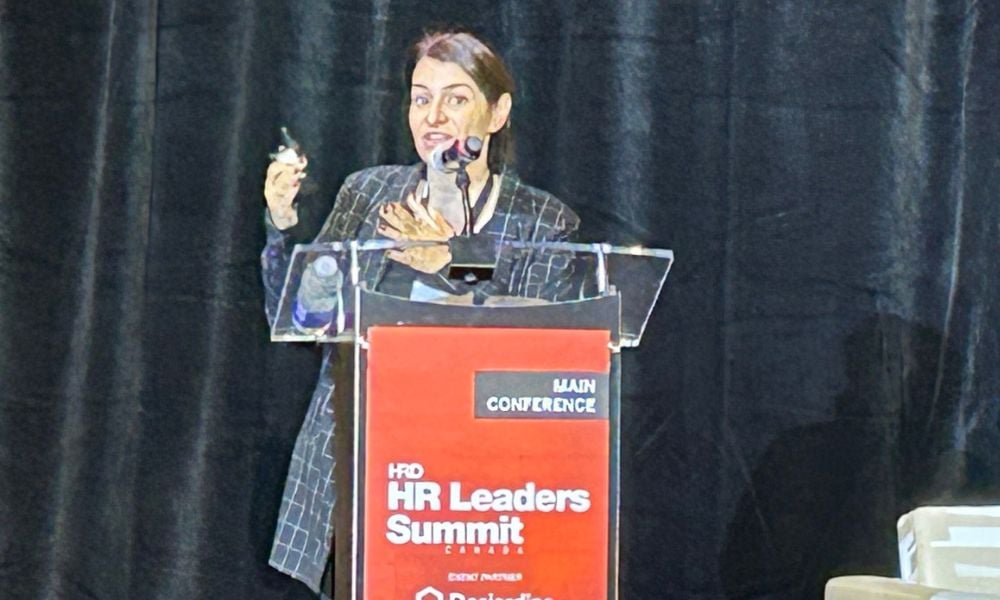
That’s according to Neda Nasseri, product director of drug insurance at Desjardins. Speaking to a room full of HR professionals and plan sponsors on Monday at the HR Leaders Summit, she emphasized that cancer is hitting the workforce harder than many realize.
“Ninety per cent of these people are usually above 50 years old but you've got a good chunk that's between 50 and 64, and 10.8 per cent between 15 and 49 years old. What that means is that 40 per cent of people affected by cancer are in their working years. These are your employees, these are your friends, your acquaintances, and even all these strangers around us,” she said.
To Nasseri, the response must begin long before a diagnosis, emphasizing the need for prevention as a workplace strategy. She pointed to a few ideas like healthy food in cafeterias, wellness programs, and subtle design tweaks that encourage movement, anything to support long-term health.
“Ideally, you want a healthy mind. You want a healthy body. You want a healthy gut,” she said.
But proactive care can’t stop at gym subsidies and fruit bowls. Nasseri stresses the need for structured policies: job modifications, early contact during a leave, return-to-work training, and a consistent point of contact for employees managing a serious illness.
Meanwhile, cancer diagnoses are rising sharply among people under 50. While the exact causes remain unclear, Nasseri believes lifestyle factors, including stress and obesity, are playing a major role. Ten of those 17 rising cancers, she noted, are closely linked to obesity, a condition now affecting 60 per cent of Canadians when measured by BMI.
Nasseri sees this as a call to action for benefits leaders. She urged employers to take a comprehensive, evidence-based approach to supporting employees living with obesity, pointing to the need for benefits that go beyond physical health and include dieticians, psychologists, and sports therapists.
At Desjardins, for example, kinesiology is made accessible by bundling it within physiotherapy coverage.
She also pushed back on the hesitation some plan sponsors express around covering GLP-1 agonists like semaglutide in benefits plans.
“To be honest, my answer will always be yes, because I don’t believe in segregating a disease over another one,” she said.
Backing her stance, she referenced a US-based Aon study involving 50 million plan members that showed a 46 per cent drop in cardiovascular events after GLP-1 coverage was introduced. While costs rose slightly in the first year, medical expenses dropped by 50 per cent in the second, she explained.
Yet, when it comes to supporting employees with cancer, most employers still aren’t adequately informed or equipped, according to Nasseri. Survey results show that companies with 250 to 1,000 employees largely described themselves as only “somewhat or slightly familiar” with cancer-related issues. Among smaller businesses with fewer than 50 employees, that number rose to 75 per cent.
Additionally, according to Nasseri, almost 80 per cent of cancer patients experience mental health issues, and these challenges don’t follow a predictable timeline as “it could be during screening, it could be during treatment, it could be after treatment,” she said, noting that symptoms may show up as PTSD, depression, panic, or insomnia.
Meanwhile, benefit plans often include far more than people realize. Beyond the basics, many plans offer coverage for osteopathy, naturopathy, dietetics, massage therapy, acupuncture, orthotherapy, and kinesiotherapy, all of which can help manage the physical and emotional toll of a cancer diagnosis.
“By no means am I saying that naturopathy will cure cancer, but it can help for some of the symptoms,” said Nasseri.
She also emphasized the importance of fertility-related benefits, especially for younger employees facing treatment that could affect their ability to have children.
Additionally, daily support services, such as home nursing, meal prep, grocery shopping, and even coverage for meal kits or catering, can also make a major difference during treatment and recovery.
When it comes to supporting employees returning to work after a serious illness like cancer, Nasseri sees a major gap in employer readiness. While almost 61 per cent of organizations reported having return-to-work policies, many are still relying on informal or inconsistent approaches.
“Fifty-eight percent had no policy but had ad hoc accommodations,” she noted, with 73 per cent lacking any formal programs at all.
Nasseri emphasized ad hoc isn’t good enough, underscoring the need for structured, well-communicated return-to-work programs that managers understand and can act on. Just as important is promoting those resources internally so employees and managers alike know what’s available and how to access it.
Beyond return-to-work policies, Nasseri argued for a broader overhaul of benefit offerings. Many employees assume that psychological support will be there if they need it, but that’s not always the case.
She acknowledged a number of group insurance offerings that can fill these gaps, from acupuncture and physiotherapy to massage therapy, psychological counselling, and flexible wellness accounts. Employee Assistance Programs (EAPs), especially those that include crisis management teams, also play a key role in supporting teams through traumatic events like the loss of a colleague.
But none of this ultimately matters, Nasseri warned, if employees don’t know or believe in the value of their benefits.
Pointing to a past survey, when asked whether they’d choose $10,000 or their benefits plan, “about 60 per cent of people said they would pick the $10,000,” she said. For employers, that should be a red flag.
“We know how valuable a benefits plan is,” she said. “But it’s very important to show the value to your employees. It’s not because you know the value but because they do.”


